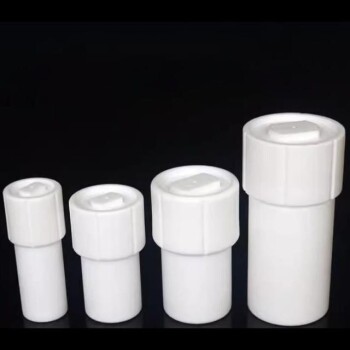
The high-pressure digestion tank functions as a dual-component system where the PTFE lining ensures chemical survival while the steel shell ensures physical containment. In the ionothermal carbonization process, the Polytetrafluoroethylene (PTFE) lining acts as a chemically inert barrier against corrosive ionic liquids and reaction products, while the steel outer shell provides the mechanical strength required to withstand the high autogenous pressures generated at temperatures up to 240 °C.
Core Takeaway: The success of ionothermal carbonization depends on a "shield and vessel" synergy: the PTFE liner prevents chemical degradation of the equipment, while the steel shell maintains the high-pressure environment necessary for the complete hydrolysis and aromatization of biomass.
The Structural Role of the Steel Shell
Engineering for Extreme Pressure
The primary function of the steel shell is to serve as a pressure vessel. During the heating of biomass and ionic liquids, autogenous pressure builds rapidly within the sealed environment.
The robust construction of the shell ensures that the tank can safely contain these forces without deformation or catastrophic failure. This containment is what allows the reaction to remain in the liquid phase even at temperatures exceeding 200 °C.
Thermal Regulation and Heat Transfer
The steel shell acts as the primary interface for thermal energy transfer from the heating source to the internal reactants. Its high thermal conductivity allows for relatively uniform heating of the internal environment.
By maintaining a stable temperature, the shell facilitates the consistent kinetics required for complex biomass transitions. Without this rigid thermal environment, the precise stages of carbonization would be impossible to control.
The Protective Function of the PTFE Lining
Chemical Inertness and Corrosion Resistance
Ionic liquids often contain strong coordinating anions and produce corrosive byproducts during the carbonization of materials like sugarcane bagasse. The PTFE lining is utilized for its exceptional chemical stability, which prevents these aggressive agents from attacking the steel shell.
This "shield" is critical because even minor corrosion of the outer shell would compromise its structural integrity. PTFE remains non-reactive across a wide pH range, making it the industry standard for acidic and ionic reaction environments.
Preventing Sample Contamination
Beyond protecting the vessel, the PTFE liner protects the purity of the product. Because PTFE is non-stick and non-reactive, it prevents metallic ions from the steel shell from leaching into the reaction mixture.
This ensures that the resulting carbonized material—such as those used in catalysts or energy storage—maintains its intended morphology and chemical composition. The liner also simplifies the recovery of the carbonized biomass post-reaction.
Understanding the Trade-offs and Limitations
Thermal Ceiling of PTFE
While PTFE is chemically superior, it has a definite thermal limit, typically around 240 °C to 250 °C. Exceeding these temperatures can cause the liner to soften or undergo thermal decomposition, releasing toxic fumes and compromising the seal.
Researchers must strictly monitor internal temperatures to ensure they do not exceed the material's safety threshold. Failure to do so can lead to a "blown" liner, where the reactant leaks into the space between the liner and the steel shell.
Mechanical Fragility
The PTFE liner is relatively soft and can be easily scratched or deformed if handled improperly. Mechanical damage to the liner provides a path for corrosive precursors to reach the steel shell, leading to hidden "pitting" corrosion.
Furthermore, the seal depends on the physical fit between the liner lid and the vessel body. Any misalignment during the sealing process can lead to pressure loss, which halts the hydrolysis and dehydration processes essential for carbonization.
How to Apply This to Your Project
Making the Right Choice for Your Goal
- If your primary focus is maximizing biomass conversion: Ensure your steel shell is rated for at least 25% higher pressure than your target autogenous pressure to allow for safe, complete hydrolysis.
- If your primary focus is working with aggressive ionic liquids: Prioritize a high-quality, thick-walled PTFE liner to prevent chemical "soaking" or permeation into the steel housing.
- If your primary focus is material purity and morphology: Use a fresh PTFE liner for each synthesis to avoid cross-contamination and ensure the "vertical growth" of structures is not disrupted by residual precursors.
Understanding the mechanical partnership between the lining and the shell is the first step toward safe and repeatable high-pressure synthesis.
Summary Table:
| Component | Primary Function | Key Benefit |
|---|---|---|
| Steel Shell | Mechanical Strength & Pressure Containment | Safely maintains high-pressure liquid phases and provides uniform heat transfer. |
| PTFE Lining | Chemical Inertness & Corrosion Resistance | Protects the vessel from aggressive ionic liquids and prevents sample contamination. |
| Synergy | Structural Integrity + Chemical Shield | Enables safe hydrolysis and aromatization of biomass at temperatures up to 240 °C. |
Elevate Your Lab's Carbonization Precision with KINTEK
Don't compromise your research with substandard containment. KINTEK specializes in advanced laboratory equipment designed to meet the rigorous demands of high-pressure synthesis. Our precision-engineered high-temperature high-pressure reactors and autoclaves provide the perfect balance of structural durability and chemical protection, ensuring repeatable results for your biomass research.
From high-performance muffle and vacuum furnaces to essential PTFE consumables and hydraulic presses, we provide the tools that empower scientists to innovate safely. Experience the KINTEK difference in quality and reliability today.
Contact our experts to find the right reactor for your application!
References
- Soha Aldroubi, Nicolas Brun. Ionothermal carbonization of sugarcane bagasse in imidazolium tetrachloroferrate ionic liquids: effect of the cation on textural and morphological properties. DOI: 10.1039/d3gc00300k
This article is also based on technical information from Kintek Solution Knowledge Base .
Related Products
- Custom PTFE Teflon Parts Manufacturer for Microwave Digestion Tank
- Desktop Fast High Pressure Laboratory Autoclave Sterilizer 16L 24L for Lab Use
- Portable High Pressure Laboratory Autoclave Steam Sterilizer for Lab Use
- Laboratory High Pressure Vacuum Tube Furnace
- Customizable High Pressure Reactors for Advanced Scientific and Industrial Applications
People Also Ask
- Why are PTFE containers required for PCT leaching tests? Ensure Chemical Inertness and Analytical Precision
- Why use high-quality PTFE containers for CO2 reduction electrolytes? Eliminate silicon contamination and ensure data.
- Why is PTFE Mandatory for Hydrofluoric Acid (HF) Handling? Ensure Safety and Data Integrity in Corrosion Testing
- Why is a PTFE container required for acid leaching of silicon nanosheets? Ensure High Purity and Safety
- Why are polytetrafluoroethylene (PTFE) containers essential for assessing the corrosion resistance of glassified waste?