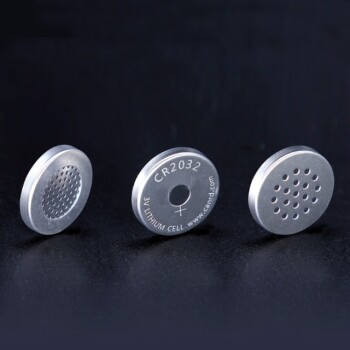
A multi-channel battery test system serves as the primary validation tool for evaluating the performance and safety of all-solid-state batteries. It provides precise galvanostatic charge-discharge control and continuous voltage monitoring, enabling researchers to record critical performance metrics under varying current densities and controlled temperatures.
By simulating real-world usage conditions, this system verifies the electrochemical stability of solid-state electrolytes (such as PEO/LSTZ) and provides the quantitative data necessary to confirm lithium dendrite suppression.
Core Capabilities of the System
To understand how researchers validate solid-state technology, you must look at the specific control mechanisms the test system offers.
Precise Galvanostatic Control
The system allows for strict regulation of current during charging and discharging cycles.
This ensures that the battery is tested under consistent current densities, which is essential for accurately measuring rate performance.
Real-time Voltage Monitoring
Continuous tracking of voltage changes is critical for identifying failure points.
The system monitors voltage responses to detect irregularities that may indicate internal short circuits or material degradation.
Evaluating Performance Metrics
The value of a multi-channel system lies in its ability to generate high-fidelity data regarding the battery's lifespan and efficiency.
Capacity Retention
The system tracks how much energy the battery can hold over repeated cycles.
High capacity retention rates indicate that the solid-state electrolyte is stable and not breaking down during long-term cycling.
Coulombic Efficiency
This metric measures the charge efficiency of the battery.
The system records Coulombic efficiency to determine how much of the energy put into the battery can actually be withdrawn, highlighting the reversibility of the electrochemical reactions.
Monitoring Overpotential
Overpotential refers to the voltage difference between the battery's theoretical and actual operation.
By recording overpotential variations, the system helps researchers understand the internal resistance and kinetic barriers within the cell.
Validating Solid-State Electrolyte Stability
Beyond basic metrics, the system is engineered to test the specific properties of materials like PEO/LSTZ electrolytes.
Testing Under Thermal Stress
Solid-state batteries often require elevated temperatures for optimal ion conductivity.
The system supports testing at specific temperatures, such as 45°C, to evaluate how the electrolyte performs under thermal operating conditions.
Verifying Dendrite Suppression
One of the main goals of solid-state batteries is preventing lithium dendrite growth.
The system collects core data that verifies the material's ability to suppress lithium dendrites, ensuring the battery remains safe and functional over time.
Understanding the Limitations
While these systems are powerful, relying solely on electrical data presents certain analytical trade-offs.
Indirect Detection of Dendrites
The system detects dendrite formation primarily through voltage anomalies or short circuits.
It does not provide visual confirmation; therefore, electrical data implies dendrite growth but often requires post-mortem physical analysis for absolute confirmation.
Thermal Uniformity Challenges
Testing at elevated temperatures (e.g., 45°C) requires rigorous environmental control.
If the thermal chamber within the system has uneven heat distribution, the overpotential data across different channels may vary artificially, unrelated to the battery chemistry.
Making the Right Choice for Your Goal
To maximize the utility of your test data, focus your analysis based on your specific research objectives.
- If your primary focus is Long-Cycle Stability: Prioritize analyzing capacity retention trends over hundreds of cycles to verify the chemical inertness of the PEO/LSTZ electrolyte.
- If your primary focus is Rate Performance: Focus on overpotential variations at increasing current densities to determine the kinetic limits of the cell.
Accurate data interpretation is the bridge between a promising material and a commercially viable battery.
Summary Table:
| Feature | Technical Support & Capability | Key Metric Evaluated |
|---|---|---|
| Current Control | Precise galvanostatic charge-discharge | Rate performance & current density |
| Voltage Tracking | Real-time monitoring & anomaly detection | Overpotential & internal short circuits |
| Cycling Stability | Long-term capacity retention tracking | Electrolyte stability & lifespan |
| Efficiency Metrics | Precise energy input/output recording | Coulombic efficiency & reversibility |
| Thermal Testing | Integration with controlled temperature environments | Ion conductivity & thermal stress |
| Safety Validation | Voltage drop detection for dendrite growth | Lithium dendrite suppression |
Elevate Your Battery Research with KINTEK Precision
Unlock deep insights into your all-solid-state battery chemistry with KINTEK’s advanced testing and laboratory solutions. Whether you are measuring capacity retention in PEO/LSTZ electrolytes or investigating dendrite suppression, our comprehensive range of multi-channel test systems, high-temperature furnaces, and battery research consumables ensures high-fidelity data and reliable results.
From battery assembly tools to specialized electrolytic cells, KINTEK provides the high-precision equipment necessary for rigorous electrochemical validation. Empower your R&D today—Contact our technical experts at KINTEK to find the perfect solution for your lab!
Related Products
- Customizable Swagelok Type Test Cells for Advanced Battery Research Electrochemical Analysis
- Battery Lab Equipment 304 Stainless Steel Strip Foil 20um Thick for Battery Test
- Laboratory Hydraulic Press Lab Pellet Press for Button Battery
- Platinum Sheet Electrode for Battery Lab Applications
- Li-Air Battery Case for Battery Lab Applications
People Also Ask
- How does a standardized electrochemical test cell assist in MOx/CNTf electrode screening? Optimize Material Ratios
- Why is a dedicated electrochemical test cell necessary for carbon steel? Ensure Precise Geothermal Corrosion Data
- What is the difference between a voltaic cell and an electrochemical cell? Understand the Two Types of Energy Conversion
- How do the electrochemical cell and three-electrode testing system collaborate? Optimize Zinc Anode Deposition Control
- Why must the electrochemical cell be continuously purged with nitrogen? Ensure Precision in Ni-Cr Corrosion Tests