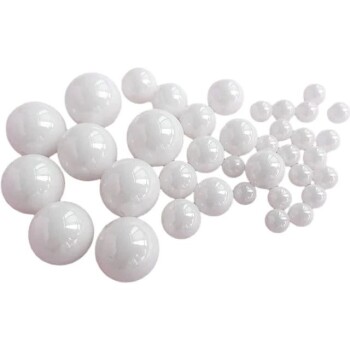
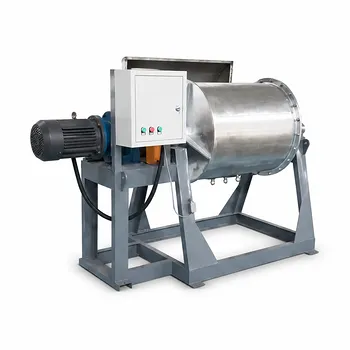
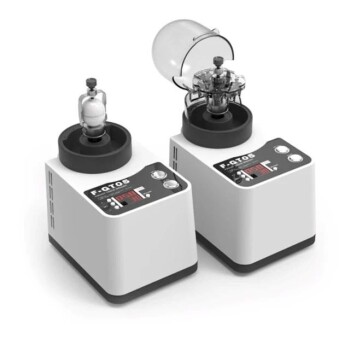
Zirconia grinding balls are the definitive choice for milling Lithium Lanthanum Zirconium Oxide (LLZO) due to a unique synergy of high mechanical density and specific chemical compatibility. They provide the kinetic energy necessary to pulverize hard garnet-type ceramics while acting as a safeguard against foreign impurities that would degrade the battery's performance.
Core Insight: The most critical advantage of zirconia media is "material compatibility." Because the LLZO precursor mixture already contains zirconium dioxide (ZrO2), any microscopic wear debris from the grinding balls introduces no foreign elements, preserving the strict stoichiometry required for high ionic conductivity.
The Critical Role of Purity in Solid Electrolytes
In solid-state battery manufacturing, purity is not just a specification; it is the determinant of performance.
The "Same Material" Principle
Mechanical milling inevitably causes some wear on the grinding media.
If you were to use alumina or steel balls, that wear would introduce aluminum or iron impurities into your powder.
However, since LLZO precursors already include Zirconium Dioxide (ZrO2), using zirconia balls means that any wear byproduct is chemically identical to the base material. This eliminates the risk of introducing foreign contaminants.
Preventing Electrochemical Degradation
Metallic impurities, such as iron from steel media, are disastrous for solid electrolytes.
These impurities can act as electron conduction pathways or reactive sites, ruining the electrochemical stability of the final electrolyte.
Zirconia is chemically inert and ensures that the processed powder retains the high purity necessary for optimal ionic conductivity.
Mechanical Efficiency and Particle Refinement
Beyond chemistry, the physical properties of zirconia are essential for processing the robust structure of garnet-type ceramics.
High Density Generates High Impact
LLZO precursors are hard materials that require significant energy to break down.
Zirconia beads have a high density, which translates to greater kinetic energy during the milling process.
This allows the media to generate the high impact force needed to effectively crush raw oxides and refine particle sizes down to the necessary reactive levels.
Extreme Hardness for Durability
High-energy milling often requires long processing cycles (e.g., 12 hours or more).
Zirconia’s extreme hardness and superior wear resistance allow it to withstand these rigorous conditions without rapid degradation.
This durability ensures that the size and shape of the grinding media remain consistent throughout the process, leading to a uniform particle size distribution in the final powder.
Common Pitfalls in Media Selection
When selecting milling media for LLZO, it is crucial to understand the consequences of using alternative materials.
The Risk of Alumina Contamination
While alumina is a common ceramic grinding media, it is unsuitable for high-performance LLZO.
Alumina is less dense than zirconia, resulting in lower milling efficiency.
More importantly, wear from alumina balls introduces excess aluminum, which disrupts the precise chemical balance (stoichiometry) and phase purity of the LLZO powder.
The Danger of Metallic Media
Steel or metallic alloys should generally be avoided for this specific application.
The introduction of even trace amounts of conductive metals creates internal short-circuit risks within the solid electrolyte layer.
Making the Right Choice for Your Goal
To ensure the success of your solid-state electrolyte synthesis, align your processing parameters with your performance objectives.
- If your primary focus is Ionic Conductivity: Prioritize high-purity zirconia media to eliminate the introduction of foreign cations that impede lithium-ion movement.
- If your primary focus is Process Efficiency: Leverage the high density of zirconia to shorten milling times and achieve finer particle sizes compared to lower-density ceramics.
By utilizing zirconia grinding balls, you effectively align the mechanical requirements of pulverization with the strict chemical hygiene required for advanced battery materials.
Summary Table:
| Feature | Zirconia (ZrO2) Media | Alumina (Al2O3) Media | Steel/Metallic Media |
|---|---|---|---|
| Chemical Compatibility | High (Matches LLZO Chemistry) | Low (Introduces Al impurities) | Low (Introduces Fe impurities) |
| Purity Impact | Zero Foreign Elements | Disrupts Stoichiometry | Risk of Electrochemical Failure |
| Mechanical Density | High (Efficient Grinding) | Medium (Slower Grinding) | Very High (High Impact) |
| Wear Resistance | Excellent | Moderate | High (But Contaminates) |
| Best Application | Solid-State Electrolytes | General Purpose Ceramics | Non-Electronic Materials |
Elevate Your Battery Research with KINTEK
Don't let impurities compromise your solid-state electrolyte performance. KINTEK specializes in providing high-performance laboratory equipment and consumables tailored for advanced battery research. From our high-density zirconia grinding media to our precision crushing and milling systems, we ensure your LLZO powders achieve optimal particle refinement and purity.
Our extensive portfolio also includes:
- High-Temperature Furnaces (Muffle, Tube, Vacuum, CVD) for sintering and synthesis.
- Hydraulic Presses (Pellet, Hot, Isostatic) for solid-state cell assembly.
- Battery Research Tools and essential consumables like PTFE products, ceramics, and crucibles.
Ready to optimize your milling process? Contact KINTEK today to discover how our high-purity solutions can enhance your lab's efficiency and material performance!
Related Products
- Precision Machined Zirconia Ceramic Ball for Engineering Advanced Fine Ceramics
- Laboratory Jar Ball Mill with Alumina Zirconia Grinding Jar and Balls
- Stainless Steel Laboratory Ball Mill for Dry Powder and Liquid with Ceramic Polyurethane Lining
- Laboratory Jar Mill with Agate Grinding Jar and Balls
- Laboratory Ball Mill Jar Mill with Metal Alloy Grinding Jar and Balls
People Also Ask
- What are the applications of zirconia ceramics? Unlock High-Performance Solutions for Extreme Environments
- What is the physical mechanism for selecting hard grinding media? Optimize Your ZrC-Al Matrix Composite Production
- Why are zirconia milling balls preferred for P2-type layered oxides? Ensure High Purity and Grinding Efficiency
- What is the purpose of using zirconia milling balls of different diameters? Optimize Solid Electrolyte Processing
- Why are zirconia grinding jars and balls required for solid-state electrolyte powders? Ensure High Purity & Performance