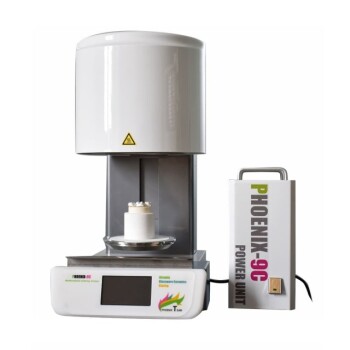
Dental press furnaces function as a critical post-processing hub within modern digital dentistry, specifically bridging the gap between design and final application. They are primarily utilized to finalize CAD/CAM milled restorations through heat and pressure, and to apply glazing schemes that provide the necessary aesthetic polish to the ceramic.
Modern dental press furnaces are essential for converting intermediate CAD/CAM milled components into hardened, clinically viable restorations, while ensuring the final aesthetic finish matches natural dentition through precise glazing.
Integrating with Digital Workflows
Processing CAD/CAM Milled Restorations
The rise of computer-aided design and manufacturing (CAD/CAM) has shifted how restorations are produced, but the mill is not the end of the line.
Dental press furnaces are used to take these milled restoration components and process them into their final state.
By applying specific combinations of high pressure and temperature, the furnace transforms the ceramic material into a hardened, finished condition suitable for patient use.
Aesthetic Glazing Schemes
Beyond structural hardening, modern furnaces play a pivotal role in the cosmetic success of the restoration.
They are utilized to execute glazing schemes, which involve firing a thin layer of glass over the ceramic surface.
This process adds an aesthetic finishing polish, ensuring the artificial tooth mimics the translucency and texture of natural enamel.
Operational Enhancements
Connectivity and Automation
To keep pace with the speed of digital workflows, modern furnaces have evolved beyond simple heating elements.
Many units now feature touchscreen controls and pre-set programs designed to match specific material requirements automatically.
Furthermore, the ability to connect to the internet allows for software updates and the downloading of specific firing protocols, ensuring compatibility with the latest ceramic materials used in milling.
Versatility in Application
These furnaces are not limited to a single type of restoration.
They are capable of processing a wide variety of ceramic components, including onlays, inlays, and bridges.
This versatility makes them a central piece of equipment for labs handling diverse patient needs.
Understanding the Trade-offs
Process Dependency
While integrating a press furnace with CAD/CAM offers precision, it creates a linear dependency in the workflow.
If the furnace malfunctions or requires calibration, the entire production line halts, as milled parts cannot be finalized clinically without this thermal processing.
Complexity of Material Matching
The precision of modern furnaces requires strict adherence to material protocols.
Using the wrong pre-set program or glazing scheme for a specific CAD/CAM material can result in structural failure or poor aesthetics.
Operators must ensure that the furnace's internet-connected libraries are synchronized with the specific materials being milled.
Making the Right Choice for Your Goal
When evaluating how a dental press furnace fits into your laboratory or clinic, consider your specific production needs.
- If your primary focus is High-Volume Production: Prioritize furnaces with robust internet connectivity and pre-set programs to streamline the transition from your CAD/CAM mill to the firing stage.
- If your primary focus is Aesthetic Excellence: Ensure the furnace has advanced control over glazing schemes to guarantee the highest quality finish on visible restorations.
Success in modern dentistry relies on the seamless hand-off between digital milling and physical processing; the right furnace ensures this transition is flawless.
Summary Table:
| Feature | Role in Modern Dental Workflow | Benefit to Clinic/Lab |
|---|---|---|
| CAD/CAM Integration | Finalizes milled ceramic components through heat and pressure | Ensures clinical hardening and structural integrity |
| Aesthetic Glazing | Fires a thin glass layer over ceramic surfaces | Provides natural translucency and a high-polish finish |
| Digital Connectivity | Internet-connected updates and firing protocols | Guaranteed compatibility with the latest ceramic materials |
| Automated Programs | Touchscreen controls with pre-set material cycles | Reduces human error and streamlines high-volume production |
Elevate Your Restorative Precision with KINTEK
In the era of digital dentistry, your CAD/CAM mill is only as good as the furnace that finalizes the work. KINTEK specializes in advanced laboratory equipment, providing high-performance dental press furnaces specifically designed to integrate seamlessly with modern milling technologies.
Our furnaces offer precise temperature control and automated glazing protocols to ensure every onlay, bridge, and inlay meets the highest standards of durability and aesthetic excellence. Beyond dental solutions, KINTEK offers a comprehensive range of high-temperature furnaces, hydraulic presses, and essential laboratory consumables to support your technical needs.
Ready to bridge the gap between digital design and clinical perfection? Contact KINTEK today to discover how our equipment can enhance your lab's efficiency and output quality.
Related Products
- Dental Porcelain Zirconia Sintering Ceramic Vacuum Press Furnace
- Dental Porcelain Zirconia Sintering Ceramic Furnace Chairside with Transformer
- Vacuum Dental Porcelain Sintering Furnace
- Vacuum Hot Press Furnace Heated Vacuum Press Machine Tube Furnace
- 600T Vacuum Induction Hot Press Furnace for Heat Treat and Sintering
People Also Ask
- What does sintering do to zirconia? Unlock Its Full Strength and Aesthetic Potential
- What is the shrinkage of zirconia during sintering? Mastering the 20-25% Dimensional Change
- What is the sintering temperature of zirconia ceramic? Mastering the 1400°C-1600°C Thermal Profile
- What is the price of zirconia sintering furnace? Invest in Precision, Not Just a Price Tag
- What factors are important to consider when choosing a dental sintering furnace? Match Your Workflow for Optimal Results