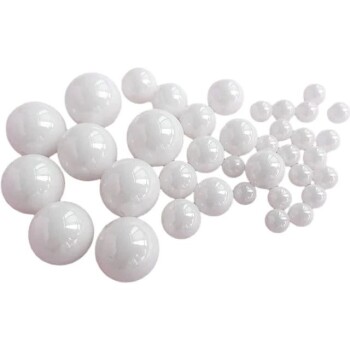
Zirconia (ZrO2) grinding jars are the defining standard for preparing Li7P3S11 because they serve as a contamination-proof barrier during the mechanical alloying process. Their selection is primarily dictated by the need to prevent metallic impurities from entering the sulfide electrolyte, as zirconia’s extreme hardness and chemical inertness allow it to withstand high-energy impact without shedding material.
The Core Insight Success in synthesizing Li7P3S11 relies on maintaining absolute purity during synthesis. Zirconia is chosen because it offers the mechanical toughness required for high-energy milling while remaining chemically inert, ensuring the final electrolyte retains high ionic conductivity and electrochemical stability.
Preserving Chemical Purity
The primary challenge in synthesizing sulfide electrolytes like Li7P3S11 is their extreme sensitivity to contamination.
Eliminating Metallic Impurities
Standard stainless steel jars are unsuitable for this application because the abrasive forces of milling can introduce iron or chromium particles into the powder.
Zirconia possesses superior wear resistance, ensuring that even after hours of high-speed impact, the jar walls do not degrade or chip. This prevents conductive metal contaminants from entering the mixture, which would otherwise cause side reactions and degrade the electrolyte's performance.
Chemical Inertness
Li7P3S11 is a reactive material. Zirconia is chemically inert, meaning it does not react with the sulfur or phosphorus components of the electrolyte.
This stability ensures that the stoichiometry of the precursor powders remains precise throughout the process. It guarantees that the final product is purely the intended solid-state electrolyte, without unwanted byproducts that could impede ion transport.
Withstanding Mechanical Forces
Preparation of solid-state electrolytes often requires mechanical alloying, a process involving intense kinetic energy.
Resisting High-Energy Impact
Mechanical alloying utilizes heavy impact forces to refine powders to the micron level and facilitate chemical reactions.
Zirconia jars are selected for their extreme hardness, allowing them to absorb these repeated heavy impacts without cracking or compromising the sample integrity. This durability is essential for maintaining a consistent milling environment over long durations.
Facilitating Kinetic Energy Transfer
When paired with high-density zirconia balls, zirconia jars create an optimal environment for energy transfer.
The density of the material helps generate the powerful kinetic energy needed for efficient powder refinement. This efficiency leads to a finer particle size and higher specific surface area, which enhances the sintering activity and quality of the final electrolyte.
Understanding the Trade-offs
While zirconia is the technical superior choice for this application, it is important to understand its operational limitations.
Thermal Insulation
Unlike metal jars, zirconia is a ceramic and a thermal insulator. Heat generated during high-energy milling does not dissipate as quickly.
Operators must monitor process temperatures to ensure the heat buildup does not adversely affect the phase purity of the heat-sensitive sulfide materials.
Handling and Brittleness
Despite its hardness, zirconia is brittle compared to steel.
While it withstands the compressive forces of milling balls, it is susceptible to catastrophic failure if dropped or subjected to thermal shock. Careful handling is required during the loading and unloading of the glovebox.
Making the Right Choice for Your Goal
The specific requirements of your synthesis project should dictate your equipment setup.
- If your primary focus is Electrochemical Performance: Prioritize high-purity zirconia jars to ensure zero metallic contamination, maximizing ionic conductivity.
- If your primary focus is Process Stability: Ensure you use high-quality sealed zirconia jars capable of maintaining an inert argon atmosphere to prevent hydrolysis of the moisture-sensitive sulfide.
- If your primary focus is Cost Efficiency: Acknowledge that while zirconia is more expensive than steel, the cost is justified by the prevention of wasted batches due to contamination.
Zirconia remains the only viable option for high-performance sulfide electrolytes, as the cost of the equipment is far outweighed by the value of sample purity.
Summary Table:
| Feature | Benefit for Li7P3S11 Synthesis | Impact on Electrolyte Quality |
|---|---|---|
| Extreme Hardness | Resists high-energy impact during mechanical alloying | Prevents jar degradation and material loss |
| Chemical Inertness | No reaction with sulfur or phosphorus components | Maintains precise stoichiometry and phase purity |
| Wear Resistance | Eliminates metallic contamination (Fe, Cr) | Enhances ionic conductivity and electrochemical stability |
| High Density | Facilitates efficient kinetic energy transfer | Achieves finer particle size and better sintering activity |
Elevate Your Battery Research with KINTEK Precision
Don't let metallic impurities compromise your solid-state electrolyte performance. KINTEK specializes in high-performance laboratory equipment designed for the rigorous demands of advanced materials science. Whether you are synthesizing Li7P3S11 or exploring new battery chemistries, our premium zirconia grinding jars and milling media ensure the chemical purity and particle refinement your research deserves.
Beyond milling solutions, KINTEK offers a comprehensive range of tools to support your entire workflow:
- High-Temperature Furnaces & Reactors: Precise thermal processing for sulfide synthesis.
- Hydraulic Presses: Professional-grade pellet, hot, and isostatic presses for electrolyte shaping.
- Battery Research Consumables: Specialized electrolytic cells, electrodes, and glovebox-ready tools.
Ready to achieve superior electrochemical results? Contact our technical experts today to find the perfect configuration for your lab!
Related Products
- Laboratory Jar Ball Mill with Alumina Zirconia Grinding Jar and Balls
- Laboratory Jar Mill with Agate Grinding Jar and Balls
- Laboratory Ball Mill Jar Mill with Metal Alloy Grinding Jar and Balls
- Precision Machined Zirconia Ceramic Ball for Engineering Advanced Fine Ceramics
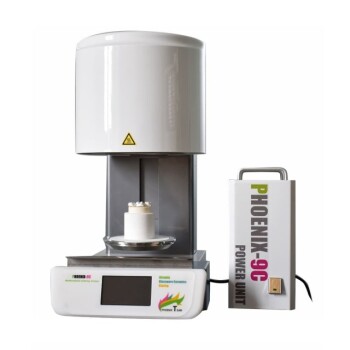
- Dental Porcelain Zirconia Sintering Ceramic Furnace Chairside with Transformer
People Also Ask
- What are the primary functions of using a ball mill for BZCY72 powder? Achieve High Purity and Enhanced Sintering
- In what way does a laboratory ball mill affect material properties when modifying PHBV/pulp fiber composites?
- Why is a laboratory ball mill required for ultra-fine fly ash? Unlock Nano-Scale Adsorption Power
- What is the function of a laboratory ball mill in the preparation of AMMCs? Optimize Dispersion & Grain Refinement
- What is the function of a laboratory ball mill in the pretreatment of waste tire char (WTC)? Optimize Material Reactivity