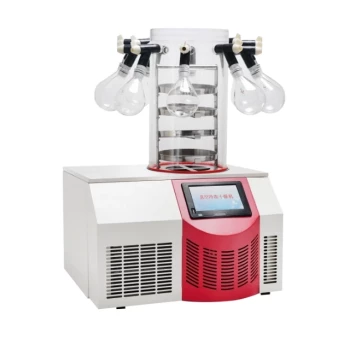
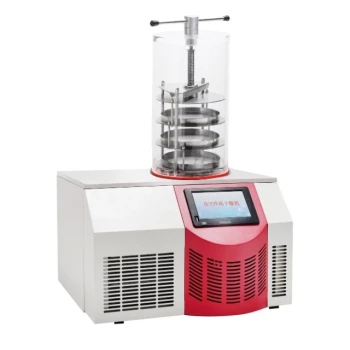
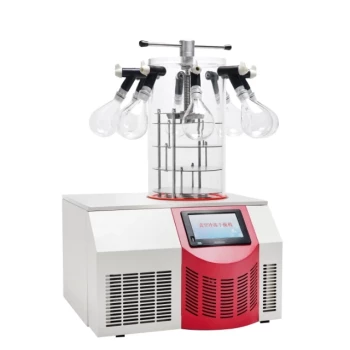
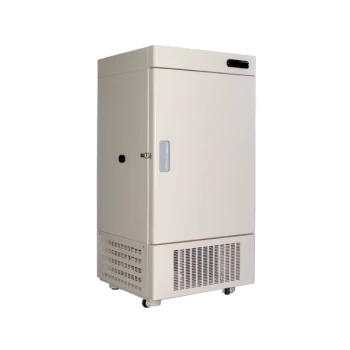
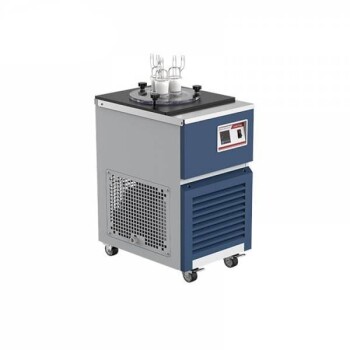
The primary reason for selecting a freeze dryer for nickel nanoparticle precursors is to prevent structural collapse during the solvent removal process. By utilizing sublimation under a high vacuum, the system bypasses the liquid phase entirely. This eliminates the strong surface tension and capillary forces associated with traditional heat drying, which are the primary causes of irreversible particle clumping.
The core value of freeze drying lies in its ability to translate the perfect dispersion of nanoparticles in a liquid state directly into a dry powder, maintaining a high specific surface area without forming hard agglomerates.
The Physics of Particle Preservation
Eliminating Capillary Forces
In traditional drying methods, such as oven heating, the solvent evaporates from a liquid state. As the liquid recedes, it exerts significant surface tension and capillary forces on the nanoparticles.
These forces pull the particles tightly together. This results in hard agglomeration and often causes the collapse of the particle lattice structure, rendering the material difficult to process further.
The Sublimation Pathway
A freeze dryer operates by freezing the precursor first, locking the particles in place within a solid matrix. Under a vacuum, the frozen solvent converts directly from ice to vapor (sublimation).
Because the solvent never transitions back into a liquid, the damaging surface tension forces never occur. The physical structure of the precursor is preserved exactly as it existed in the frozen state.
Impact on Material Performance
High Specific Surface Area
The removal of solvent without lattice collapse results in a powder with a loose, porous structure.
For applications like catalyst preparation, this is critical. The resulting powder maintains an extremely high specific surface area, which directly correlates to higher chemical reactivity and performance.
Superior Re-dispersibility
Powders dried via heat often form hard, cement-like clumps that are nearly impossible to break down without damaging the particles.
In contrast, freeze-dried nickel precursors form soft agglomerates. These loose structures are easily broken apart, allowing for excellent re-dispersibility in liquids and superior sintering activity in later processing stages.
Understanding the Trade-offs: Heat vs. Vacuum
The Risk of Heat Drying
While potentially faster or simpler for bulk materials, heat drying introduces a high risk for sensitive precursors.
The primary pitfall is the alteration of the material's physical state. If the lattice collapses due to surface tension, the original particle size and beneficial properties are effectively lost, leading to poor performance in high-tech applications.
The Necessity of Freeze Drying
Freeze drying is not merely an alternative; it is often a necessity for "qualified precursors."
Just as with sensitive biologicals or advanced materials like graphene and yttrium oxide, nickel nanoparticles require this method to maintain their integrity. The trade-off is the requirement for specialized vacuum equipment to ensure the material remains active and chemically viable.
Making the Right Choice for Your Goal
To determine if this drying method is required for your specific application, consider your performance targets:
- If your primary focus is High-Performance Catalysis: You must use freeze drying to ensure high specific surface area and prevent the formation of hard agglomerates that reduce reactivity.
- If your primary focus is Sintering Activity: You should prioritize freeze drying to maintain a loose, porous structure that facilitates better densification and structural integrity in the final solid.
By preserving the liquid-phase dispersion in a dry state, freeze drying unlocks the full potential of nickel nanoparticles.
Summary Table:
| Feature | Traditional Heat Drying | Freeze Drying (Sublimation) |
|---|---|---|
| Phase Transition | Liquid to Vapor | Solid to Vapor (Sublimation) |
| Structural Impact | Capillary forces cause lattice collapse | Structural integrity preserved |
| Particle State | Forms hard, cement-like clumps | Creates loose, porous soft agglomerates |
| Surface Area | Low due to particle shrinking | Exceptionally high specific surface area |
| Re-dispersibility | Poor; difficult to break down | Excellent; easy to re-disperse |
| Best For | Bulk, non-sensitive materials | High-performance catalysts & nanomaterials |
Elevate Your Nanomaterial Precision with KINTEK
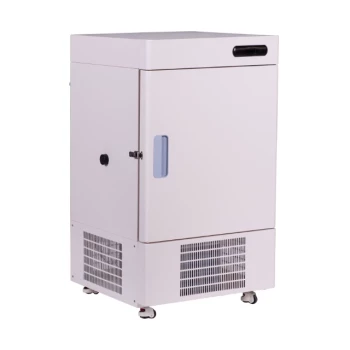
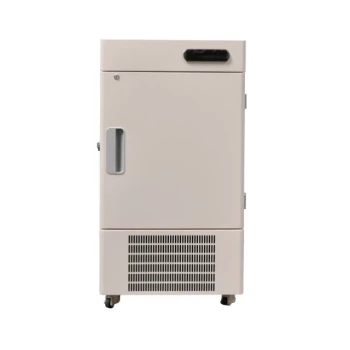
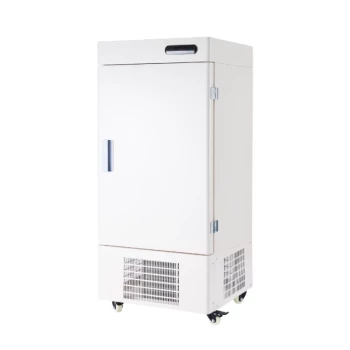
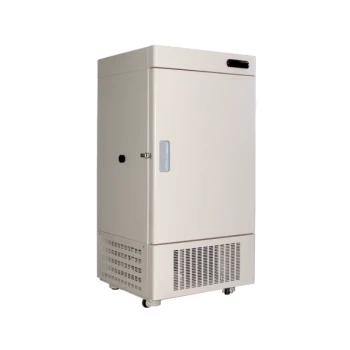
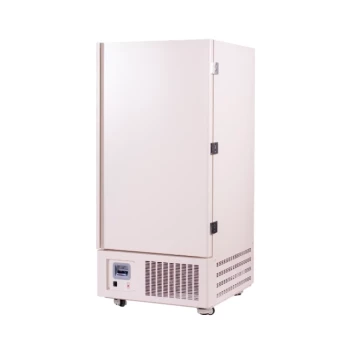
Don't let traditional drying methods compromise your research. At KINTEK, we understand that maintaining the delicate lattice structure of nickel precursors is vital for catalyst performance and sintering activity. Our advanced cooling solutions, including high-performance freeze dryers and ULT freezers, are engineered to eliminate capillary forces and preserve your material's high specific surface area.
Whether you are working with sensitive nanoparticles, advanced ceramics, or battery research, KINTEK offers a comprehensive range of laboratory equipment—from high-temperature vacuum furnaces and rotary systems to isostatic hydraulic presses and electrolytic cells—to support your entire workflow.
Ready to achieve superior powder quality? Contact our experts today to find the perfect freeze-drying solution for your lab!
References
- Nuru-Deen Jaji, Muhammad Bisyrul Hafi Othman. Advanced nickel nanoparticles technology: From synthesis to applications. DOI: 10.1515/ntrev-2020-0109
This article is also based on technical information from Kintek Solution Knowledge Base .
Related Products
- High Performance Laboratory Freeze Dryer
- High Performance Laboratory Freeze Dryer for Research and Development
- Benchtop Laboratory Freeze Dryer for Lab Use
- Benchtop Laboratory Vacuum Freeze Dryer
- 108L Vertical Ultra Low Temperature ULT Freezer
People Also Ask
- What role does a laboratory freeze dryer play in the synthesis of graphene-based electrocatalysts? Preserve 3D Structures
- What are the technical advantages of using a laboratory freeze dryer for porous carbon precursors? Preserve 3D Networks
- What types of liquid samples can be processed using a laboratory freeze dryer? Preserve Your Sensitive Materials
- How do laboratory freeze dryers support scientific research? Preserve Sample Integrity for Reproducible Results
- Why is a laboratory freeze dryer preferred over traditional heating? Preserve Biochar Structure & Maximize Porosity