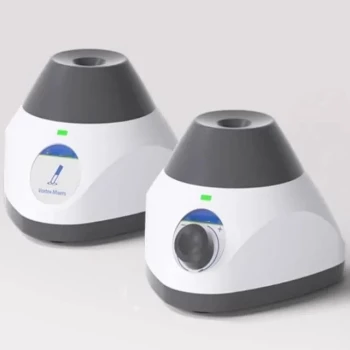
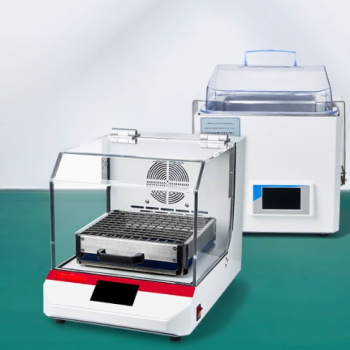
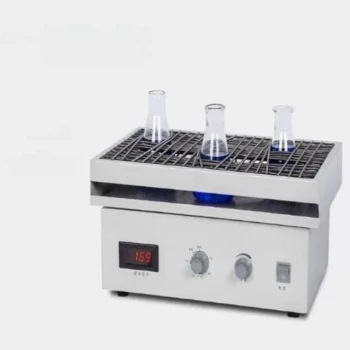
A high-precision thermostatic shaker is the critical component for ensuring the chemical homogeneity and performance reliability of functionalized water hyacinth biochar composites. During synthesis, it provides the precise thermal environment and continuous mechanical energy required to uniformly distribute aluminum-zinc cations across the porous biochar structure. This prevents localized concentration gradients and ensures that the active components are evenly integrated, resulting in a material with consistent and repeatable adsorption properties.
The shaker facilitates a controlled kinetic environment that eliminates liquid film diffusion resistance and ensures uniform solute diffusion. By maintaining a stable temperature and constant agitation, it allows for the creation of composites with high-fidelity surface functionalization and accurate thermodynamic profiles.
Enhancing the Co-precipitation Process
The synthesis of water hyacinth biochar composites relies heavily on the co-precipitation of aluminum and zinc cations onto the biochar surface.
Achieving Uniform Active Component Distribution
Continuous mechanical power from the shaker ensures that biochar particles and the aluminum-zinc precursor solution remain in constant, full contact. This prevents the clumping of precursors and promotes an even distribution of active components across the complex pore structure of the biochar.
Maintaining Precise Thermal Equilibrium
Specific temperatures, such as 25 °C, are often required to control the rate of chemical precipitation and particle growth. A high-precision shaker maintains this environment within tight tolerances, ensuring that the chemical reaction kinetics remain consistent throughout the entire synthesis batch.
Overcoming Physical Barriers to Synthesis
Without active agitation, the interaction between the solid biochar and the liquid precursor solution is hindered by physical boundary layers.
Eliminating Liquid Film Diffusion Resistance
A stagnant liquid layer, known as a boundary film, can form around biochar particles and slow down the movement of ions. The shaker’s rotational or reciprocating motion creates turbulence that breaks down this film resistance, allowing ions to reach the biochar surface more efficiently.
Ensuring Solute Diffusion and Gradient Removal
Localized concentration gradients occur when ions are consumed near the biochar surface faster than they can be replaced by passive diffusion. The shaker provides uniform solute diffusion, ensuring that every biochar particle is exposed to the same concentration of functionalizing agents regardless of its position in the vessel.
Supporting Accurate Data Modeling
For researchers, the controlled environment of a thermostatic shaker is essential for fitting adsorption kinetic models. Because the agitation is stable and the temperature is constant, the resulting equilibrium data is highly repeatable and reflects the true thermodynamic properties of the material.
Understanding the Trade-offs
While high-precision shakers are essential, they introduce specific variables that must be managed to avoid compromising the material.
Agitation Intensity vs. Particle Integrity
Excessive shaking speeds can lead to mechanical degradation of the fragile water hyacinth biochar structure. If the biochar particles are pulverized by high shear forces, the surface area increases unpredictably, which can skew the results of the functionalization process.
Heat Transfer and Energy Consumption
Maintaining precise temperature control in a large volume of solution requires significant energy and stable ambient conditions. If the shaker is overloaded or the thermal sensors are not calibrated, the actual temperature of the solution may deviate from the setpoint, leading to non-uniform precipitation.
How to Apply This to Your Project
To achieve the best results when synthesizing functionalized biochar, your choice of equipment settings should align with your specific research or production goals.
- If your primary focus is consistent material performance: Prioritize a shaker with high RPM stability to ensure that active components are distributed identically across every batch of biochar.
- If your primary focus is thermodynamic modeling: Invest in a unit with high-precision temperature sensors (±0.1°C) to ensure that kinetic data accurately reflects the environmental variables you are testing.
- If your primary focus is structural integrity: Use the minimum agitation speed required to eliminate liquid film resistance, preventing the mechanical breakdown of the biochar’s internal pore structure.
By precisely controlling the kinetic and thermal environment, you transform a simple mixing process into a rigorous chemical synthesis that yields high-performance functional materials.
Summary Table:
| Feature | Role in Synthesis | Impact on Material |
|---|---|---|
| Thermal Equilibrium | Regulates reaction kinetics | Stable precipitation and accurate thermodynamic data |
| Mechanical Agitation | Distributes Al-Zn precursors | Uniform active component loading across porous structures |
| Diffusion Management | Eliminates liquid film resistance | Removes concentration gradients for efficient ion transport |
| Precision Stability | Balances shear and integrity | Prevents mechanical breakdown of fragile biochar pores |
Elevate Your Materials Synthesis with KINTEK Precision
Achieving superior functionalized biochar requires more than basic mixing—it demands the absolute control provided by professional-grade laboratory equipment. KINTEK specializes in providing high-precision tools designed to ensure chemical homogeneity and repeatable results in your most demanding research projects.
Our comprehensive portfolio includes:
- Shakers & Homogenizers: For precise kinetic control and uniform solute diffusion.
- High-Temperature Furnaces: Muffle, tube, and vacuum systems for advanced carbonization.
- Crushing & Milling Systems: To prepare biochar precursors with exact particle sizes.
- High-Pressure Reactors & Autoclaves: For complex chemical functionalization.
- Cooling Solutions: ULT freezers and freeze dryers for sample preservation.
Ready to optimize your laboratory workflow and achieve consistent material performance? Contact KINTEK today to consult with our experts on the ideal equipment solutions for your synthesis needs.
References
- Pengyang Bian, Qinqin Shao. Performance and Mechanism of Functionalized Water Hyacinth Biochar for Adsorption and Removal of Benzotriazole and Lead in Water. DOI: 10.3390/ijms24108936
This article is also based on technical information from Kintek Solution Knowledge Base .
Related Products
- Laboratory Vortex Mixer Orbital Shaker Multifunctional Rotation Oscillation Mixer
- Automatic High Temperature Heated Hydraulic Press Machine with Heated Plates for Lab
- Shaking Incubators for Diverse Laboratory Applications
- Manual High Temperature Heated Hydraulic Press Machine with Heated Plates for Lab
- Laboratory Oscillating Orbital Shaker
People Also Ask
- What is the role of a laboratory orbital shaker in copper recovery? Optimize Industrial Waste Liquid Processing
- What is the role of a laboratory orbital shaker in activated carbon synthesis? Maximize Pore Depth & Surface Area
- What is a laboratory mixer used for? Choose the Right Tool for Liquids or Solids
- What is a laboratory mixer? A Guide to Achieving Perfect Sample Homogeneity
- What are laboratory mixers used for? Achieve Perfect Sample Homogeneity and Reliable Results