The necessity of a stainless steel Teflon-lined autoclave for HKUST-1 synthesis is defined by the requirement for a pressurized, chemically inert environment. This equipment allows solvents to reach temperatures well above their atmospheric boiling points while remaining in a liquid state. This condition generates autogenous pressure, which is the primary driving force for the coordination and self-assembly of metal ions and ligands into high-quality crystals.
The autoclave functions as a high-pressure reaction chamber that forces precursors into solution and provides the energy required for metal-organic framework (MOF) crystallization. It balances the mechanical strength needed to contain internal pressure with the chemical inertness required to ensure product purity.
Managing Thermodynamics and Pressure
Surpassing Atmospheric Boiling Points
The sealed nature of the autoclave allows the reaction mixture to reach a subcritical state. In this state, solvents remain liquid at temperatures that would normally cause them to vaporize. This elevated temperature significantly increases the solubility and diffusion rates of the precursors, ensuring they are fully available for the reaction.
Driving Molecular Self-Assembly
High internal pressure reduces the activation energy required for the formation of chemical bonds between copper ions and organic ligands. This pressure facilitates the transition from an amorphous gel or solution into a highly ordered crystalline MFI structure. Without this pressurized environment, the self-assembly process would be inefficient, leading to poor yields or impure phases.
Ensuring Chemical Purity and Structural Integrity
The Role of the Teflon (PTFE) Liner
The Polytetrafluoroethylene (PTFE) liner provides exceptional chemical inertness. It prevents aggressive solvents or precursors from reacting with the outer metal shell, which would otherwise cause corrosion. More importantly, it acts as a barrier that prevents metal ions from the stainless steel from leaching into the reaction, ensuring the high purity of the HKUST-1 crystals.
Structural Support from the Stainless Steel Sleeve
While Teflon is chemically resistant, it lacks the mechanical strength to withstand high internal pressures. The stainless steel outer shell provides the necessary physical reinforcement to contain the autogenous pressure safely. This dual-layer design ensures the vessel can withstand temperatures typically ranging from 100°C to 200°C without deforming or rupturing.
Common Pitfalls and Trade-offs
Temperature Limits and Material "Creep"
Teflon has a functional limit, typically around 250°C, beyond which it begins to soften or "creep." Exceeding these thermal limits can cause the liner to deform, leading to a loss of the hermetic seal and a subsequent drop in pressure. This failure directly halts the crystallization process and can damage the stainless steel shell through exposure to chemicals.
Volume and Expansion Risks
A common mistake is overfilling the autoclave liner, which leaves no room for the thermal expansion of the liquid. It is generally recommended to fill the vessel to only 60-80% of its capacity. Overfilling can lead to extreme pressure spikes that exceed the safety ratings of the stainless steel sleeve, posing a significant safety hazard.
How to Apply This to Your Synthesis
Selecting and using the right autoclave depends on your specific yield and quality requirements.
- If your primary focus is crystal purity: Ensure the Teflon liner is pristine and free of scratches, as surface defects can harbor contaminants from previous reactions.
- If your primary focus is structural regularity: Monitor and control the cooling rate after the reaction, as rapid cooling can cause thermal stress and irregular crystal morphology.
- If your primary focus is safety and longevity: Never exceed the manufacturer's maximum temperature rating and always inspect the seal gaskets before every run.
The combination of high-pressure containment and chemical isolation is the only way to reliably produce the highly crystalline and porous structure of HKUST-1.
Summary Table:
| Component | Primary Function | Benefit for HKUST-1 Synthesis |
|---|---|---|
| Teflon (PTFE) Liner | Chemical Inertness | Prevents metal leaching and ensures high product purity. |
| Stainless Steel Shell | Mechanical Support | Safely contains high autogenous pressure at 100°C–200°C. |
| Autogenous Pressure | Solvent Superheating | Drives molecular self-assembly and crystal growth. |
| Hermetic Seal | Pressure Containment | Maintains a subcritical state to increase precursor solubility. |
Optimize Your MOF Synthesis with KINTEK
Achieving the perfect crystalline structure for HKUST-1 requires equipment that balances extreme pressure with absolute chemical purity. KINTEK specializes in high-performance laboratory solutions, offering a premium range of high-temperature high-pressure reactors and autoclaves designed specifically for demanding solvothermal synthesis.
Whether you need precision-engineered PTFE-lined vessels, high-durability crucibles, or advanced crushing and milling systems for post-synthesis processing, KINTEK provides the reliability your research demands.
Ready to upgrade your laboratory’s capabilities? Contact our experts today to find the ideal autoclave for your specific application and ensure consistent, high-quality results every time.
References
- Xiaoze Yin, Aimin Li. Novel Fenton-like Catalyst HKUST-1(Cu)/MoS2-3-C with Non-Equilibrium-State Surface for Selective Degradation of Phenolic Contaminants: Synergistic Effects of σ-Cu-Ligand and ≡Mo–OOSO3− Complex. DOI: 10.3390/w16010121
This article is also based on technical information from Kintek Solution Knowledge Base .
Related Products
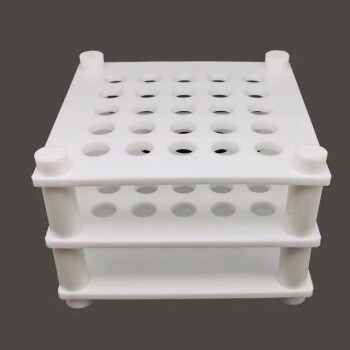
- Custom PTFE Teflon Parts Manufacturer for Centrifuge Tube Racks
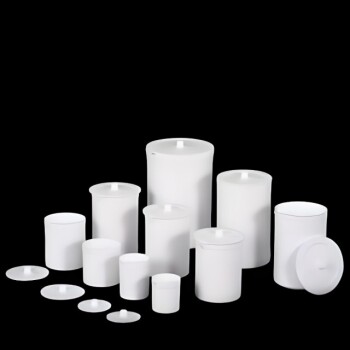
- Custom PTFE Teflon Parts Manufacturer PTFE Beaker and Lids
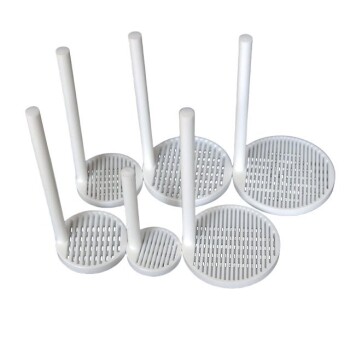
- Custom PTFE Teflon Parts Manufacturer for Cleaning Racks
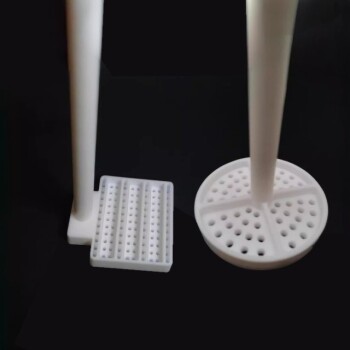
- Custom PTFE Teflon Parts Manufacturer Corrosion Resistant Cleaning Rack Flower Basket
- Custom Machined and Molded PTFE Teflon Parts Manufacturer for Laboratory ITO FTO Conductive Glass Cleaning Flower Basket
People Also Ask
- Why is slender PTFE tubing necessary for flow control in multi-channel catalyst aging? Ensure Equal Gas Distribution
- Why are PTFE containers required for PCT leaching tests? Ensure Chemical Inertness and Analytical Precision
- Why are PTFE containers necessary for selective HF etching of MAX phases? Ensure Safe & Pure MXene Synthesis
- What role do PTFE containers play in trace metal detection? Ensure Analytical Precision in Photocatalysis Studies
- Why is a PTFE container required for acid leaching of silicon nanosheets? Ensure High Purity and Safety