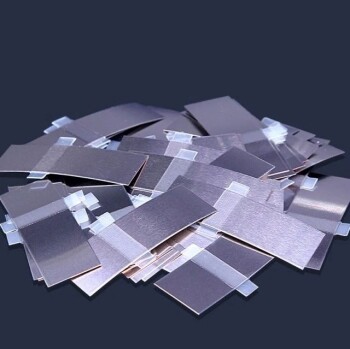
Glass fiber paper is the primary choice for aqueous zinc-ion battery (AZIB) research due to its exceptional electrolyte wettability and high porosity. These properties allow the separator to function as a robust electrolyte reservoir, facilitating the rapid and uniform transport of multivalent Zn2+ ions. This results in a significant reduction in internal resistance and a marked improvement in cycling stability compared to traditional polymer separators.
The central advantage of glass fiber paper lies in its ability to maintain a continuous, low-resistance pathway for zinc ions by absorbing and retaining large volumes of aqueous electrolyte. Its chemical stability and mechanical structure further protect the battery from short circuits and dendrite-induced failure during extended cycling.
Superior Electrolyte Management
High Wettability and Liquid Absorption
Glass fiber paper is naturally hydrophilic, allowing it to be instantly and thoroughly wetted by aqueous electrolytes like ZnSO4. This ensures that the entire volume of the separator contributes to ion transport, preventing "dry spots" that can lead to uneven current distribution.
The Reservoir Effect
Because of its loose, porous structure, glass fiber can hold significantly more liquid electrolyte than traditional polyolefin separators used in lithium-ion batteries. This reservoir effect ensures a consistent supply of Zn2+ ions at the electrode interface, even during high-rate discharge cycles.
Facilitating Rapid Ion Shuttling
The high porosity of glass fiber membranes minimizes the tortuosity of the ion path. This allows multivalent zinc ions to move rapidly and uniformly between the anode and cathode, which is essential for achieving high power density.
Enhancing Electrochemical Stability
Minimizing Internal Resistance
By facilitating high-speed ion transmission, glass fiber paper effectively reduces the internal ohmic resistance of the battery cell. This efficiency is critical in experimental settings to ensure that the measured performance reflects the active materials rather than limitations of the separator.
Regulating Zinc Deposition
The uniform distribution of electrolyte within the glass fiber matrix helps regulate Zn2+ diffusion paths. When ion flux is uniform, the likelihood of localized "hot spots" for zinc accumulation is reduced, which helps promote a more planar deposition of zinc.
Inhibiting Dendrite Growth
The mechanical strength and structural integrity of glass fiber provide a robust physical barrier. This barrier helps inhibit the penetration of zinc dendrites, which are needle-like structures that can grow from the anode and cause internal short circuits.
Understanding the Trade-offs
Impact on Energy Density
While glass fiber is excellent for experimental stability, it is significantly thicker than commercial polymer separators. This added thickness increases the overall volume of the cell, which reduces the volumetric energy density—a critical factor for commercial scaling.
Mechanical Fragility
Glass fiber paper is relatively brittle when dry and can be prone to tearing during high-speed manufacturing processes. Researchers must handle it carefully during manual coin cell or pouch cell assembly to avoid structural compromises.
Electrolyte Consumption
Because the separator is highly porous, it requires a higher volume of electrolyte to function optimally. In commercial applications where minimizing electrolyte weight is a priority, this high absorption capacity can be viewed as a disadvantage.
How to Apply This to Your Project
When selecting or preparing a separator for your zinc-ion research, consider your primary experimental goals to determine if glass fiber is the optimal choice.
- If your primary focus is high-rate performance: Glass fiber is the ideal choice because its low tortuosity and high porosity support rapid ion migration during fast charging.
- If your primary focus is long-term cycling stability: Utilize glass fiber to ensure a consistent electrolyte supply and provide a physical barrier against dendrite penetration.
- If your primary focus is high active material loading: The high absorption capacity of glass fiber ensures that even thick electrode layers (e.g., 12.5 mg cm⁻²) receive sufficient ion flux.
- If your primary focus is commercial prototype development: Consider testing thinner cellulose-based or modified polymer separators that offer better volumetric efficiency than standard glass fiber filter paper.
By leveraging the high wettability and chemical stability of glass fiber paper, you can ensure that your experimental results accurately reflect the potential of your electrode materials.
Summary Table:
| Feature | Benefit for AZIBs | Impact on Battery Performance |
|---|---|---|
| High Wettability | Rapid & thorough electrolyte absorption | Prevents dry spots and ensures uniform current |
| High Porosity | Functions as an electrolyte reservoir | Maintains stable ion flux during high-rate discharge |
| Low Tortuosity | Minimal resistance to ion migration | Reduces internal ohmic resistance for higher power |
| Mechanical Barrier | Physical inhibition of Zn dendrites | Prevents internal short circuits and extends cycle life |
Elevate Your AZIB Research with KINTEK Precision
Achieving breakthrough results in aqueous zinc-ion battery (AZIB) research requires more than just high-quality separators—it demands precision at every step of the assembly process. KINTEK specializes in providing researchers with the essential tools needed to ensure accuracy and repeatability in the lab.
Our extensive portfolio features:
- Battery Research Tools & Consumables: High-quality separators, CR2032 coin cell parts, and specialized electrodes.
- Material Preparation: Advanced crushing and milling systems, and hydraulic pellet presses for consistent electrode fabrication.
- Thermal Processing: A wide range of high-temperature furnaces (muffle, vacuum, CVD) for active material synthesis.
- Testing & Storage: ULT freezers and cooling solutions for electrolyte stability.
Whether you are focusing on minimizing internal resistance or inhibiting dendrite growth, KINTEK provides the reliability your project deserves.
Contact KINTEK today to optimize your battery assembly and material research!
References
- Enze Hu, Zhiming Liu. Recent Progresses on Vanadium Sulfide Cathodes for Aqueous Zinc-Ion Batteries. DOI: 10.3390/en16020917
This article is also based on technical information from Kintek Solution Knowledge Base .
Related Products
- Hydrophilic Carbon Paper TGPH060 for Battery Lab Applications
- Polyethylene Separator for Lithium Battery
- Proton Exchange Membrane for Batteries Lab Applications
- High Purity Zinc Foil for Battery Lab Applications
- Conductive Carbon Cloth Carbon Paper Carbon Felt for Electrodes and Batteries
People Also Ask
- What role does hydrophilic carbon fiber paper play as an electrode material? Enhancing Flow Cell Efficiency
- Why is carbon paper placed between the powder and the graphite mold? Protect Your LTPO Electrolytes & Tooling
- How can the lifespan of carbon paper be extended? Reinforce Edges with Epoxy for Maximum Durability
- Why is carbon paper commonly selected as a current collector for manganese dioxide cathodes? Unlock Battery Efficiency
- What are the material properties of carbon paper? Unlocking High Conductivity & Porosity for Your Lab