Multi-channel battery test systems provide the precise, automated environment required to evaluate the impact of GO-CoNiP (Graphene Oxide-Cobalt Nickel Phosphorus) modified separators on battery longevity. These systems execute continuous galvanostatic charge-discharge (GCD) cycles over hundreds or thousands of hours to quantify how effectively the modified separator suppresses the polysulfide shuttle effect and prevents lithium dendrite growth. By recording capacity retention and voltage polarization in real-time, they offer the empirical proof needed to validate structural stability and electrochemical performance.
Core Takeaway: Multi-channel testers serve as the primary tool for quantifying the long-term efficacy of GO-CoNiP separators by automating high-precision data collection across thousands of cycles. This allows researchers to verify improvements in cycle life, Coulombic efficiency, and voltage stability under varied current densities.
Quantifying Longevity and Stability
High-Precision Galvanostatic Control
The system maintains a constant current environment for stability testing, which is essential for evaluating material modifications. It allows for testing at specific rates, such as 0.5C, 1C, and 2C, to see how the GO-CoNiP layer handles different kinetic demands.
Long-Term Cycle Life Tracking
These systems are designed for endurance, often running for thousands of cycles without interruption. They provide the core data used to calculate the capacity decay rate, a critical metric for determining if a modified separator is commercially viable.
Evaluating Capacity Retention
By tracking the discharge capacity over time, the tester identifies exactly when and how the battery begins to fail. This helps researchers determine if the GO-CoNiP coating provides a consistent barrier against active material loss throughout the battery's life.
Validating the GO-CoNiP Mechanism
Monitoring the Polysulfide Shuttle Effect
A primary role of GO-CoNiP is to suppress the "shuttle effect" in high-performance batteries. The test system calculates Coulombic efficiency for every cycle, where a high and stable percentage indicates the modification is successfully trapping polysulfides.
Identifying Dendrite Suppression and Voltage Polarization
The equipment records real-time voltage-time curves to monitor for sudden drops or fluctuations that signal dendrite penetration. It also tracks overpotential variations, showing whether the GO-CoNiP layer reduces internal resistance or if it adds unwanted polarization over time.
Analysis of Discharge Platform Variations
The system monitors the stability of the voltage platforms during discharge. For GO-CoNiP separators, maintaining a flat and consistent voltage platform is a key indicator that the electrochemical reaction remains efficient despite repeated cycling.
Efficiency through Automation and Scale
Simultaneous Multi-Sample Evaluation
Multi-channel systems allow for the simultaneous testing of multiple coin cells or solid-state batteries. This is vital for comparing standard separators against GO-CoNiP modified versions under identical environmental conditions to eliminate experimental variables.
High-Frequency Data Logging
The hardware ensures consistent sampling frequencies, capturing minute changes in voltage and current that might be missed by less sophisticated equipment. This level of detail is necessary to identify the exact onset of structural degradation or catalyst poisoning.
Automated Data Processing
The systems automatically generate voltage and capacity curves, reducing the risk of human error in long-term studies. This automation allows researchers to focus on interpreting the relationship between the GO-CoNiP synthesis parameters and the resulting electrochemical performance.
Understanding the Trade-offs and Pitfalls
Environmental Sensitivity
While the test system is highly precise, it cannot compensate for external temperature fluctuations unless housed in a climate-controlled chamber. Variations in ambient temperature can lead to "noise" in the data, making it difficult to isolate the separator's performance.
Data Overload and Resolution
Testing dozens of channels simultaneously at high sampling rates can generate massive datasets that require significant storage and processing power. Researchers must balance the need for high-resolution data with the practicalities of data management and analysis.
Limitation of Electrochemical Data
It is important to remember that these systems provide macroscopic performance data, not microscopic visual proof. While the data may suggest dendrite suppression, physical characterization (like SEM or TEM) is still required to confirm the physical state of the GO-CoNiP layer after cycling.
How to Apply These Systems to Your Research
Successful assessment of modified separators requires a strategic approach to using multi-channel hardware.
- If your primary focus is verifying shuttle effect suppression: Prioritize long-term cycling at moderate rates (e.g., 0.5C) and monitor for fluctuations in Coulombic efficiency across the first 500 cycles.
- If your primary focus is high-power performance: Execute rate capability tests (ranging from 0.1C to 5C) to determine if the GO-CoNiP coating hinders ion transport at high current densities.
- If your primary focus is dendrite resistance: Utilize high-precision voltage monitoring to detect "micro-shorts" or increasing overpotential that indicates the separator is failing to protect the anode.
By leveraging the automated, high-precision capabilities of multi-channel testers, researchers can transform raw electrochemical behavior into a definitive proof of a modified separator's value.
Summary Table:
| Feature | Research Benefit for GO-CoNiP Separators |
|---|---|
| GCD Cycling | Automates thousands of cycles to quantify capacity decay rates. |
| Coulombic Efficiency | Monitors the effectiveness of polysulfide shuttle suppression. |
| Voltage Tracking | Detects real-time fluctuations to signal dendrite growth or polarization. |
| Multi-channel Scale | Enables simultaneous comparison of modified vs. standard separators. |
Maximize Your Battery Research Precision with KINTEK
Ensure the long-term stability of your material innovations with KINTEK’s advanced laboratory solutions. Our high-precision multi-channel battery test systems are designed to validate the efficacy of components like GO-CoNiP modified separators, providing the high-frequency data logging and automated analysis required for breakthrough results.
Beyond battery testing, KINTEK supports your entire R&D workflow with:
- Material Synthesis: High-temperature furnaces (muffle, vacuum, CVD) and high-pressure reactors.
- Sample Preparation: Hydraulic pellet presses, crushing and milling systems, and specialized ceramics.
- Electrochemical Tools: High-quality electrolytic cells, electrodes, and essential consumables like PTFE products.
Ready to transform your electrochemical data into definitive proof? Contact KINTEK today to find the perfect equipment for your lab!
References
- Jiaqi Li, Xiaodong Guo. GO‐CoNiP New Composite Material Modified Separator for Long Cycle Lithium–Sulfur Batteries. DOI: 10.1002/smll.202307912
This article is also based on technical information from Kintek Solution Knowledge Base .
Related Products
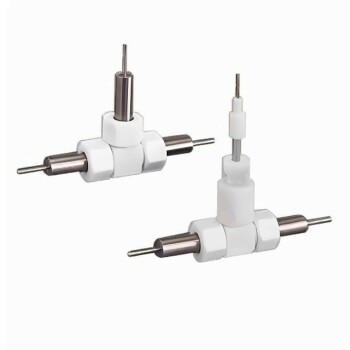
- Customizable Swagelok Type Test Cells for Advanced Battery Research Electrochemical Analysis
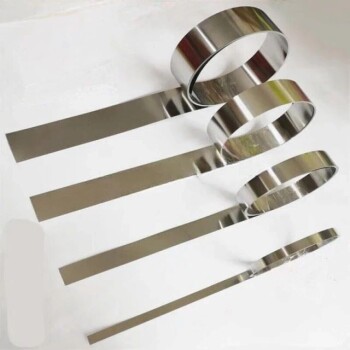
- Battery Lab Equipment 304 Stainless Steel Strip Foil 20um Thick for Battery Test
- Platinum Sheet Electrode for Battery Lab Applications
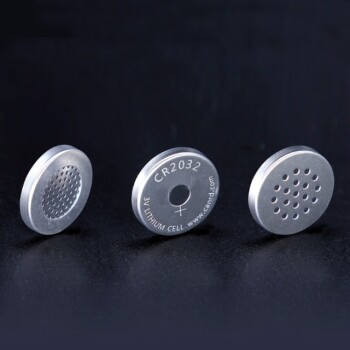
- Laboratory Hydraulic Press Lab Pellet Press for Button Battery
- Li-Air Battery Case for Battery Lab Applications
People Also Ask
- How does a standardized electrochemical test cell assist in MOx/CNTf electrode screening? Optimize Material Ratios
- Why is a dedicated electrochemical test cell necessary for carbon steel? Ensure Precise Geothermal Corrosion Data
- What is the difference between a voltaic cell and an electrochemical cell? Understand the Two Types of Energy Conversion
- How do the electrochemical cell and three-electrode testing system collaborate? Optimize Zinc Anode Deposition Control
- Why must the electrochemical cell be continuously purged with nitrogen? Ensure Precision in Ni-Cr Corrosion Tests