Standard laboratory sieves with a 0.075 mm limit are essential for ensuring sample homogeneity and reaction precision in coal slag research. By reducing raw materials to this specific fineness, researchers exponentially increase the specific surface area, which directly improves thermal efficiency and the rate of component diffusion during the melting process. This meticulous preparation ensures that experimental results reflect the slag's intrinsic chemical behavior rather than physical inconsistencies.
Core Takeaway: Utilizing a 0.075 mm sieve threshold eliminates particle-related diffusion resistance, enabling the rapid formation of a uniform liquid phase and significantly increasing the accuracy of viscosity simulations and DSC thermal analysis.
Optimizing Kinetic and Thermal Efficiency
Maximizing Specific Surface Area
Reducing coal slag to a particle size below 0.075 mm drastically increases the surface-to-volume ratio. This allows heat to penetrate the material more evenly and rapidly, ensuring that the entire sample reaches the target temperature simultaneously.
Improving Component Diffusion Rates
In the melting process, the chemical components must interact and diffuse to form a stable melt. Fine particles shorten the distance ions must travel, which facilitates a faster and more complete chemical interaction during high-temperature experiments.
Eliminating Diffusion Resistance
Drawing from gasification principles, uniform fineness helps eliminate both internal and external diffusion resistance. This ensures that the data gathered—whether kinetic or rheological—is a true reflection of the material's properties rather than a byproduct of physical mass transfer limitations.
Enhancing Data Fidelity in Slag Experiments
Sensitivity in DSC Heat Flow Detection
Differential Scanning Calorimetry (DSC) relies on detecting minute changes in heat flow during crystallization. Fine particles provide a more consistent thermal contact with the sensor, which significantly enhances the signal sensitivity and clarity of the resulting thermograms.
Facilitating Rapid Liquid Phase Formation
For viscosity measurements to be valid, the slag must transition into a completely uniform liquid phase. A 0.075 mm limit ensures the sample melts quickly and homogeneously, preventing localized variations in chemistry that could skew viscosity readings.
Accuracy in Viscosity Simulations
Mathematical models used to simulate slag flow depend on high-quality empirical data. By using standardized fine powders, researchers can produce repeatable results that align closely with theoretical simulations, reducing the margin of error in industrial applications.
Understanding the Trade-offs
Risk of Sample Contamination
Extensive grinding required to pass a 0.075 mm sieve can introduce contaminants from the grinding media (such as alumina or tungsten carbide). These impurities can subtly alter the chemical composition of the slag and affect its melting point or viscosity.
Managing Moisture and Agglomeration
Fine powders are highly hygroscopic and tend to clump or "bridge" due to static electricity or moisture. If the sample is not stored in a desiccator, these agglomerates can behave like larger particles, effectively undoing the benefits of the sieving process.
Sample Loss and Material Bias
During the sieving process, finer fractions may be lost as dust, or harder minerals may resist grinding. This can lead to a "preferential sampling" effect where the chemical composition of the sieved powder differs slightly from the original bulk coal slag.
How to Apply This to Your Research
To achieve the best results in your viscosity and crystallization studies, align your preparation method with your specific experimental goals.
- If your primary focus is crystallization kinetics: Prioritize the 0.075 mm sieve to maximize DSC sensitivity and capture subtle phase transition signals.
- If your primary focus is high-temperature viscosity modeling: Ensure the powder is thoroughly homogenized after sieving to guarantee the liquid phase is uniform before measurement begins.
- If your primary focus is gasification reactivity: Use a 0.074 mm or 0.075 mm aperture to eliminate mass transfer resistance, ensuring your kinetic data reflects intrinsic reaction characteristics.
Precise particle size control is the foundational step in transforming raw slag into a reliable medium for advanced thermal analysis.
Summary Table:
| Benefit Category | Impact on Experiment | Key Advantage |
|---|---|---|
| Kinetic Efficiency | Maximized Surface Area | Faster heat penetration and component diffusion |
| Data Fidelity | Enhanced DSC Sensitivity | Clearer heat flow detection for phase transitions |
| Viscosity Accuracy | Rapid Liquid Phase Formation | Ensures a homogeneous melt for reliable modeling |
| Reaction Precision | Zero Diffusion Resistance | Results reflect intrinsic chemical properties |
| Homogeneity | Uniform Particle Distribution | Eliminates physical inconsistencies in samples |
Elevate Your Coal Slag Research with KINTEK Precision
Achieving a perfect 0.075 mm sample is just the first step toward experimental excellence. At KINTEK, we specialize in providing the high-performance tools necessary for rigorous thermal analysis and material characterization.
Whether you are conducting viscosity simulations or DSC crystallization studies, our comprehensive portfolio supports your entire workflow:
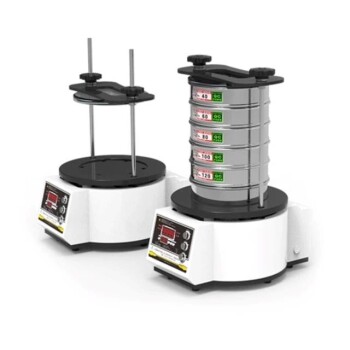
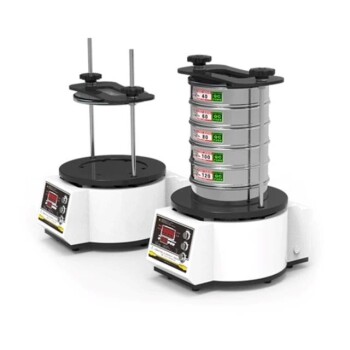
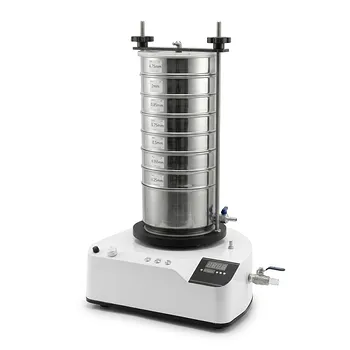
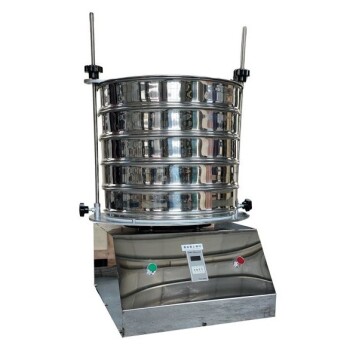
- Preparation: High-precision sieving equipment, crushing and milling systems to achieve uniform fineness.
- Thermal Analysis: A wide range of high-temperature furnaces (muffle, tube, vacuum) and crucibles for stable melt environments.
- Advanced Research: High-temperature high-pressure reactors, viscosity measurement support, and essential ceramic consumables.
Don't let sample inconsistencies compromise your data. Contact KINTEK today to discover how our laboratory solutions can enhance your research accuracy and efficiency!
References
- Jing Guo, Jingchong Yan. Solid Precipitation Behaviors in Coal Slag from Different Primary Phases and Their Effects on Slag Viscosity from Thermochemistry and Experimental. DOI: 10.3390/pr11051522
This article is also based on technical information from Kintek Solution Knowledge Base .
Related Products
- Laboratory Vibratory Sieve Shaker Machine Slap Vibrating Sieve
- Vibratory Sieve Shaker Machine Dry Three-Dimensional Vibrating Sieve
- Laboratory Wet Three-Dimensional Vibratory Sieve Shaker Machine
- Laboratory Vibratory Sieve Shaker Machine for Dry and Wet Three-Dimensional Sieving
- Laboratory Test Sieves and Sieving Machines
People Also Ask
- How does a laboratory vibratory sieve shaker facilitate the microstructural study of gas-atomized alloy powders?
- What role does a laboratory vibrating sieve shaker play in the LiFePO4 powder processing workflow? Ensure Batch Quality
- What are laboratory sieves used for? Measure Particle Size for Quality Control & R&D
- What are the uses of sieve in laboratory? Essential Guide to Particle Size Analysis
- What are the sieve used in laboratory? A Guide to Choosing the Right Sieve for Accurate Particle Analysis