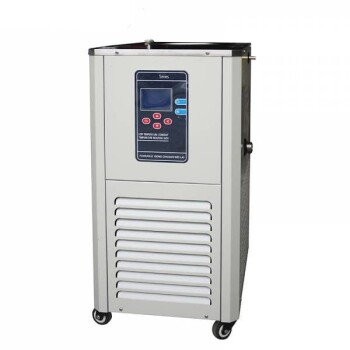
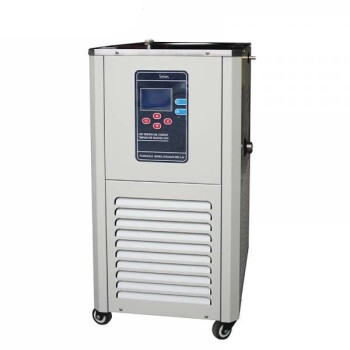
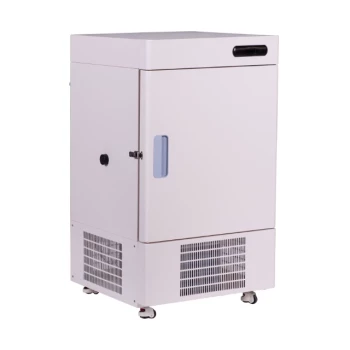
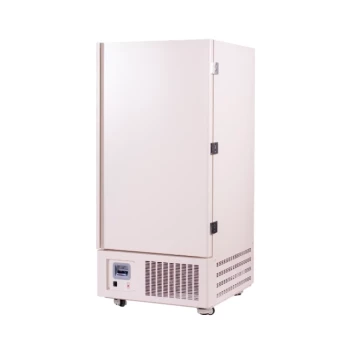
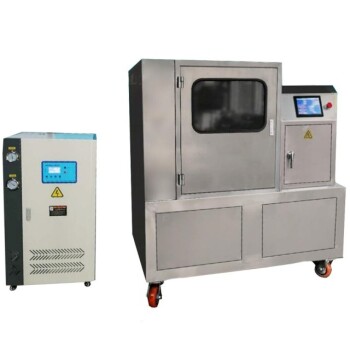
Constant temperature cooling systems isolate photochemical activity from thermal interference, ensuring that hydrogen evolution data is a direct result of light-matter interaction. By neutralizing the intense infrared thermal radiation emitted by high-power light sources like Xenon lamps, these systems maintain a stable environment that prevents heat-driven side reactions from corrupting the experimental results.
A constant temperature cooling system is essential for decoupling photochemical kinetics from thermal catalytic effects. It ensures that the measured data reflects the true efficiency of the catalyst under light, rather than unintended reactions triggered by rising temperatures.
Eliminating Thermal Interference from Light Sources
The Impact of Infrared Radiation
High-power light sources, such as 300W or 400W Xenon lamps, generate substantial heat alongside visible light. This infrared radiation can rapidly increase the temperature of the reaction solution if left unregulated.
Distinguishing Photochemical vs. Thermal Effects
Without precise cooling, it becomes impossible to determine if hydrogen production is caused by photon absorption or simple thermal catalysis. A cooling system maintains a baseline temperature (often as low as 8 °C) to ensure the energy driving the reaction is purely radiant.
Preventing Environmental Fluctuations
External ambient temperatures can fluctuate throughout a long-duration experiment. Constant temperature units provide a controlled buffer, eliminating environmental variables that would otherwise compromise the reproducibility of the data.
Preserving Catalyst Integrity and Kinetic Accuracy
Suppressing Unwanted Side Reactions
High temperatures can trigger competing side reactions that consume reactants or produce alternative byproducts. By keeping the system cool, researchers can slow these processes down, ensuring the data accurately reflects the primary photochemical pathway.
Maintaining Catalyst Performance
Many catalysts are sensitive to temperature shifts which can cause performance fluctuations or structural changes. Stable cooling ensures the catalyst remains in a consistent state, allowing for an accurate analysis of its long-term stability and kinetics.
Protecting the Experimental Apparatus
Excessive heat from high-intensity lamps can damage the reaction chamber or sensitive sensors. A circulating cooling system, often utilizing a condenser and cold water tank, acts as a safeguard for the entire technical setup.
Understanding the Trade-offs
Precision vs. System Complexity
Implementing a high-performance chiller or circulating system adds complexity to the experimental design and requires regular maintenance. However, the trade-off is a significant reduction in data noise and a higher degree of scientific confidence.
Temperature Selection and Over-Cooling
Setting the temperature too low can occasionally inhibit the natural movement of molecules, potentially slowing the reaction unnaturally. It is critical to select a stable set-point (such as 25 °C or 30 °C) that balances thermal suppression with optimal molecular diffusion.
How to Apply This to Your Research
Effective thermal management is the difference between speculative observations and rigorous, publishable data. Your choice of cooling strategy should align with the intensity of your light source and the duration of your tests.
- If your primary focus is isolating photochemical kinetics: Use a high-precision chiller to maintain a low, constant temperature (e.g., 8-10 °C) to completely neutralize infrared heat.
- If your primary focus is long-term catalyst stability: Utilize a circulating cooling water system with a condenser to protect the catalyst from thermal degradation over multi-hour experiments.
- If your primary focus is thermodynamic parameter analysis: Ensure the cooling system is integrated with a digital controller to maintain temperature precision within ±0.1 °C for accurate isotherm mapping.
Precise thermal control transforms a standard light-driven experiment into a rigorous environment where only the true potential of the catalyst is measured.
Summary Table:
| Feature | Function in Photocatalysis | Impact on Data Accuracy |
|---|---|---|
| Thermal Isolation | Neutralizes IR radiation from Xenon lamps | Prevents heat-driven side reactions from corrupting data |
| Kinetic Decoupling | Separates photochemical from thermal effects | Ensures measured efficiency is purely light-driven |
| Climate Stability | Buffers against ambient room fluctuations | Improves experimental reproducibility and consistency |
| Catalyst Protection | Prevents thermal degradation of materials | Maintains catalyst integrity for long-term stability tests |
| Apparatus Safety | Cools reaction chambers and sensors | Protects sensitive equipment from high-intensity lamp heat |
Maximize Your Research Precision with KINTEK
Precise thermal management is the backbone of reliable photocatalytic data. KINTEK specializes in high-performance laboratory equipment designed to meet the rigorous demands of material science and energy research. Whether you need advanced cooling solutions (ULT freezers, cold traps, and chillers) to isolate reaction kinetics or high-temperature high-pressure reactors and autoclaves for complex synthesis, our comprehensive portfolio has you covered.
From photochemical catalysts to battery research tools and precision hydraulic presses, KINTEK provides the reliability and technical support your lab deserves. Don't let thermal noise compromise your results.
Contact KINTEK Today to Optimize Your Lab Setup!
References
- Shaosen Shi, Yuangang Li. Photocatalytic hydrogen evolution and simultaneously converting high-concentration of thiols into disulfides with excellent yield under visible-light. DOI: 10.1039/d2ta08783a
This article is also based on technical information from Kintek Solution Knowledge Base .
Related Products
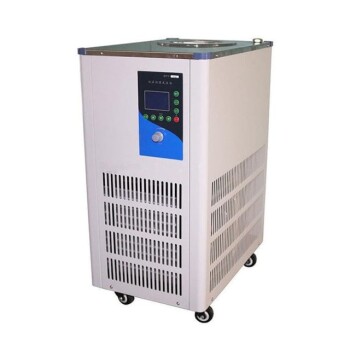
- 100L Chilling Circulator Cooling Water Circulator for Low Temperature Constant Temperature Reaction Bath Water Bath Cooling
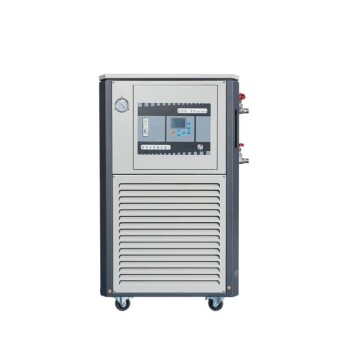
- 5L Heating Chilling Circulator Cooling Water Bath Circulator for High and Low Temperature Constant Temperature Reaction
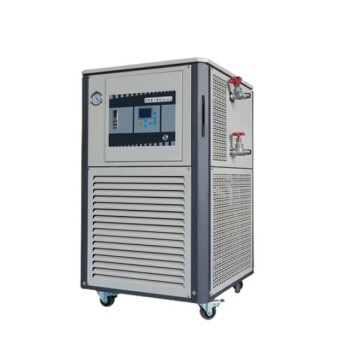
- 50L Heating Chilling Circulator Cooling Water Bath Circulator for High and Low Temperature Constant Temperature Reaction
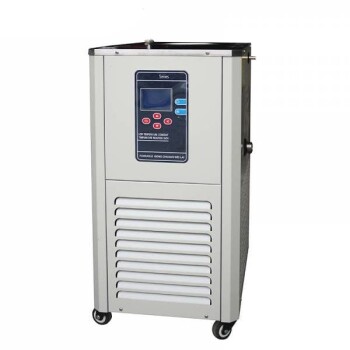
- 30L Chiller Water Bath Cooling Circulator Low Temperature Constant Temperature Reaction Bath
- 10L Heating Chilling Circulator Cooling Water Bath Circulator for High and Low Temperature Constant Temperature Reaction
People Also Ask
- What function does a circulating cooling chiller perform during the gas adsorption isotherm testing of nanoporous carbon?
- Why is a circulating water chiller required for Prussian Blue nanoparticles? Ensure Stability & Batch Reproducibility
- What is the purpose of a cooling circulation water bath system in electrochemical experiments? Enhance Lab Precision
- How does a constant temperature circulator support the leaching reaction of gold scrap? Optimize Gold Recovery Results
- How do constant temperature circulators impact weight-loss immersion tests? Ensure Precision in Corrosion Analysis