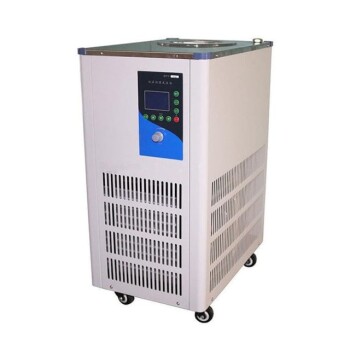
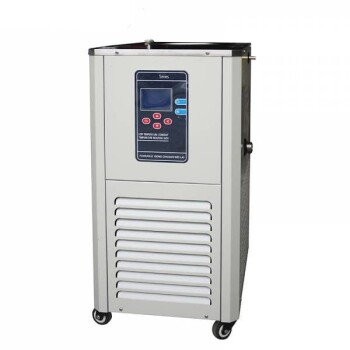
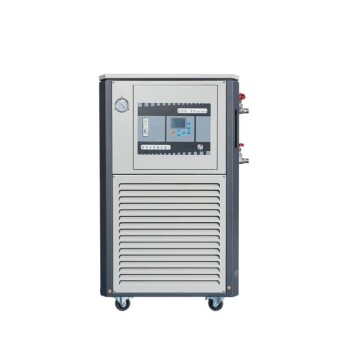
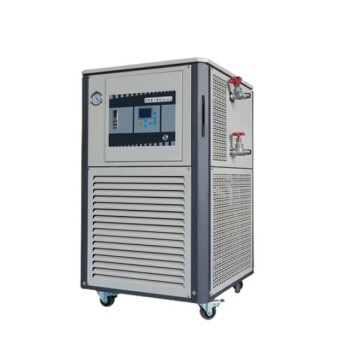
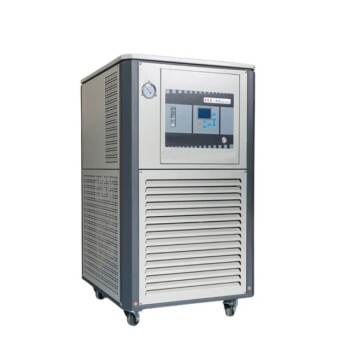
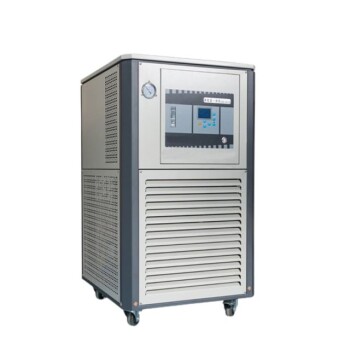
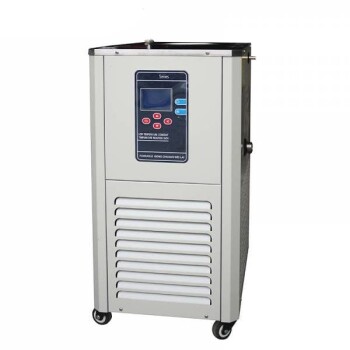
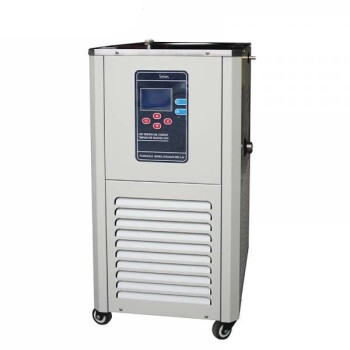
Precise thermal regulation is the defining variable in the accuracy of stainless steel weight-loss immersion tests. Because the corrosion rate of stainless steel—particularly in organic acids—relates exponentially to temperature, constant temperature circulators are essential for preventing skewed data. These devices maintain the strict uniformity required to validate results over long-term simulations.
The exponential relationship between heat and corrosion means that even minor temperature fluctuations can render weight-loss data useless. Constant temperature circulators provide the active fluid motion necessary to eliminate thermal gradients, ensuring the scientific validity and reproducibility of tests lasting 30 days or more.
The Critical Link Between Heat and Accuracy
The Exponential Corrosion Factor
The corrosion rate of stainless steel is not linearly related to temperature. It follows an exponential relationship, specifically when interacting with organic acids.
This means a slight increase in temperature does not result in a slight increase in corrosion; it causes a disproportionately large spike in weight loss. Without tight control, you cannot accurately measure the material's resistance.
The Necessity of Long-Term Stability
Immersion tests often simulate industrial storage conditions, requiring durations of 30 days or longer.
Over such extended periods, ambient environmental changes can impact the test fluid. A constant temperature circulator acts as a safeguard, locking in the thermal environment to ensure the data collected on day 30 is consistent with the conditions on day 1.
Why Circulation Mechanisms Matter
Eliminating Thermal Gradients
A static water bath can develop "hot spots" near the heating element and "cold spots" near the vessel walls.
In a weight-loss test, these gradients would cause different parts of the sample—or different samples in the same bath—to corrode at different rates. Continuous fluid circulation creates a uniform temperature field, ensuring every square millimeter of the stainless steel is exposed to identical thermal conditions.
Ensuring Data Reproducibility
Scientific validity hinges on the ability to reproduce results.
If the thermal environment varies due to lack of circulation, the data becomes anecdotal rather than scientific. Circulators standardize the environment, allowing you to confidently attribute weight loss to the chemical interaction rather than thermal anomalies.
Common Pitfalls to Avoid
Underestimating the Impact of Stagnation
A common error in experimental design is assuming a static heater is sufficient for immersion testing.
Without active circulation, you introduce uncontrolled variables. The lack of movement prevents the homogenization of the fluid temperature, leading to erratic corrosion rates that do not reflect reality.
Neglecting the Duration Factor
Short-term stability is easy to achieve, but maintaining it for a month requires robust equipment.
Relying on equipment not rated for continuous, long-term circulation introduces the risk of mechanical failure or thermal drift mid-experiment. This invalidates the entire 30-day dataset, wasting significant time and resources.
Ensuring Validity in Your Experimental Design
To guarantee the accuracy of your stainless steel corrosion testing, match your equipment choice to your specific data requirements.
- If your primary focus is scientific validity: Prioritize devices with active circulation to eliminate thermal gradients and ensure the exponential corrosion rate is measured accurately.
- If your primary focus is industrial simulation: Ensure your equipment is rated for continuous operation to maintain stability over the full 30-day testing cycle.
By controlling the thermal variables with precision, you transform your corrosion data from a rough estimate into a definitive standard.
Summary Table:
| Feature | Static Water Bath | Constant Temperature Circulator | Impact on Test Accuracy |
|---|---|---|---|
| Temperature Uniformity | Poor (Hot/Cold Spots) | High (Active Homogenization) | Eliminates localized corrosion rate variances |
| Thermal Regulation | Passive/Reactive | Active/Continuous | Vital for exponential corrosion-to-heat ratios |
| Long-term Stability | Prone to Drift | Stable for 30+ Days | Ensures consistency in long-duration simulations |
| Data Reliability | Anecdotal/Inconsistent | Scientific/Reproducible | High validity for industrial & academic standards |
Elevate Your Corrosion Testing with KINTEK Precision
Don't let thermal fluctuations compromise 30 days of critical research. KINTEK specializes in high-performance laboratory solutions designed for the most demanding immersion tests. From our advanced cooling solutions and constant temperature circulators to specialized electrolytic cells and high-pressure reactors, we provide the stability your stainless steel analysis requires.
Our comprehensive portfolio also includes high-temperature furnaces, crushing systems, and essential consumables like PTFE and ceramics to support every stage of your material science workflow. Achieve scientific certainty with KINTEK—Contact our experts today to find the perfect thermal regulation system for your lab!
References
- Aqeel Abbas, Rami K. Suleiman. Influence of Organic Acids and Related Organic Compounds on Corrosion Behavior of Stainless Steel—A Critical Review. DOI: 10.3390/met13081479
This article is also based on technical information from Kintek Solution Knowledge Base .
Related Products
- High Temperature Constant Temperature Heating Circulator Water Bath Chiller Circulator for Reaction Bath
- 100L Chilling Circulator Cooling Water Circulator for Low Temperature Constant Temperature Reaction Bath Water Bath Cooling
- 50L Chiller Water Bath Cooling Circulator Low Temperature Constant Temperature Reaction Bath
- 40L Chiller Water Bath Cooling Circulator Low Temperature Constant Temperature Reaction Bath
- 5L Chilling Circulator Cooling Water Bath Circulator for Low Temperature Constant Temperature Reaction Bath
People Also Ask
- What is the necessity of a circulating water bath in chlorate production? Optimize Yield & Purity with Precision
- How does a constant temperature circulator support the leaching reaction of gold scrap? Optimize Gold Recovery Results
- Why is a constant temperature water bath used for precursor storage in CVD? Achieve Stable Nanocrystalline SiC Deposition
- Why is a high-precision constant temperature water bath necessary for anaerobic digestion? Ensure Success at 37±0.02°C
- Why are constant temperature water baths critical in thiourea leaching? Master Gold Recovery with Precision Heat