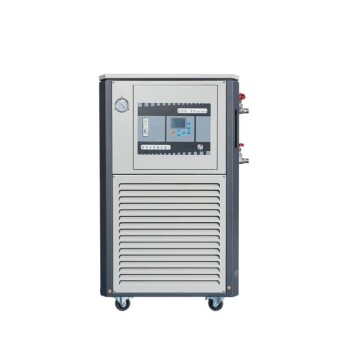
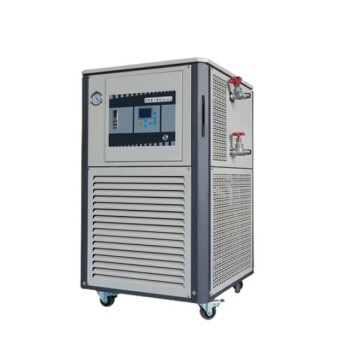
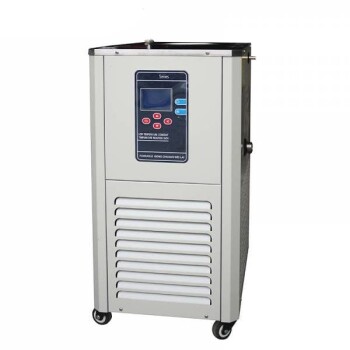
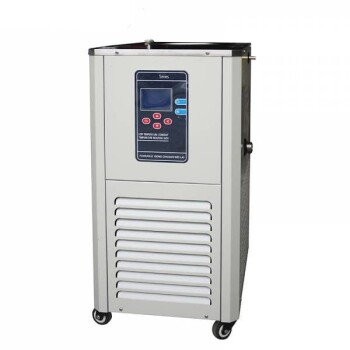
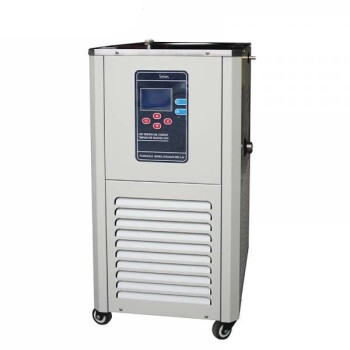
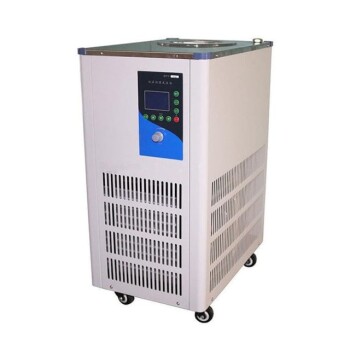
A high-precision constant temperature circulating water bath serves as the critical stabilizer in AEM electrolyzer research. It functions by actively heating and rigorously regulating the temperature of the circulating electrolyte to maintain a steady thermal environment. This precise control allows researchers to isolate temperature as a variable, ensuring that experimental results reflect the material's true performance rather than environmental fluctuations.
Because Anion Exchange Membranes (AEMs) are highly sensitive to thermal changes, precise temperature control is non-negotiable for reliable data. A high-precision bath eliminates environmental variables, allowing researchers to accurately measure how heat affects ionic conductivity, reaction kinetics, and ohmic impedance.
The Critical Link Between Temperature and AEM Performance
Ensuring Material Stability
The stability of an Anion Exchange Membrane is directly tied to its thermal environment.
A high-precision bath maintains a constant temperature, preventing fluctuations that could compromise the structural integrity of the membrane.
By eliminating thermal spikes or drops, researchers can test the membrane's durability without the interference of accidental thermal stress.
Controlling Ionic Conductivity
Ionic conductivity in AEMs is highly sensitive to temperature variations.
Even minor deviations in heat can significantly alter how effectively ions move through the membrane.
The circulating water bath ensures the electrolyte temperature remains exact, guaranteeing that conductivity measurements are accurate and reproducible.
Enabling Accurate Electrochemical Analysis
Isolating Reaction Kinetics
To understand how an electrolyzer performs, researchers must analyze electrochemical reaction kinetics.
These reaction rates change drastically with temperature; a precise bath allows scientists to lock in specific temperatures to observe these changes.
This isolation is the only way to determine if performance gains are due to the catalyst's intrinsic properties or simply a change in thermal energy.
Measuring Ohmic Impedance
Ohmic impedance, or the resistance within the cell, is another variable that fluctuates with heat.
Accurate evaluation requires a stable thermal baseline to distinguish between material resistance and temperature-induced resistance changes.
High-precision control removes the "noise" of temperature drift, providing clear data on the system's impedance.
Common Pitfalls in Thermal Management
The Risk of Environmental Interference
A common error in electrolyzer research is underestimating the impact of ambient room temperature.
Without a high-precision bath, external environmental changes can skew data regarding reaction kinetics and stability.
Reliable research requires the total elimination of this interference, which only active thermal circulation can provide.
The Challenge of Circulation Uniformity
While the bath heats the fluid, the system relies on the circulating electrolyte to distribute that heat.
If the circulation is not consistent, thermal gradients can occur between the bath and the electrolyzer cell.
Researchers must ensure the bath's pump capacity matches the system's needs to maintain the high precision required for AEM study.
Making the Right Choice for Your Research Goals
To maximize the value of your data, align your thermal control strategy with your specific research objectives:
- If your primary focus is Material Characterization: Prioritize precision to accurately map the relationship between temperature and ionic conductivity.
- If your primary focus is System Efficiency: Use the bath to isolate ohmic impedance and kinetic data to optimize operating conditions.
Eliminating thermal variables is the first step toward validating the true potential of your AEM technology.
Summary Table:
| Research Factor | Role of Constant Temperature Bath | Key Impact on Results |
|---|---|---|
| Material Stability | Prevents thermal spikes and structural degradation | Ensures membrane durability |
| Ionic Conductivity | Maintains exact electrolyte temperature | Guarantees accurate conductivity data |
| Reaction Kinetics | Isolates temperature as a controlled variable | Validates catalyst performance |
| Ohmic Impedance | Eliminates thermal drift and resistance noise | Provides clear baseline impedance |
Elevate Your Hydrogen Research with KINTEK Precision
Precise thermal management is the foundation of breakthrough AEM electrolyzer performance. At KINTEK, we specialize in providing high-performance laboratory equipment designed to meet the rigorous demands of green energy research.
Our comprehensive portfolio includes:
- Advanced Temperature Control: High-precision circulating water baths, ULT freezers, and cold traps.
- Electrolysis Solutions: Specialized electrolytic cells, electrodes, and AEM-compatible testing tools.
- Material Processing: High-temperature muffle and vacuum furnaces, hydraulic presses, and crushing systems.
Don't let environmental variables compromise your data. Partner with KINTEK to secure the reliability and reproducibility your research deserves. Contact our technical team today to find the perfect solution for your lab.
References
- Adeline Loh, Yanyu Liang. Design and Scale-Up of Zero-Gap AEM Water Electrolysers for Hydrogen Production. DOI: 10.3390/hydrogen4020018
This article is also based on technical information from Kintek Solution Knowledge Base .
Related Products
- High Temperature Constant Temperature Heating Circulator Water Bath Chiller Circulator for Reaction Bath
- 20L Heating Chilling Circulator Cooling Water Bath Circulator for High and Low Temperature Constant Temperature Reaction
- 5L Heating Chilling Circulator Cooling Water Bath Circulator for High and Low Temperature Constant Temperature Reaction
- 10L Heating Chilling Circulator Cooling Water Bath Circulator for High and Low Temperature Constant Temperature Reaction
- 30L Heating Chilling Circulator Cooling Water Bath Circulator for High and Low Temperature Constant Temperature Reaction
People Also Ask
- What is the necessity of a circulating water bath in chlorate production? Optimize Yield & Purity with Precision
- How do constant temperature circulators impact weight-loss immersion tests? Ensure Precision in Corrosion Analysis
- How does a constant temperature circulator support the leaching reaction of gold scrap? Optimize Gold Recovery Results
- Why is a constant temperature water bath used for precursor storage in CVD? Achieve Stable Nanocrystalline SiC Deposition
- Why is a high-precision constant temperature water bath necessary for anaerobic digestion? Ensure Success at 37±0.02°C