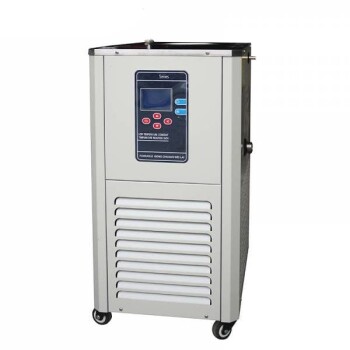
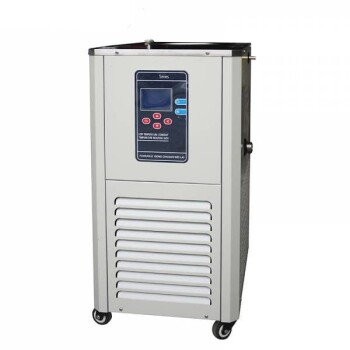
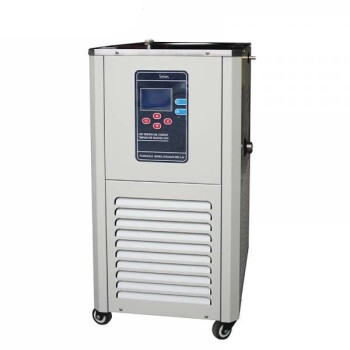
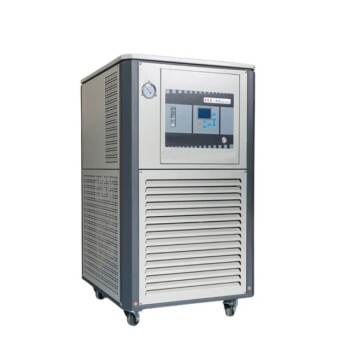
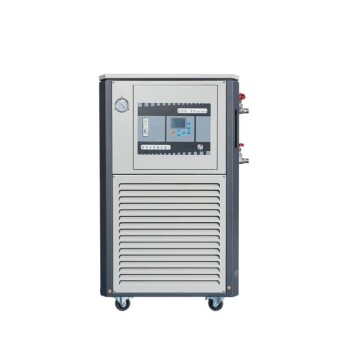
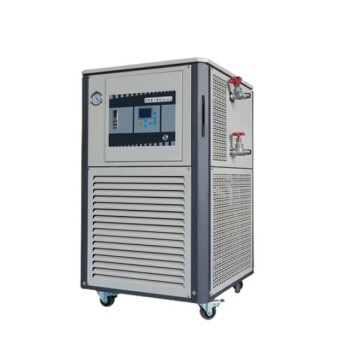
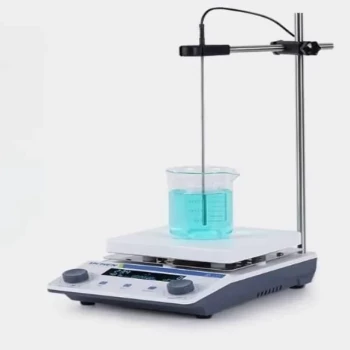
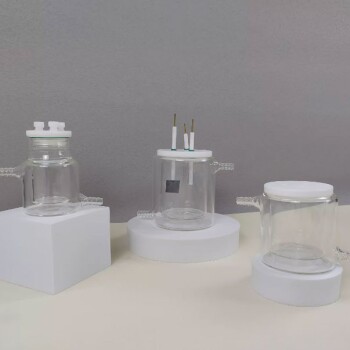
The primary function of a constant temperature water bath is to create a highly precise, stable thermal environment for the reaction between Carbon Dioxide (CO2) and Triethanolamine (TEA). Because the rate of chemical absorption is extremely sensitive to heat, this equipment eliminates environmental fluctuations. This stability is the only way to ensure that the data collected—specifically regarding absorption kinetics and thermodynamics—is accurate and reproducible.
Temperature variability is the single largest source of error in absorption kinetics; it alters both the speed of reaction and the total capacity of the solvent. A constant temperature water bath neutralizes this variable, allowing for precise simulation of industrial thermodynamic performance.
The Critical Role of Thermal Stability
Eliminating Experimental Noise
In CO2 absorption research, data integrity relies on isolation. If the temperature fluctuates even slightly during an experiment, it becomes impossible to determine if a change in absorption rate is due to the solvent's chemistry or the environmental shift.
Ensuring Repeatability
The water bath guarantees that an experiment run on Monday yields the same results as one run on Friday. High-precision maintenance of the temperature allows researchers to validate their findings through repeated trials without data drift.
Isolating Kinetic Variables
CO2 absorption into amine solutions like TEA is driven by complex reaction kinetics. By locking the temperature at a fixed point (e.g., 40°C), researchers can accurately calculate specific metrics like enhancement factors and absorption loads without interference.
Simulating Real-World Application
Modeling Industrial Thermodynamics
Laboratory research is rarely the end goal; the data is usually intended to scale up to industrial carbon capture plants. Industrial absorption columns operate under strict thermodynamic conditions.
Replicating Specific Operating Conditions
The water bath allows researchers to "dial in" specific temperatures that mimic the varying conditions found in an industrial absorber. This makes the laboratory data predictive, allowing engineers to estimate how TEA will perform in a full-scale commercial environment.
Understanding Common Pitfalls
The Lag in Heat Transfer
While a water bath maintains the external temperature, the reaction between CO2 and TEA can be exothermic (generating its own heat). Researchers must account for the time lag between heat generation inside the vessel and the water bath's ability to dissipate it.
Circulation and Uniformity
A set temperature does not guarantee a uniform temperature. Poor water circulation can lead to thermal gradients within the bath, creating "hot" or "cold" spots that compromise the precision of the reactor vessel.
Ensuring Validity in Your Research
To maximize the value of your experimental setup, align your temperature control strategy with your specific research goals:
- If your primary focus is fundamental kinetics: Prioritize stability to ensure enhancement factor calculations are not skewed by thermal noise.
- If your primary focus is industrial scale-up: Use the bath to test a range of distinct temperatures to map the thermodynamic performance of TEA across potential operating conditions.
Precision in temperature control is not merely a procedural step; it is the baseline requirement for generating credible, scalable data in carbon capture technology.
Summary Table:
| Feature | Role in CO2/TEA Kinetics Research | Impact on Data Quality |
|---|---|---|
| Thermal Stability | Neutralizes environmental temperature fluctuations | Eliminates experimental noise and data drift |
| Kinetic Isolation | Maintains a fixed point (e.g., 40°C) | Enables accurate calculation of enhancement factors |
| Industrial Simulation | Replicates commercial absorber conditions | Ensures laboratory data is predictive for scale-up |
| Repeatability | Provides identical conditions across multiple trials | Guarantees findings are valid and reproducible |
Elevate Your Carbon Capture Research with KINTEK Precision
Precise thermal control is the backbone of credible kinetic data. At KINTEK, we specialize in high-performance laboratory equipment designed to meet the rigorous demands of CO2 absorption studies. From advanced constant temperature water baths and cooling solutions to specialized high-temperature high-pressure reactors and autoclaves, we provide the tools necessary to simulate industrial environments with absolute accuracy.
Whether you are analyzing TEA kinetics or scaling up carbon capture technologies, KINTEK offers a comprehensive range of PTFE products, ceramics, and high-precision monitoring tools to ensure your results are reproducible and scalable.
Ready to optimize your laboratory setup? Contact our technical experts today to find the perfect equipment solution for your research goals.
References
- Harold W. Orendi, Lidija Šiller. Enhancements of Triethanolamine CO2 Absorption Rate and Degradation in the Presence of Nickel Nanoparticles Catalysts. DOI: 10.3390/atmos15121479
This article is also based on technical information from Kintek Solution Knowledge Base .
Related Products
- High Temperature Constant Temperature Heating Circulator Water Bath Chiller Circulator for Reaction Bath
- 50L Chiller Water Bath Cooling Circulator Low Temperature Constant Temperature Reaction Bath
- 10L Chilling Circulator Cooling Water Bath Low Temperature Constant Temperature Reaction Bath
- 30L Chiller Water Bath Cooling Circulator Low Temperature Constant Temperature Reaction Bath
- 40L Chiller Water Bath Cooling Circulator Low Temperature Constant Temperature Reaction Bath
People Also Ask
- What is the necessity of a circulating water bath in chlorate production? Optimize Yield & Purity with Precision
- How do constant temperature circulators impact weight-loss immersion tests? Ensure Precision in Corrosion Analysis
- How does a constant temperature circulator support the leaching reaction of gold scrap? Optimize Gold Recovery Results
- Why is a constant temperature water bath used for precursor storage in CVD? Achieve Stable Nanocrystalline SiC Deposition
- Why is a high-precision constant temperature water bath necessary for anaerobic digestion? Ensure Success at 37±0.02°C