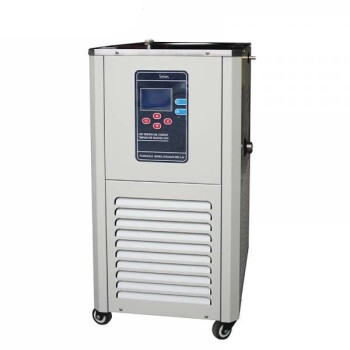
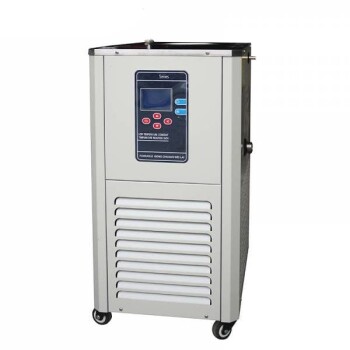
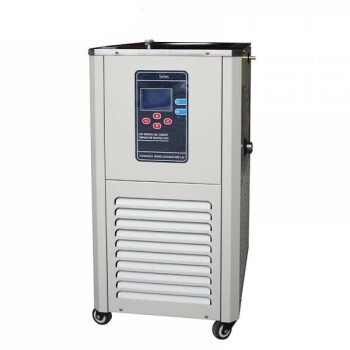
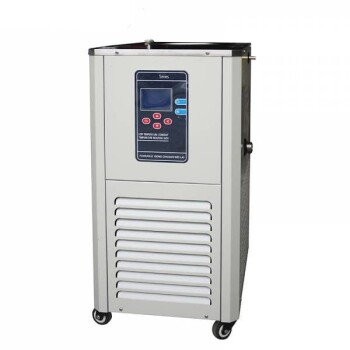
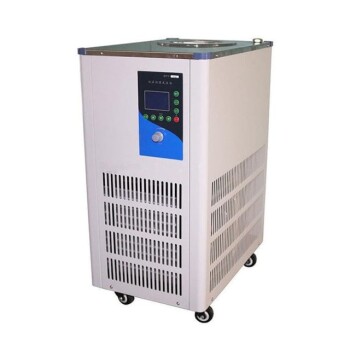
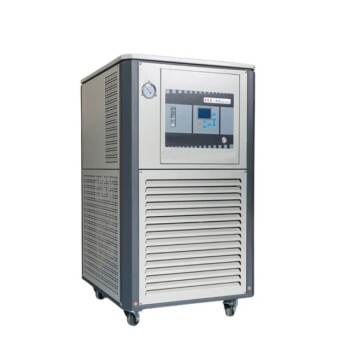
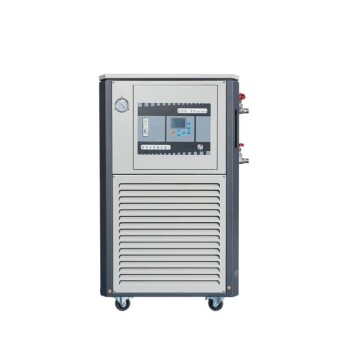
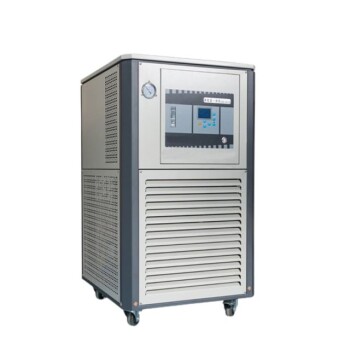
Precise thermal regulation is the defining characteristic of water baths and chillers. These devices serve a dual purpose: they actively heat or cool liquid samples to a desired set point and, crucially, hold them there to prevent fluctuations. By stabilizing the thermal environment, they ensure that sensitive liquids remain at a constant temperature for the duration of a procedure.
The primary value of water baths and chillers is not just changing a sample's temperature, but subsequently maintaining it at a constant, stable level to ensure consistency.
The Dual Functionality of Thermal Control
To understand the utility of these devices, it is necessary to separate their operation into two distinct phases: the adjustment phase and the maintenance phase.
Phase 1: Heating or Cooling
The initial function of these devices is to alter the state of a liquid sample. Depending on the specific equipment, the system works to heat or cool the liquid to reach a specific target parameter.
This capability allows you to bring a sample from ambient room temperature to a precise operational point required for your work.
Phase 2: Maintaining Stability
Once the target temperature is reached, the device shifts its focus to stability. The primary reference highlights that these tools subsequently maintain the samples at a constant temperature.
This eliminates thermal drift, ensuring that the liquid remains in a steady state for as long as necessary.
Understanding the Operational Scope
While these devices are essential for temperature control, it is important to recognize the scope of their application based on their definition.
The Limitation of the Medium
These devices are specifically designed for liquid samples. This implies that the thermal transfer relies on fluid dynamics, which is distinct from air-based incubation or solid-block heating.
Stability vs. Speed
The definition emphasizes a "constant, stable temperature" as the end goal. Achieving high stability often requires a trade-off in the speed of the initial temperature ramp-up or cool-down.
Making the Right Choice for Your Goal
The selection of a water bath or chiller depends entirely on which side of the temperature spectrum your specific liquid sample requires.
- If your primary focus is increasing sample temperature: You require a water bath designed to heat the liquid and hold it at an elevated constant.
- If your primary focus is decreasing sample temperature: You require a chiller designed to cool the liquid and maintain that lower stable environment.
Effective temperature management relies on recognizing that reaching the target is only half the job; holding it constant is where precision lies.
Summary Table:
| Feature | Water Bath | Chiller |
|---|---|---|
| Primary Function | Heating and temperature maintenance | Cooling and temperature maintenance |
| Sample Medium | Liquids | Liquids |
| Phase 1 Action | Increases temperature to set point | Decreases temperature to set point |
| Phase 2 Action | Eliminates thermal drift for stability | Maintains a steady, low-temperature state |
| Key Benefit | Uniform heat distribution | Consistent thermal heat removal |
Optimize Your Thermal Precision with KINTEK
Don't let thermal drift compromise your research. KINTEK provides high-performance laboratory solutions designed for rigorous consistency. Whether you need advanced cooling solutions (ULT freezers, cold traps, freeze dryers) to maintain sub-ambient stability or specialized high-temperature furnaces and reactors for heat-intensive processes, our equipment ensures your liquid samples remain at the exact set point required for success.
From PTFE products and ceramics to sophisticated crushing, milling, and hydraulic press systems, KINTEK is your partner in laboratory excellence.
Ready to elevate your lab's stability and efficiency? Contact our experts today to find the perfect thermal regulation system for your specific application!
Related Products
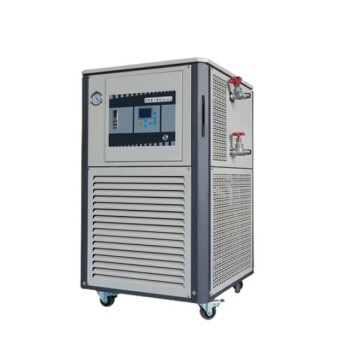
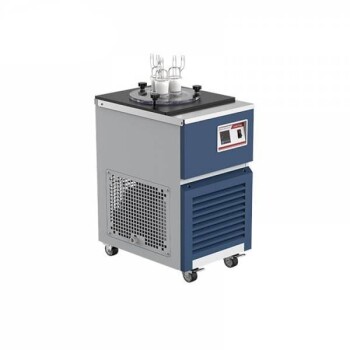
- 50L Chiller Water Bath Cooling Circulator Low Temperature Constant Temperature Reaction Bath
- 40L Chiller Water Bath Cooling Circulator Low Temperature Constant Temperature Reaction Bath
- 20L Chiller Water Bath Cooling Circulator Low Temperature Constant Temperature Reaction Bath
- 30L Chiller Water Bath Cooling Circulator Low Temperature Constant Temperature Reaction Bath
- 10L Chilling Circulator Cooling Water Bath Low Temperature Constant Temperature Reaction Bath
People Also Ask
- For which types of substances are water baths and chillers considered ideal? Essential Care for Sensitive Samples
- What is the necessity of a circulating water bath in chlorate production? Optimize Yield & Purity with Precision
- Why is a circulating water chiller required for Prussian Blue nanoparticles? Ensure Stability & Batch Reproducibility
- What function does a circulating cooling chiller perform during the gas adsorption isotherm testing of nanoporous carbon?
- What is the purpose of a cooling circulation water bath system in electrochemical experiments? Enhance Lab Precision