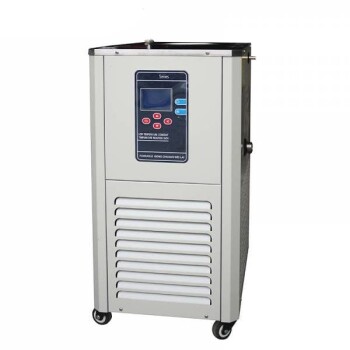
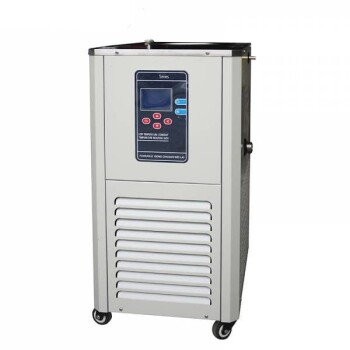
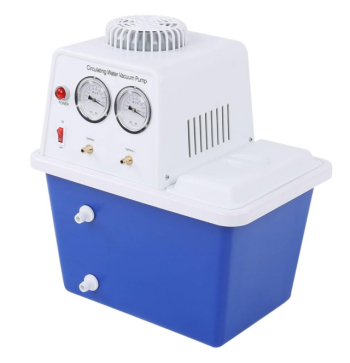
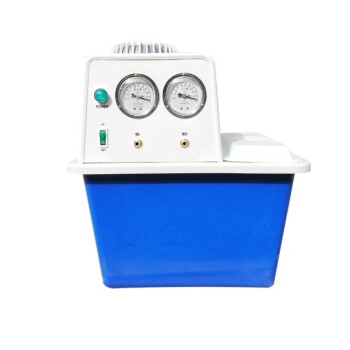
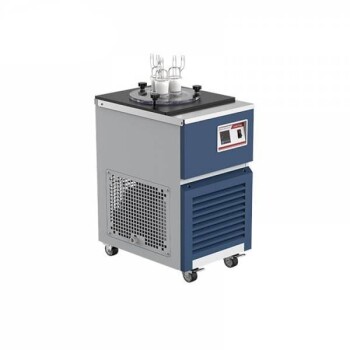
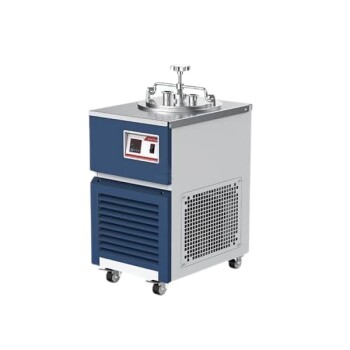
The necessity of a circulating cooling system stems from the intensely exothermic nature of Plasma Electrolytic Oxidation (PEO), the primary method for synthesizing TiOx·MOy coatings. Without a mechanism to actively dissipate this heat and maintain the electrolyte between 20-25 degrees Celsius, the process becomes unstable, leading to chemical breakdown and structural failure of the coating.
Core Insight:
Synthesis of these oxide coatings is a high-energy process that turns electrical power into massive amounts of heat. The cooling system is not merely an accessory; it is a critical process control variable that prevents electrolyte decomposition and physical defects like stress cracking.
The Thermal Dynamics of Synthesis
Managing Exothermic Energy
The PEO process involves high-voltage discharges that generate plasma on the metal surface. This reaction releases significant thermal energy directly into the electrolyte solution.
Without immediate heat extraction, the temperature of the bath would rise rapidly. A circulating cooling system acts as a thermal ballast, ensuring the energy input does not translate into uncontrolled thermal runaway.
The Critical Temperature Window
To successfully synthesize TiOx·MOy, the electrolyte temperature must be strictly maintained within a range of 20-25 degrees Celsius.
Straying outside this narrow window compromises the electrochemical environment. Precision cooling ensures that the reaction kinetics remain predictable throughout the coating duration.
Impact on Coating Quality
Preventing Electrolyte Decomposition
The chemical stability of the electrolyte is temperature-dependent. Overheating causes chemical decomposition, altering the concentration and efficacy of the reactive elements in the bath.
If the electrolyte degrades, the synthesis of the TiOx·MOy complex becomes erratic. Maintaining a cool, stable temperature preserves the chemical integrity required for consistent oxide formation.
Ensuring Uniform Growth
Heat drives reaction rates; therefore, uneven temperature distribution leads to uneven coating thickness.
A circulating system promotes thermal homogeneity, preventing localized overheating. This ensures the oxide layer grows at a uniform rate across the entire geometry of the component.
Avoiding Physical Defects
Uncontrolled heat creates thermal stress within the growing ceramic layer. This often manifests as coating burnout or stress cracking, rendering the part unusable.
By keeping the temperature low and stable, the cooling system mitigates these internal stresses, resulting in a dense, adherent, and crack-free coating.
Risks of Inadequate Thermal Management
Equipment Instability and Data Drift
Beyond the coating itself, high-temperature synthesis places immense strain on the hardware. High-power supplies and electronic control units generate their own waste heat during operation.
If the cooling system fails to manage the thermal load of the equipment, performance stability drops. This can lead to fluctuations in voltage or current, compromising the accuracy of performance data and reproducibility of the experiment.
Safety and Operational Longevity
Operating high-voltage equipment in an overheated environment poses safety risks.
An industrial-grade cooling system protects vacuum pumps and power systems during long-term thermal cycling. This safeguards the machinery against premature failure and ensures safe, continuous operation.
Ensuring Process Success
Recommendations for Optimization
- If your primary focus is Coating Integrity: Maintain the electrolyte strictly between 20-25°C to prevent stress cracking and ensure uniform oxide growth.
- If your primary focus is Process Consistency: Ensure the cooling system is rated to handle the waste heat of both the reaction and the high-power supply to prevent data drift.
Ultimately, the cooling system is the guardian of the synthesis process, converting high-energy chaos into a controlled, high-quality ceramic finish.
Summary Table:
| Feature | Impact of Inadequate Cooling | Benefits of Controlled Cooling (20-25°C) |
|---|---|---|
| Electrolyte Stability | Chemical decomposition and thermal runaway | Stable chemical integrity and reaction kinetics |
| Coating Structure | Stress cracking, burnout, and uneven thickness | Dense, adherent, and uniform oxide layers |
| Equipment Performance | Data drift and hardware overheating | Reliable operation and extended equipment lifespan |
| Process Control | Unpredictable reaction rates | Consistent, reproducible synthesis results |
Maximize Your Synthesis Precision with KINTEK
Ensure your TiOx·MOy oxide coating synthesis remains stable and successful with KINTEK’s high-performance laboratory solutions. From advanced circulating cooling systems and ULT freezers to robust high-temperature reactors and power supplies, we provide the specialized equipment needed to manage extreme thermal energy and prevent process failure.
Whether you are conducting battery research, material synthesis, or surface engineering, KINTEK offers a comprehensive range of:
- Cooling Solutions: Cold traps, freeze dryers, and industrial-grade chillers.
- High-Temperature Equipment: Muffle, tube, and vacuum furnaces.
- Reaction Systems: High-pressure reactors, autoclaves, and electrolytic cells.
Don't let thermal instability compromise your research data or coating quality. Contact our technical experts today to find the perfect thermal management solution for your laboratory.
References
- N. Sakhnenko, Oleksii Matykin. Examining the formation and properties of TiO2 oxide coatings with metals of iron triad. DOI: 10.15587/1729-4061.2017.97550
This article is also based on technical information from Kintek Solution Knowledge Base .
Related Products
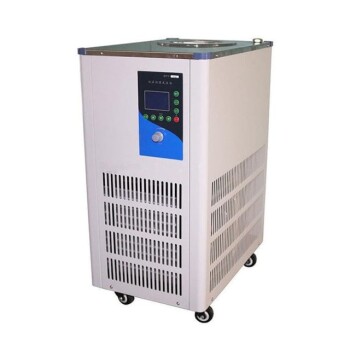
- 100L Chilling Circulator Cooling Water Circulator for Low Temperature Constant Temperature Reaction Bath Water Bath Cooling
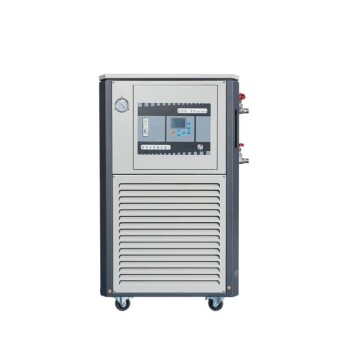
- 10L Heating Chilling Circulator Cooling Water Bath Circulator for High and Low Temperature Constant Temperature Reaction
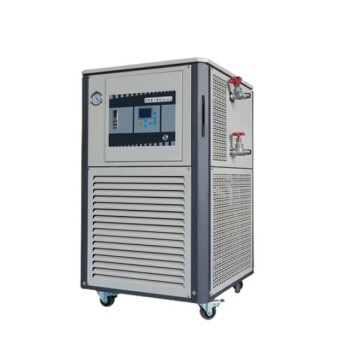
- 100L Heating Chilling Circulator Cooling Water Bath Circulator for High and Low Temperature Constant Temperature Reaction
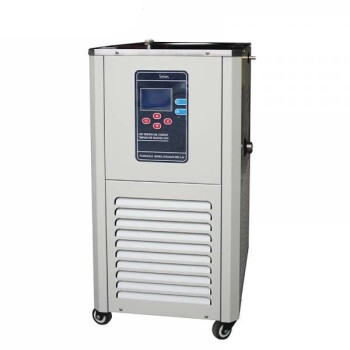
- 5L Heating Chilling Circulator Cooling Water Bath Circulator for High and Low Temperature Constant Temperature Reaction
- 20L Heating Chilling Circulator Cooling Water Bath Circulator for High and Low Temperature Constant Temperature Reaction
People Also Ask
- What function does a circulating cooling chiller perform during the gas adsorption isotherm testing of nanoporous carbon?
- Why is a circulating water chiller required for Prussian Blue nanoparticles? Ensure Stability & Batch Reproducibility
- What is the purpose of a cooling circulation water bath system in electrochemical experiments? Enhance Lab Precision
- How does a constant temperature circulator support the leaching reaction of gold scrap? Optimize Gold Recovery Results
- How do constant temperature circulators impact weight-loss immersion tests? Ensure Precision in Corrosion Analysis