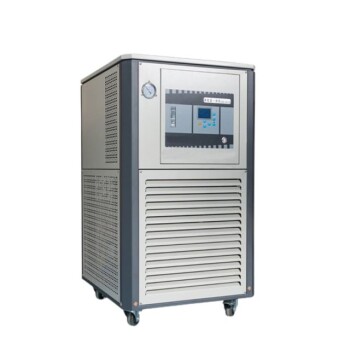
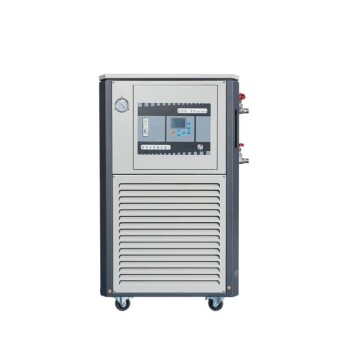
Rapid thermal termination is the single most critical function of the cooling circulation system. Immediately upon completing the corncob hydrothermal reaction, this system drives the medium temperature down to 30 °C. This sudden drop is not merely for safety or handling; it is a chemical necessity to arrest the reaction kinetics instantly.
The cooling system acts as a definitive "stop" button for the chemical process. Without rapid cooling, residual heat causes valuable monosaccharides to over-degrade into toxic inhibitors, effectively ruining the yield and purity of the final product.
The Mechanics of Yield Preservation
Terminating Degradation Reactions
Heat is the engine of the hydrothermal reaction. As long as the temperature remains high, the chemical breakdown of the biomass continues.
The cooling circulation system is essential because it physically stops these degradation reactions. By dropping the temperature to 30 °C, you freeze the chemical state of the mixture at its optimal point.
Maximizing Sugar Recovery
The primary goal of this process is to extract valuable sugars (monosaccharides) from the corncob.
If the cooling is slow or passive, the heat remains in the reactor. This prolonged exposure destroys the very sugars you just worked to extract, lowering the sugar recovery rate significantly.
Preventing Chemical Contamination
Avoiding the Formation of Inhibitors
When monosaccharides are exposed to high temperatures for too long, they do not just disappear; they transform into unwanted byproducts.
The primary reference specifically identifies furfural and 5-hydroxymethylfurfural (HMF) as the result of this over-degradation.
The Consequence of HMF and Furfural
These byproducts are classified as inhibitors.
Their presence is doubly detrimental: they represent lost potential yield (sugar that was destroyed) and introduced toxicity that can hamper downstream biological processes, such as fermentation.
Understanding the Risks of Improper Cooling
The Risk of Thermal Inertia
Large reactors have significant thermal mass. Without an active circulation system, the center of the liquid volume stays hot long after the heat source is turned off.
The Cost of Passive Cooling
Relying on natural cooling allows "uncontrolled cooking" to continue.
While you save energy by not running a cooling pump, you pay a much higher price in yield loss and the cost of removing inhibitors later.
Making the Right Choice for Your Process
Depending on your specific goals for the hydrolysate, the cooling phase dictates your success.
- If your primary focus is Maximum Yield: You must employ rapid cooling to lock in the highest concentration of monosaccharides before they degrade.
- If your primary focus is High Purity: You must prioritize thermal termination to prevent the synthesis of HMF and furfural, ensuring a clean pre-hydrolysate.
Control over the cooling phase is not an operational detail; it is the defining factor that separates a high-value harvest from a chemically degraded batch.
Summary Table:
| Feature | Impact of Rapid Cooling (to 30°C) | Risk of Passive/Slow Cooling |
|---|---|---|
| Reaction Kinetics | Instant thermal termination | Continued "uncontrolled cooking" |
| Sugar Recovery | Maximized monosaccharide yield | High degradation of valuable sugars |
| Chemical Purity | Low levels of furfural and HMF | High concentration of toxic inhibitors |
| Process Control | Locks in optimal chemical state | Thermal inertia leads to unpredictable results |
Optimize Your Biomass Processing with KINTEK
Precision cooling is as vital as heating in high-temperature hydrothermal reactions. At KINTEK, we specialize in providing high-performance laboratory solutions, including high-temperature high-pressure reactors, autoclaves, and advanced cooling solutions (ULT freezers, cold traps) designed to protect your yields from degradation.
Whether you are refining sugar recovery or developing bio-based chemicals, our expert-grade PTFE products, ceramics, and crucibles ensure contamination-free results.
Ready to enhance your lab's efficiency and purity?
Contact KINTEK today for a tailored consultation and secure the highest value from your research.
References
- Tang-sheng Sun, Feng Xu. Hydrothermal Treatment and Enzymatic Saccharification of Corncobs. DOI: 10.15376/biores.9.2.3000-3013
This article is also based on technical information from Kintek Solution Knowledge Base .
Related Products
- High Pressure Laboratory Autoclave Reactor for Hydrothermal Synthesis
- Customizable Laboratory High Temperature High Pressure Reactors for Diverse Scientific Applications
- Custom PTFE Teflon Parts Manufacturer for Hydrothermal Synthesis Reactor Polytetrafluoroethylene Carbon Paper and Carbon Cloth Nano-growth
- Electric Rotary Kiln Small Rotary Furnace Biomass Pyrolysis Plant
- Stainless High Pressure Autoclave Reactor Laboratory Pressure Reactor
People Also Ask
- What role does a high-pressure reactor (autoclave) play in the synthesis of NiCuFe-LDH? Master Hydrothermal Growth
- What Role Does a High-Pressure Reactor or Autoclave Play in HA Catalyst Synthesis? Achieve High Surface Area Materials
- What equipment is required for hydrothermal synthesis of Ga0.25Zn4.67S5.08? Optimize Your Semiconductor Production
- What is the function of a high-pressure reactor in the hydrothermal synthesis of boehmite? Expert Process Insights
- What role does an autoclave play in the synthesis of MnO2 nanofibers? Mastering Hydrothermal Growth