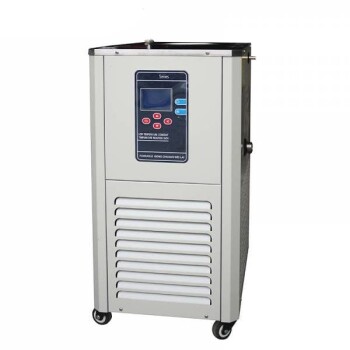
Integrating a cryogenic cooling device into the high-pressure torsion (HPT) of stainless steel provides a critical mechanism for thermal management during severe plastic deformation. By actively suppressing the adiabatic heating naturally generated by the process, this technique prevents dynamic recovery, enabling the material to achieve a significantly finer, more uniform microstructure with a higher martensite volume fraction than is possible at room temperature.
The core value of cryogenic HPT lies in its ability to freeze the material's internal structure during deformation. By preventing heat-induced defect healing, you force the stainless steel to retain a maximum density of crystal defects, resulting in superior grain refinement.
The Challenge of Heat in High-Pressure Torsion
The Adiabatic Heating Effect
During high-pressure torsion, the intense strain applied to the material generates significant internal friction.
This results in adiabatic heating, a rapid rise in temperature within the sample that can alter the intended outcome of the processing.
The Risk of Dynamic Recovery
If this heat is not managed, the material undergoes dynamic recovery.
In this phase, the crystal lattice attempts to "heal" itself by annihilating the dislocations (defects) created during deformation, effectively undoing some of the strengthening benefits of the process.
Advantages of Cryogenic Integration
Preserving Crystal Defects
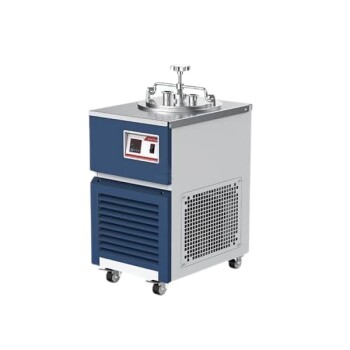
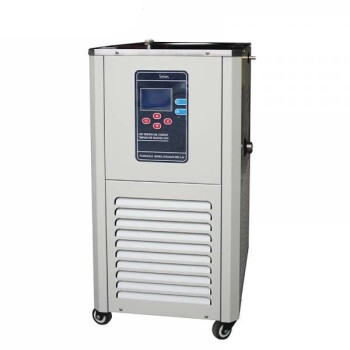
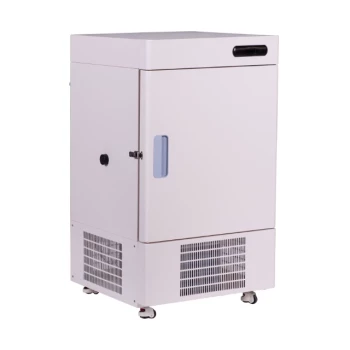
By introducing a cryogenic cooling device, you maintain the stainless steel at an extremely low operating temperature.
This suppression of thermal energy prevents the material from relaxing, allowing it to accumulate a much higher density of crystal defects.
Achieving Finer Microstructures
The inhibition of recovery processes leads to a distinct change in grain structure.
Cryogenic processing results in an equiaxed microstructure that is significantly finer and more uniform compared to samples processed at room temperature.
Enhanced Martensite Formation
Temperature plays a pivotal role in phase transformations in stainless steel.
The cryogenic environment promotes a higher martensite volume fraction, which is often desirable for applications requiring high hardness and strength.
Understanding the Trade-offs
Process Complexity
Integrating cryogenic equipment introduces significant mechanical complexity to the HPT setup.
You must manage thermal insulation and coolant flow, which can complicate sample handling and increase the overall footprint of the machinery.
Cost and Efficiency
While the material properties are enhanced, the operational cost increases due to the consumption of cryogens (such as liquid nitrogen).
For applications where only moderate grain refinement is required, the marginal gain in microstructure may not justify the increased expense of cryogenic cooling.
Making the Right Choice for Your Goal
To decide if integrating a cryogenic device is necessary for your specific application, consider your target material properties.
- If your primary focus is maximum grain refinement: Implementing cryogenic cooling is essential to suppress recovery and achieve the finest possible equiaxed structure.
- If your primary focus is phase transformation control: Use this method to maximize the martensite volume fraction, leveraging the low temperature to drive the phase change.
- If your primary focus is operational simplicity: Stick to room-temperature processing if the standard microstructural improvements of HPT are sufficient for your performance needs.
Cryogenic cooling transforms HPT from a mechanical process into a thermo-mechanical tool for pushing stainless steel to its structural limits.
Summary Table:
| Feature | Room Temperature HPT | Cryogenic Integrated HPT |
|---|---|---|
| Thermal Management | Prone to adiabatic heating | Active suppression of heat |
| Microstructure | Standard grain refinement | Superior equiaxed grain refinement |
| Defect Density | Lower due to dynamic recovery | Maximized crystal defect retention |
| Phase Transformation | Standard martensite levels | Higher martensite volume fraction |
| Hardness/Strength | High | Significantly Enhanced |
Elevate Your Material Research with KINTEK Precision Solutions
Push your stainless steel and advanced alloys to their structural limits with KINTEK’s industry-leading laboratory systems. Whether you are performing high-pressure torsion or specialized material synthesis, our comprehensive range of high-temperature high-pressure reactors, isostatic hydraulic presses, and ULT cooling solutions ensures you maintain total control over every thermal and mechanical variable.
Why choose KINTEK?
- Precision Control: Suppress dynamic recovery with our advanced cryogenic and cooling setups.
- Durability: High-performance crushing, milling, and furnace systems designed for rigorous R&D.
- Expertise: Tailored equipment solutions for battery research, material science, and dental applications.
Contact KINTEK today to optimize your lab's performance!
References
- Evgeniy Panin. Martensitic Transformations in Stainless Steels. DOI: 10.15407/ufm.23.04.684
This article is also based on technical information from Kintek Solution Knowledge Base .
Related Products
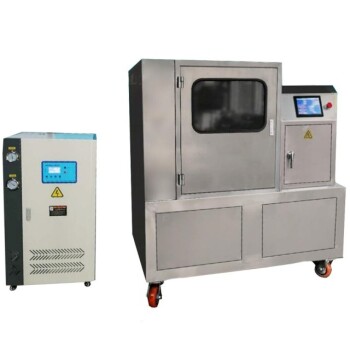
- Low-Temperature Water-Cooled Touchscreen Vibratory Ultrafine Pulverizer
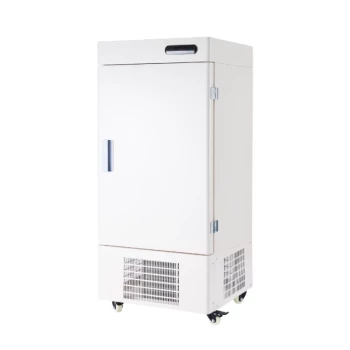
- 158L Precision Vertical Ultra Low Freezer for Laboratory Applications
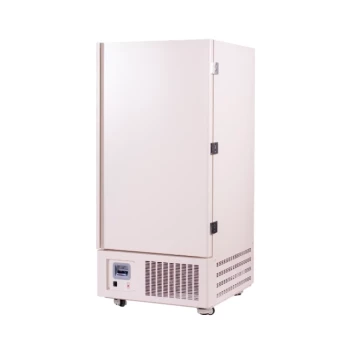
- 408L Advanced Vertical Laboratory Ultra Low Temperature Freezer for Critical Research Material Preservation
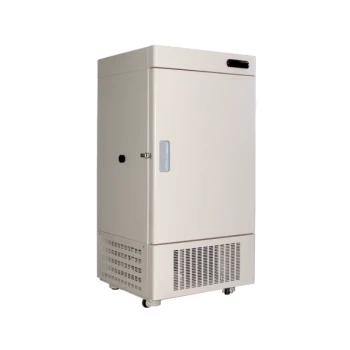
- 938L Vertical Ultra Low Temperature Freezer for Advanced Laboratory Storage
- 308L Precision Ultra Low Temperature Freezer for Laboratory Applications
People Also Ask
- What is the function of an industrial vibratory mill? Optimize Fe-Cr-Al Alloy Powder Production
- How does a Vibratory Mill improve niobium recovery efficiency? Optimize Waste Pre-treatment for Maximum Yield
- Why use stainless steel jars and balls for solid-state battery slurries? Maximize Dispersion and Conductivity
- What role does ultra-low temperature cooling equipment play in hydrogel preparation? Master Light-Driven Actuation
- Why is a low-temperature cooling solution necessary for nanoparticle toxicity? Ensure Scientific Accuracy & Stability