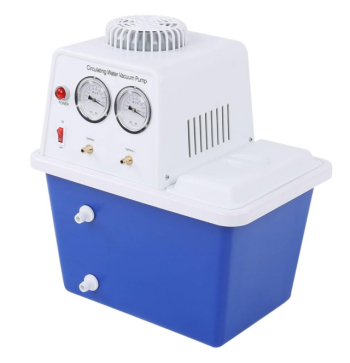
Multi-stage cooling systems utilize circulating water baths (typically at 5°C) and ice baths (0°C) to rapidly lower the temperature of pyrolysis vapors immediately after they exit the reactor. By connecting these thermal baths to condensers, the system forces high-boiling-point oxygenated compounds and hydrocarbons to undergo a phase change from gas to liquid, significantly increasing the bio-oil recovery rate and ensuring the chemical stability of the collected product.
The core function of these systems is rapid quenching: by creating a steep temperature gradient, the system halts secondary reactions and captures volatile components that would otherwise be lost as gas.
The Mechanism of Rapid Quenching
Forcing Phase Transitions
The primary role of these cooling systems is to effectively manage the transition of pyrolysis vapors. By utilizing a circulating water bath at 5°C, the system initiates the condensation of heavier, high-boiling-point compounds.
Following this with a 0°C ice bath ensures that remaining vapors are subjected to even lower temperatures. This staged approach maximizes the surface area and exposure time to cold temperatures, forcing oxygenated compounds and hydrocarbons to condense quickly.
Minimizing Secondary Cracking
Speed is critical in bio-oil collection. If hot vapors remain in a gaseous state for too long, they undergo secondary cracking reactions.
Multi-stage cooling acts as a "quench," rapidly bringing vapors down to stable temperatures. This prevents the volatiles from breaking down further into non-condensable gases or lower-quality char, thereby preserving the integrity of the liquid product.
Impact on Bio-Oil Yield and Quality
Increasing Recovery Rates
A single-stage cooling system often fails to capture lighter, more volatile fractions of bio-oil. By employing a multi-stage system that includes ice baths, you significantly reduce the vapor pressure of the bio-oil.
This reduction prevents the escape of light fractions, which are often lost in less rigorous cooling setups. The result is a measurable increase in the total volume of bio-oil recovered.
Preserving Chemical Stability
The chemical composition of bio-oil is highly sensitive to temperature. The primary reference highlights that the rapid cooling process directly influences the stability of chemical components.
By halting thermal degradation immediately, the cooling baths ensure that the collected oil represents the true output of the pyrolysis process, allowing for accurate component analysis.
Separation Efficiency
Distinguishing Oil from Gas
Effective cooling is the defining line between liquid yield and gaseous waste. A multi-stage setup improves the efficiency of separating condensable bio-oil components from non-condensable gases.
As the vapors pass through the cooling stages (potentially as low as -10°C in specialized setups), the "brown vapors" are fully condensed into liquid. This leaves behind only non-condensable gases like hydrogen and methane, which can then be easily separated and vented or collected.
Operational Trade-offs
Complexity vs. Capture Efficiency
While multi-stage cooling is superior for yield, it introduces operational complexity. A simple water bath may be easier to maintain but will likely result in the loss of light volatile fractions.
To capture the full spectrum of bio-oil, the system must maintain a strict temperature gradient. Failing to maintain the 0°C (or lower) stage allows volatile components to remain gaseous, skewing yield data and altering the chemical profile of the sample.
Solvent Dependencies
In some rigorous analysis contexts, cooling baths are used in conjunction with solvents like dichloromethane. While this aids in capturing condensables, it adds a layer of chemical handling to the physical collection process.
Making the Right Choice for Your Goal
Ideally, your cooling system should be matched to the specific volatility of the feedstock you are processing.
- If your primary focus is maximizing total yield: Prioritize a multi-stage system ending in an ice bath (0°C) or lower to aggressively trap light fractions that escape standard water condensers.
- If your primary focus is chemical characterization: Ensure your system provides rapid quenching to stop secondary cracking, preserving the original chemical structure of the pyrolysis vapors for analysis.
rapid quenching provided by multi-stage cooling is not just about temperature reduction; it is the primary control mechanism for defining the quantity and chemical integrity of your bio-oil.
Summary Table:
| Feature | Single-Stage Water Bath | Multi-Stage (Water + Ice) |
|---|---|---|
| Temperature Range | Typically 5°C to 20°C | Gradient from 5°C to 0°C (or lower) |
| Quenching Speed | Moderate | Rapid (High Gradient) |
| Light Fraction Capture | Low - Volatiles often lost | High - Captures light hydrocarbons |
| Bio-oil Stability | Reduced due to slower cooling | Enhanced; halts secondary cracking |
| Recovery Yield | Lower | Significantly Higher |
Elevate Your Pyrolysis Research with KINTEK
Maximize your bio-oil yield and ensure chemical integrity with KINTEK’s advanced cooling and laboratory solutions. Whether you are performing biomass pyrolysis or material characterization, our specialized cooling solutions (ULT freezers, cold traps, and chillers) work seamlessly with our high-temperature furnaces and reactors to provide the rapid quenching your process demands.
From high-pressure reactors and centrifuges to essential PTFE and ceramic consumables, KINTEK provides the high-performance tools necessary for precise chemical analysis and efficient material processing. Our experts are ready to help you optimize your laboratory setup for superior results.
Ready to upgrade your collection efficiency? Contact KINTEK today to find the perfect cooling system for your lab!
References
- Elena David, A. Armeanu. Cr/13X Zeolite and Zn/13X Zeolite Nanocatalysts Used in Pyrolysis of Pretreated Residual Biomass to Produce Bio-Oil with Improved Quality. DOI: 10.3390/nano12121960
This article is also based on technical information from Kintek Solution Knowledge Base .
Related Products
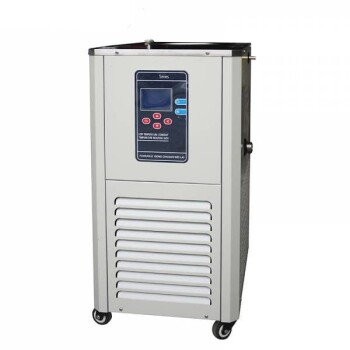
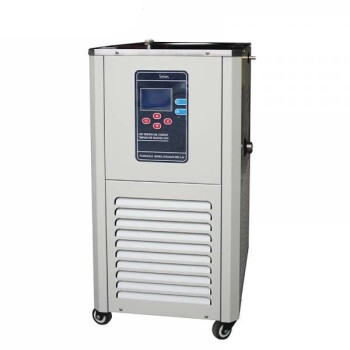
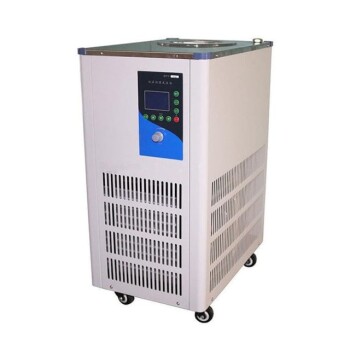
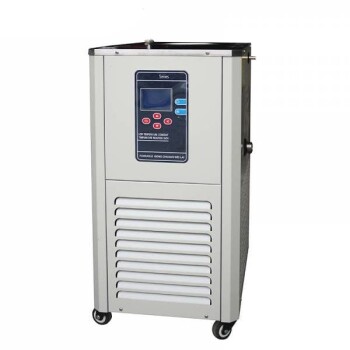
- 80L Chilling Circulator Cooling Water Circulator for Water Bath Cooling and Low Temperature Constant Temperature Reaction Bath
- 10L Chilling Circulator Cooling Water Bath Low Temperature Constant Temperature Reaction Bath
- 50L Chiller Water Bath Cooling Circulator Low Temperature Constant Temperature Reaction Bath
- 5L Chilling Circulator Cooling Water Bath Circulator for Low Temperature Constant Temperature Reaction Bath
- 20L Chiller Water Bath Cooling Circulator Low Temperature Constant Temperature Reaction Bath
People Also Ask
- Why is a circulating water chiller required for Prussian Blue nanoparticles? Ensure Stability & Batch Reproducibility
- What function does a circulating cooling chiller perform during the gas adsorption isotherm testing of nanoporous carbon?
- What is the purpose of a cooling circulation water bath system in electrochemical experiments? Enhance Lab Precision
- What is the necessity of a circulating water bath in chlorate production? Optimize Yield & Purity with Precision
- For which types of substances are water baths and chillers considered ideal? Essential Care for Sensitive Samples