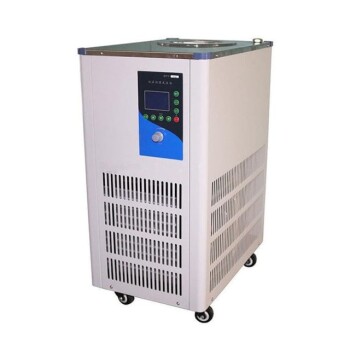
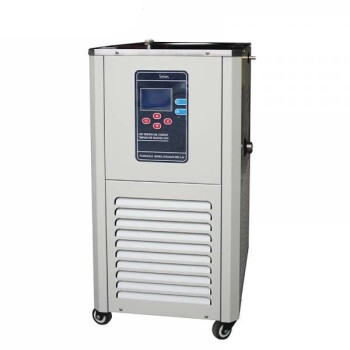
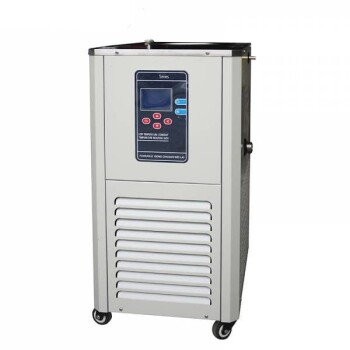
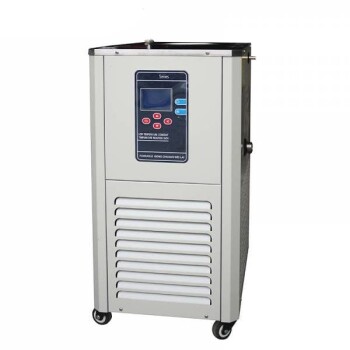
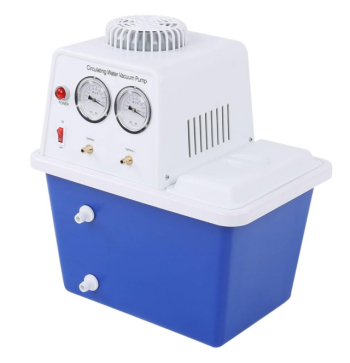
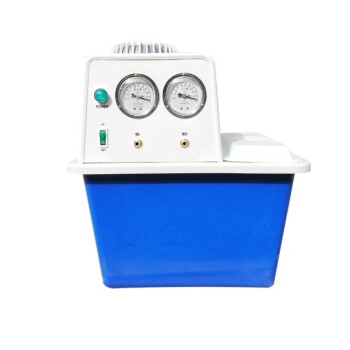
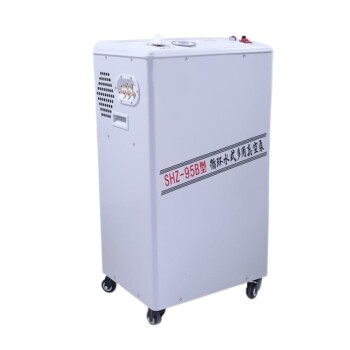
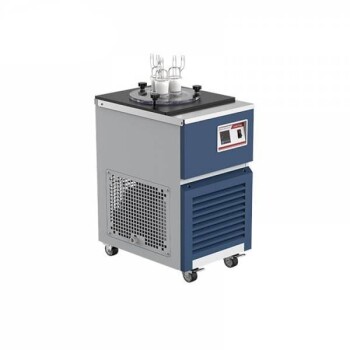
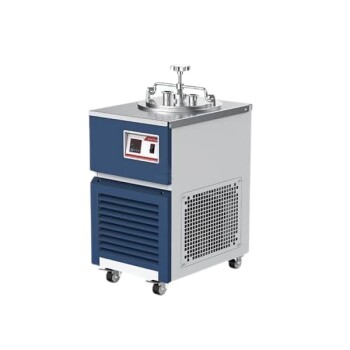
A circulating water chiller acts as the critical thermal anchor for the synthesis of Prussian Blue nanoparticles. Its primary function is to maintain a precise, constant temperature—often set to 25 °C—throughout reactions that can span several hours. By actively regulating the thermal environment, the chiller counteracts internal heat generation and external fluctuations that would otherwise compromise the quality of the final product.
In nanoparticle synthesis, temperature stability is synonymous with quality control. The chiller’s role is to neutralize frictional heat from stirring and isolate the reaction from the room's ambient changes, ensuring that every batch exhibits identical physical and chemical properties.
The Critical Role of Temperature Control
Sensitivity of Nucleation and Growth
The formation of Prussian Blue nanoparticles occurs in two distinct phases: nucleation (where the initial crystal seeds form) and growth (where those seeds expand).
Both processes are highly sensitive to thermal conditions. Even minor deviations in temperature can alter the rate at which these particles form and grow.
Ensuring Batch-to-Batch Reproducibility
For scientific data to be valid, experiments must be reproducible.
If the temperature varies between two different synthesis attempts, the resulting nanoparticles may have different sizes or chemical behaviors. The circulating water chiller eliminates this variable, guaranteeing that the properties of the nanoparticles remain consistent across every batch.
Counteracting Thermal Variables
Managing Frictional Heat
Synthesis reactions require continuous stirring to ensure proper mixing of reagents.
However, mechanical stirring creates frictional heat. Over the course of a reaction lasting several hours, this friction can slowly raise the temperature of the solution.
The water chiller actively counteracts this byproduct, absorbing the excess heat generated by the kinetic energy of the stirrer.
Mitigating Environmental Fluctuations
Laboratory environments are rarely perfectly static. Room temperatures can fluctuate based on the time of day, HVAC cycles, or nearby equipment.
Because these reactions require long durations, they are vulnerable to these ambient shifts. The chiller creates a controlled "thermal loop," effectively isolating the reaction vessel from the surrounding environment.
Risks of Thermal Instability
The Impact of Uncontrolled Thermodynamics
If a chiller is not used, or if it is undersized for the reaction volume, the system becomes thermally unstable.
This instability often leads to polydispersity, where the resulting nanoparticles vary wildly in size rather than being uniform.
Loss of Experimental Integrity
Without a chiller, temperature becomes an uncontrolled variable. This makes it impossible to determine if changes in the nanoparticle structure were caused by intended experimental adjustments (like reagent concentration) or simply by accidental heating.
Making the Right Choice for Your Goal
To ensure the highest quality synthesis, align your equipment use with your specific objectives:
- If your primary focus is Uniformity: Use the chiller to maintain a strict 25 °C baseline, as this prevents rapid growth spurts that lead to irregular particle sizes.
- If your primary focus is Scalability: Rely on the chiller to manage the increased frictional heat that naturally occurs when stirring larger volumes of solution.
By standardizing the thermal environment, you transform a volatile chemical reaction into a predictable, robust manufacturing process.
Summary Table:
| Feature | Role in Synthesis | Impact on Quality |
|---|---|---|
| Nucleation Control | Maintains constant temperature for seed formation | Prevents irregular particle sizes |
| Growth Regulation | Manages expansion rate of nanoparticles | Ensures narrow size distribution (monodispersity) |
| Friction Management | Neutralizes heat from continuous stirring | Prevents unintended thermal spikes |
| Ambient Isolation | Shields reaction from lab room temperature shifts | Guarantees experimental reproducibility |
Elevate Your Nanoparticle Synthesis with KINTEK Precision
Don't let thermal instability compromise your research. KINTEK specializes in high-performance laboratory solutions, providing the precision cooling systems, chillers, and reaction vessels essential for synthesizing high-quality Prussian Blue nanoparticles.
Our extensive portfolio—from high-temperature high-pressure reactors to crushing, milling, and advanced cooling solutions—is designed to help researchers and manufacturers achieve perfect batch-to-batch reproducibility.
Ready to optimize your thermal environment? Contact KINTEK today to discover how our expert equipment can streamline your laboratory workflow and deliver superior material consistency.
References
- Udara Bimendra Gunatilake, Eva Baldrich. Peroxidase (POD) Mimicking Activity of Different Types of Poly(ethyleneimine)-Mediated Prussian Blue Nanoparticles. DOI: 10.3390/nano15010041
This article is also based on technical information from Kintek Solution Knowledge Base .
Related Products
- 40L Chiller Water Bath Cooling Circulator Low Temperature Constant Temperature Reaction Bath
- 100L Chilling Circulator Cooling Water Circulator for Low Temperature Constant Temperature Reaction Bath Water Bath Cooling
- 50L Chiller Water Bath Cooling Circulator Low Temperature Constant Temperature Reaction Bath
- 80L Chilling Circulator Cooling Water Circulator for Water Bath Cooling and Low Temperature Constant Temperature Reaction Bath
- 20L Chiller Water Bath Cooling Circulator Low Temperature Constant Temperature Reaction Bath
People Also Ask
- What function does a circulating cooling chiller perform during the gas adsorption isotherm testing of nanoporous carbon?
- What is the necessity of a circulating water bath in chlorate production? Optimize Yield & Purity with Precision
- For which types of substances are water baths and chillers considered ideal? Essential Care for Sensitive Samples
- What is the primary function of water baths and chillers? Mastering Precise Thermal Stability for Liquid Samples
- How does a constant temperature circulator support the leaching reaction of gold scrap? Optimize Gold Recovery Results