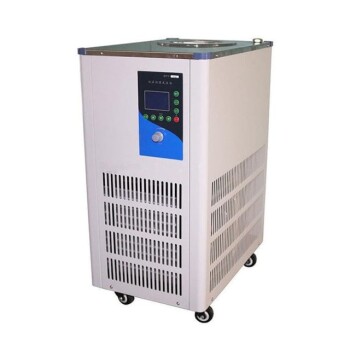
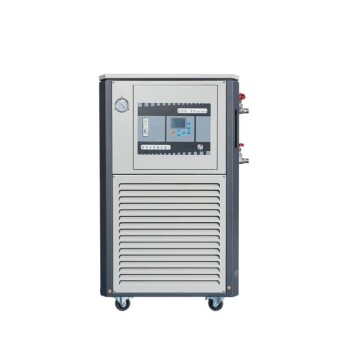
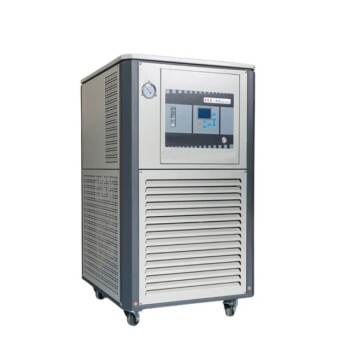
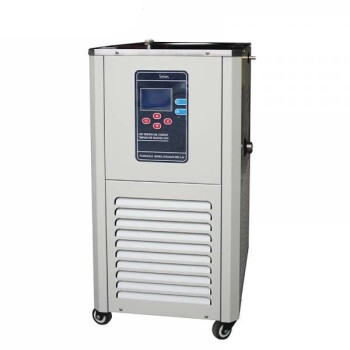
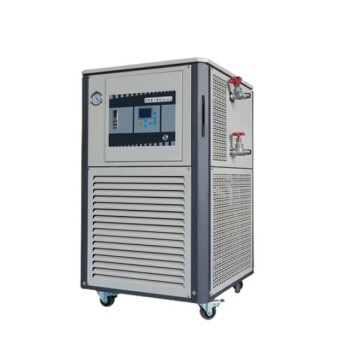
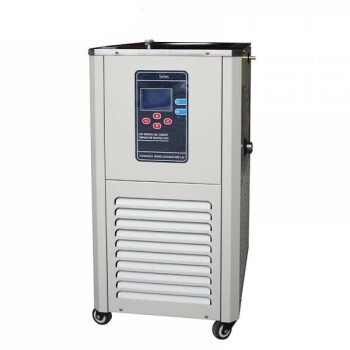
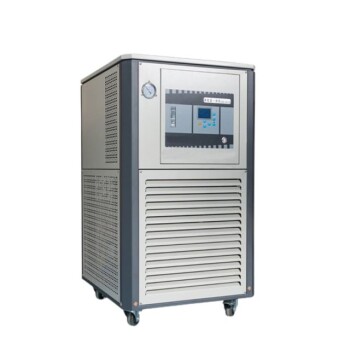
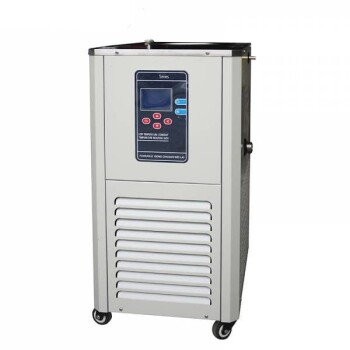
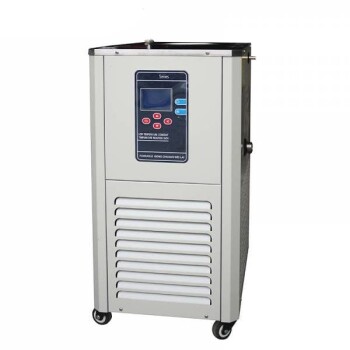
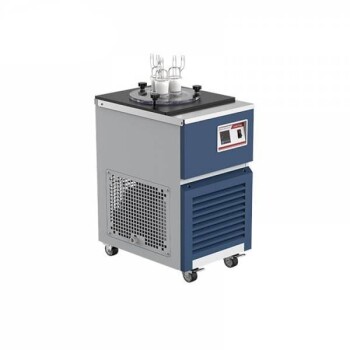
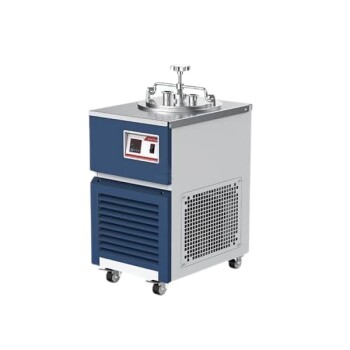
A laboratory-grade cooling circulation system serves as the primary control mechanism for determining the final microstructure of SA508 alloy during continuous cooling transformation (CCT) research. By enforcing precise cooling rates, specifically hitting a critical target of 10 K/s, the system drives the alloy to bypass early phase transformation zones, ensuring the exclusive formation of fine bainite structures.
Precision cooling is the defining factor in optimizing SA508 alloy performance. By successfully navigating the material past ferrite and pearlite zones, these systems secure a microstructure that directly enhances essential mechanical properties like fatigue life and fracture toughness.
Controlling the Phase Transformation
To understand the influence of the cooling system, one must look at how it manipulates the cooling curve of the alloy.
Achieving Critical Cooling Rates
The primary function of the cooling circulation system is to deliver a consistent, rapid temperature drop.
In the context of SA508, the system must be capable of achieving a rate of 10 K/s.
This specific rate is not arbitrary; it is the calculated threshold required to alter the material's phase evolution.
Bypassing Unwanted Phases
Without precise thermal management, the alloy naturally tends toward equilibrium phases.
If the cooling is too slow, the material enters the ferrite and pearlite transformation zones.
The cooling system prevents this by effectively "outrunning" these zones, preserving the austenite untransformed until it reaches the bainite start temperature.
The Resulting Microstructure
When the cooling system successfully enforces the 10 K/s rate, the resulting microstructure is distinct and mechanically superior.
Formation of Fine Bainite
The target structure achieved through this process is fine bainite.
This structure is a complex aggregate composed primarily of ferrite and carbides.
The Role of Ferrite Laths
Within this fine bainite matrix, the system promotes the formation of ferrite laths.
These laths provide the internal architecture that defines the material's physical capabilities.
The Consequence of Imprecision
While the benefits of a controlled system are clear, understanding the risks of inadequate cooling is equally important.
The Cost of Rate Deviation
If the circulation system fails to maintain the 10 K/s threshold, the experiment yields a mixed microstructure.
Entering the ferrite or pearlite zones results in a material that lacks the specific benefits of a pure bainite structure.
Impact on Mechanical Performance
The ultimate goal of using such high-grade equipment is to maximize fatigue life and fracture toughness.
A failure to control the cooling rate compromises these properties, rendering the material less suitable for high-stress applications.
Applying These Insights to Your Research
For engineers and researchers working with SA508 alloy, the cooling system is not just support equipment; it is a variable of production.
- If your primary focus is Microstructural Purity: Ensure your cooling circulation system is calibrated to sustain a continuous 10 K/s rate to fully bypass ferrite and pearlite zones.
- If your primary focus is Material Performance: utilize this specific cooling protocol to maximize the presence of ferrite laths and carbides, directly increasing fatigue life and fracture toughness.
Strict thermal control is the gateway to unlocking the full mechanical potential of SA508 alloy.
Summary Table:
| Feature | Targeted Parameter | Impact on SA508 Microstructure |
|---|---|---|
| Critical Cooling Rate | 10 K/s | Bypasses ferrite and pearlite transformation zones |
| Phase Control | Continuous Cooling (CCT) | Ensures exclusive formation of fine bainite structures |
| Microstructural Unit | Ferrite Laths & Carbides | Provides high-density architecture for material strength |
| Mechanical Benefit | Optimized CCT | Maximizes fatigue life and fracture toughness |
Elevate Your Material Research with KINTEK Precision
Achieving the perfect 10 K/s cooling rate for SA508 alloy requires more than basic equipment—it demands the precision of KINTEK’s laboratory-grade cooling solutions. Whether you are conducting CCT research or high-pressure thermal studies, our comprehensive portfolio including ULT freezers, cold traps, and advanced cooling circulators ensures your microstructures meet exacting standards.
From high-temperature furnaces and high-pressure reactors to specialized crushing and milling systems, KINTEK provides the end-to-end tools needed to maximize fatigue life and fracture toughness in your alloys.
Ready to optimize your lab's thermal control? Contact our experts today to find the perfect cooling solution and unlock the full potential of your materials.
References
- Muhammad Raies Abdullah, Liang Fang. Strategies Regarding High-Temperature Applications w.r.t Strength, Toughness, and Fatigue Life for SA508 Alloy. DOI: 10.3390/ma14081953
This article is also based on technical information from Kintek Solution Knowledge Base .
Related Products
- 100L Chilling Circulator Cooling Water Circulator for Low Temperature Constant Temperature Reaction Bath Water Bath Cooling
- 10L Heating Chilling Circulator Cooling Water Bath Circulator for High and Low Temperature Constant Temperature Reaction
- 20L Heating Chilling Circulator Cooling Water Bath Circulator for High and Low Temperature Constant Temperature Reaction
- 20L Chiller Water Bath Cooling Circulator Low Temperature Constant Temperature Reaction Bath
- 5L Heating Chilling Circulator Cooling Water Bath Circulator for High and Low Temperature Constant Temperature Reaction
People Also Ask
- What function does a circulating cooling chiller perform during the gas adsorption isotherm testing of nanoporous carbon?
- Why is a circulating water chiller required for Prussian Blue nanoparticles? Ensure Stability & Batch Reproducibility
- What is the purpose of a cooling circulation water bath system in electrochemical experiments? Enhance Lab Precision
- How does a constant temperature circulator support the leaching reaction of gold scrap? Optimize Gold Recovery Results
- How do constant temperature circulators impact weight-loss immersion tests? Ensure Precision in Corrosion Analysis