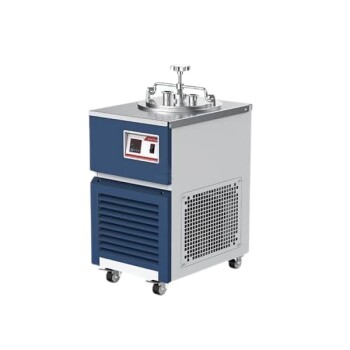
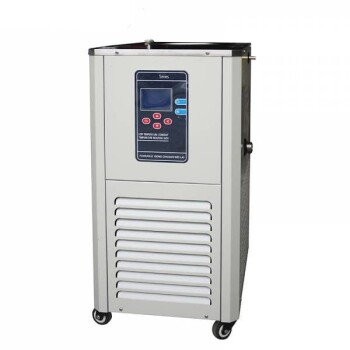
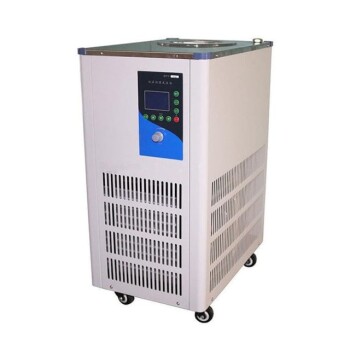
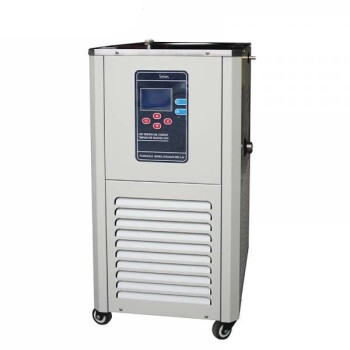
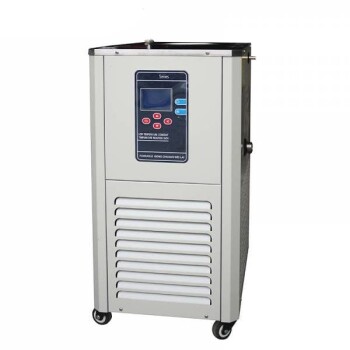
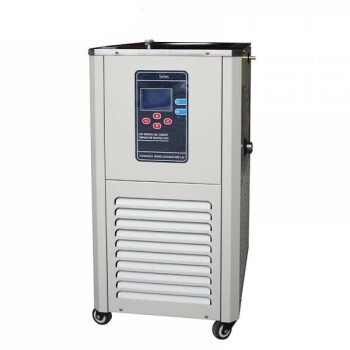
A cooling circulation system acts as a critical safeguard for the high-pressure pump in Supercritical Fluid Extraction (SFE) by actively cooling carbon dioxide (CO2) into a stable liquid state before it enters the pumping stage. Without this liquefaction, the system cannot achieve the fluid density required to generate high pressures, leading to mechanical failure and process instability.
The Core Insight: High-pressure pumps generally cannot pump gas efficiently. The chiller’s sole purpose is to convert CO2 into a liquid to prevent "gas locking," thereby enabling the pump to build the extreme pressures necessary to eventually reach a supercritical state in the extraction vessel.
The Mechanics of CO2 Delivery
The Necessity of Phase Change
CO2 typically enters the system from a storage tank, often as a gas or a gas-liquid mixture. However, the high-pressure pumps utilized in SFE are designed to move incompressible liquids, not compressible gases.
Preventing Gas Locking
If CO2 enters the pump head as a gas, the pump pistons will simply compress and decompress the gas without moving it forward.
This phenomenon is known as "gas locking." It results in zero flow, meaning the system cannot build pressure regardless of how hard the pump works.
Ensuring Delivery Efficiency
By cooling the CO2 into a liquid, the chiller ensures the fluid has a consistent, high density.
This allows the pump to "grab" a specific volume of fluid with every stroke, ensuring a steady and measurable flow rate into the system.
Establishing Supercritical Conditions
The Foundation for High Pressure
The extraction process requires the CO2 to eventually reach a supercritical state (high pressure and specific temperature) inside the extraction vessel.
The chiller provides the necessary foundation for this by delivering a stable liquid stream that the pump can pressurize effectively.
Thermal Regulation and Stability
While the vessel is heated to achieve supercriticality, the intake must remain cold.
The cooling system creates a thermal barrier, ensuring that heat from the friction of the pump or the downstream process does not creep backward and vaporize the incoming CO2.
Operational Risks and Trade-offs
The Risk of Cavitation
If the cooling capacity is insufficient, the liquid CO2 may boil or "flash" into gas bubbles inside the pump head.
The rapid collapse of these bubbles (cavitation) causes shockwaves that can pit metal surfaces and destroy pump seals, leading to costly repairs.
Inconsistent Extraction Yields
A chiller that fluctuates in temperature will cause fluctuations in the density of the CO2 entering the pump.
This results in varying mass flow rates, making it impossible to replicate extraction parameters or achieve consistent yields from batch to batch.
Making the Right Choice for Your Goal
To optimize your SFE process, focus on the specific role of temperature at the pump head:
- If your primary focus is Equipment Longevity: Ensure your chiller is powerful enough to maintain sub-cooling well below the boiling point of CO2 to prevent cavitation damage to pump seals.
- If your primary focus is Process Reproducibility: Prioritize a chiller with precise thermal stability to keep CO2 density constant, ensuring that the mass flow rate remains identical across every run.
A stable liquid feed is the non-negotiable prerequisite for a successful supercritical extraction.
Summary Table:
| Feature | Function in SFE Process | Impact of Missing Chiller |
|---|---|---|
| Phase Change | Converts gaseous CO2 into incompressible liquid | Pump cannot move gas, leading to zero flow |
| Pressure Stability | Enables the pump to build supercritical pressures | System fails to reach required extraction density |
| Cavitation Prevention | Sub-cools liquid to prevent vapor bubble formation | Shockwaves damage pump pistons and seals |
| Flow Consistency | Maintains constant CO2 density for mass flow | Fluctuating extraction yields and poor reproducibility |
Maximize Your SFE Efficiency with KINTEK Precision Solutions
Don't let pump failure or inconsistent yields compromise your supercritical fluid extraction. KINTEK specializes in high-performance laboratory equipment, including specialized cooling solutions, high-temperature high-pressure reactors, and robust pumping systems designed for the most demanding research environments.
From high-pressure autoclaves and pellet presses to precision cooling chillers, our comprehensive portfolio supports every stage of your material science and extraction workflow. Let our experts help you select the ideal thermal regulation system to protect your equipment and ensure batch-to-batch reproducibility.
Ready to optimize your lab's performance? Contact KINTEK Today to find the perfect solution for your specific application.
References
- Yogesh Murti, Pranav Bhaskar. Innovative methods for extraction of essential oils from medicinal plants. DOI: 10.21448/ijsm.1121860
This article is also based on technical information from Kintek Solution Knowledge Base .
Related Products
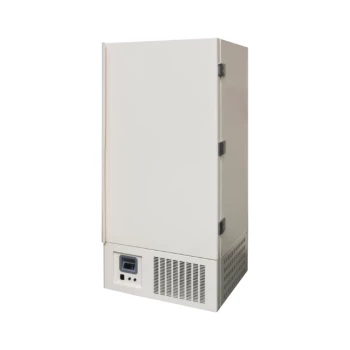
- 608L Essential Laboratory Ultra Low Temperature Freezer For Critical Sample Preservation
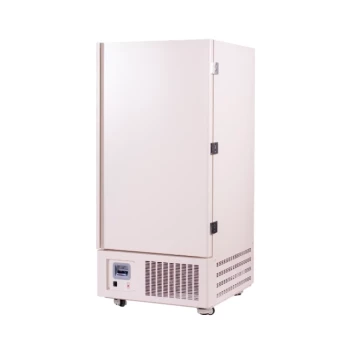
- 408L Advanced Vertical Laboratory Ultra Low Temperature Freezer for Critical Research Material Preservation
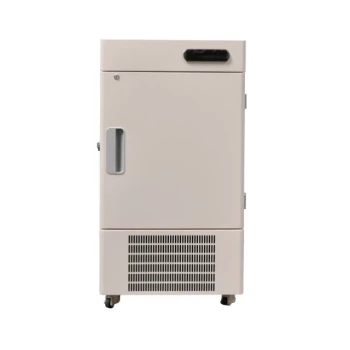
- 58L Precision Laboratory Ultra Low Temperature Upright Freezer for Critical Sample Storage
- 508L Advanced Vertical Ultra Low Temperature Freezer for Critical Laboratory Storage
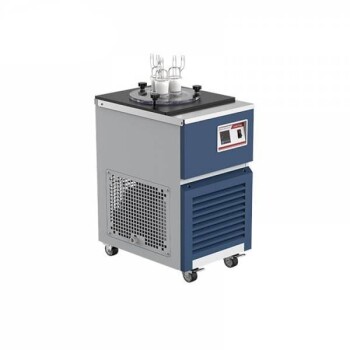
- Vacuum Cold Trap Chiller Indirect Cold Trap Chiller
People Also Ask
- What makes Ultra-Low Temperature freezers energy efficient? Key Design & Operational Strategies
- What temperature range do Ultra-Low Temperature freezers maintain? The -80°C Standard for Sample Integrity
- What are the different types of ultra-low temperature freezers available? Choose the Right ULT Freezer for Your Lab
- What are the common applications of ultra-low temperature freezers? Preserve Your Most Valuable Samples
- What are some key features of ultra-low temperature freezers? Essential Guide to Reliable Sample Storage