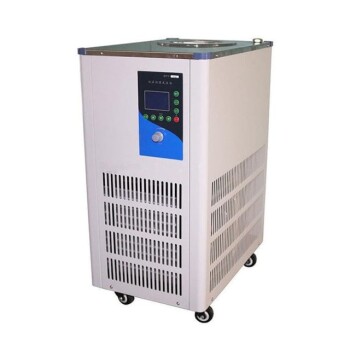
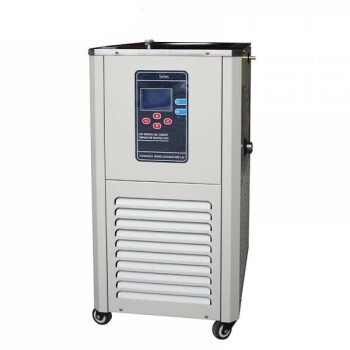
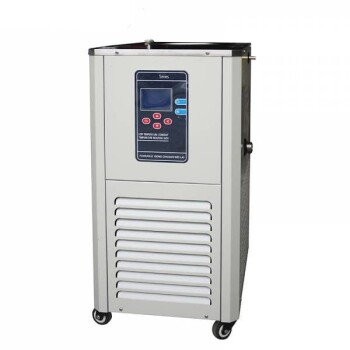
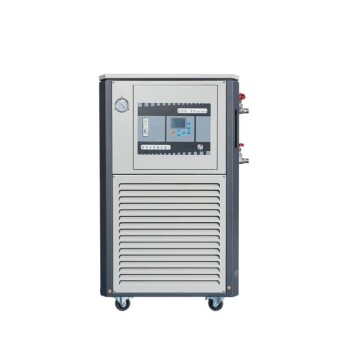
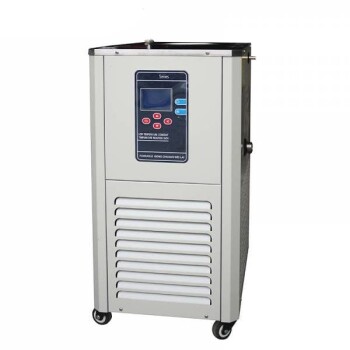
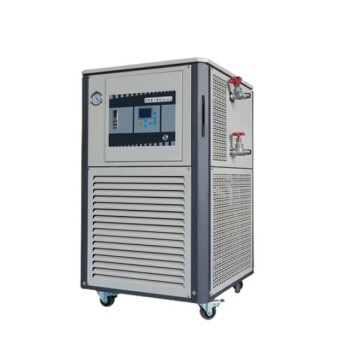
Effective thermal management is the linchpin of high-temperature immersion testing. A Recirculating Cooling Water System is essential for protecting sensitive sealing components and sensors from extreme internal temperatures, which can reach up to 500°C. By actively removing excess heat from critical interfaces like the reactor lid, it prevents mechanical failures and hazardous leaks, ensuring both equipment stability and operator safety.
While the heating source drives the reaction, the cooling system safeguards the apparatus. It creates a necessary thermal barrier to preserve seal integrity against corrosive vapors and provides the rapid quenching capabilities required to maintain product purity.
Safeguarding Equipment and Personnel
Protecting Sealing Interfaces
High-pressure reactors rely on gaskets and seals to maintain containment. Without active cooling, heat radiating from the reactor core can degrade these components.
A recirculating system targets the reactor lid and sealing interfaces, dissipating heat before it exceeds the thermal limits of the gaskets. This prevents melting or deformation that would otherwise compromise the pressure vessel.
Preventing Hazardous Leaks
When seals fail due to thermal stress, the consequences go beyond mechanical damage. In high-temperature setups, this breach allows highly corrosive acidic vapors to escape into the laboratory environment.
The cooling system acts as a primary safety barrier. By maintaining the integrity of the seals, it ensures that hazardous fumes remain contained, protecting operators from exposure and preventing damage to surrounding sensitive electronics.
Enhancing Experimental Precision and Yield
Rapid Reaction Quenching
Precise control over the "severity factor" of a treatment often requires stopping a reaction at an exact moment. An internal cooling circulation system enables instantaneous cooling once the target temperature or duration is reached.
This rapid quenching mechanism is vital for preserving chemical structures. For example, it prevents target products like xylose derivatives from degrading into unwanted inhibitors, thereby securing high recovery rates and product purity.
Eliminating Thermal Fluctuations
For experiments studying reaction kinetics, maintaining a stable baseline temperature is non-negotiable. External heat sources, such as high-power UV lamps, can introduce unwanted thermal energy.
A circulating cooling system counteracts this by flowing a cooling medium through the reactor's jacket. This maintains the system at a constant temperature (e.g., 25°C), ensuring that observed changes are due to chemical kinetics rather than thermal fluctuations.
Understanding the Challenges and Trade-offs
Managing Thermal Shock
While rapid cooling is beneficial for product recovery, it introduces the risk of thermal shock.
Drastic temperature changes can induce stress in glass or ceramic reactor components. Operators must ensure their equipment materials are rated to withstand the specific cooling rates provided by the circulation system.
System Complexity and Maintenance
Adding a recirculating loop increases the mechanical complexity of the test setup.
This system introduces additional points of failure, such as pumps and tubing connections, which require regular inspection. If the circulation flow is interrupted during a high-temperature run, the loss of cooling protection can lead to rapid seal failure.
Making the Right Choice for Your Goal
To maximize the utility of your cooling system, align its operation with your specific experimental objectives.
- If your primary focus is Equipment Safety: Prioritize cooling flow to the reactor lid and flanges to prevent gasket failure and contain corrosive vapors.
- If your primary focus is Product Purity: Utilize the system for rapid internal quenching to stop reactions immediately and prevent chemical degradation.
- If your primary focus is Kinetic Data: Use jacketed circulation to offset heat generation and maintain strictly isothermal conditions throughout the experiment.
A robust cooling strategy does not just lower temperature; it grants you control over the safety, speed, and accuracy of your research.
Summary Table:
| Feature | Primary Function | Key Benefit |
|---|---|---|
| Thermal Protection | Dissipates heat from reactor lids and gaskets | Prevents mechanical seal failure and melting |
| Safety Containment | Maintains seal integrity under high pressure | Prevents the release of corrosive vapors and leaks |
| Rapid Quenching | Instantaneous cooling of the reaction medium | Preserves product purity by stopping degradation |
| Temperature Stability | Offsets external heat via jacketed circulation | Ensures precise kinetic data and isothermal control |
Maximize Precision and Safety with KINTEK Advanced Cooling Solutions
High-temperature research demands uncompromising control. KINTEK specializes in high-performance laboratory equipment, providing the robust recirculating cooling systems and high-temperature high-pressure reactors necessary for complex immersion testing. From cooling solutions like ULT freezers and chillers to precision autoclaves and corrosion-resistant consumables, our portfolio is engineered to protect your equipment and personnel while ensuring maximum product yield.
Ready to optimize your thermal management strategy? Contact us today to discuss your setup!
References
- Nobuyuki Tanaka, Kaoru Onuki. ICONE19-43563 Corrosion test of metallic materials in high temperature acidic environments of IS process. DOI: 10.1299/jsmeicone.2011.19._icone1943_230
This article is also based on technical information from Kintek Solution Knowledge Base .
Related Products
- 50L Chiller Water Bath Cooling Circulator Low Temperature Constant Temperature Reaction Bath
- 80L Chilling Circulator Cooling Water Circulator for Water Bath Cooling and Low Temperature Constant Temperature Reaction Bath
- 100L Chilling Circulator Cooling Water Circulator for Low Temperature Constant Temperature Reaction Bath Water Bath Cooling
- 10L Chilling Circulator Cooling Water Bath Low Temperature Constant Temperature Reaction Bath
- 5L Chilling Circulator Cooling Water Bath Circulator for Low Temperature Constant Temperature Reaction Bath
People Also Ask
- For which types of substances are water baths and chillers considered ideal? Essential Care for Sensitive Samples
- What is the necessity of a circulating water bath in chlorate production? Optimize Yield & Purity with Precision
- Why is a circulating water chiller required for Prussian Blue nanoparticles? Ensure Stability & Batch Reproducibility
- What function does a circulating cooling chiller perform during the gas adsorption isotherm testing of nanoporous carbon?
- What is the primary function of water baths and chillers? Mastering Precise Thermal Stability for Liquid Samples