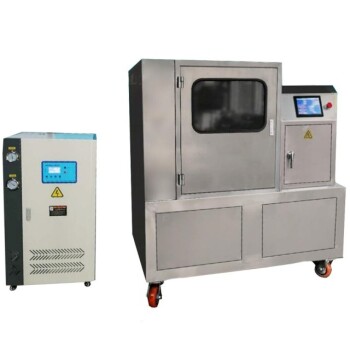
A water cooling system acts as a critical stability control mechanism in high-temperature stress corrosion testing. Its primary function is to cool the condensing components of the test vessel, forcing evaporated water vapor to return to the liquid phase and drop back into the solution.
The Core Objective High temperatures naturally cause evaporation, which threatens to alter the ratio of chemicals in your test solution. The cooling system enables a process called reflux, preserving the exact concentration of the test medium to ensure data accuracy.
The Challenge: Evaporation and Concentration
The Impact of Heat on Test Media
In stress corrosion testing, the "test medium" is often a specific chemical solution, such as high-concentration Calcium Chloride (CaCl2).
When you subject this solution to high temperatures, water naturally begins to evaporate and escape the vessel as steam.
The Risk of Concentration Drift
If this water vapor is allowed to leave the system, the volume of the solvent (water) decreases while the solute (the corrosive chemical) remains.
This rapidly increases the concentration of the corrosive agents. Because corrosion rates are highly sensitive to chemical concentration, this shift introduces a major variable that invalidates the test results.
How the Cooling System Stabilizes the Test
Facilitating Condensation
The water cooling system is directly connected to the condensing components of the apparatus.
It circulates cool water around the path of the escaping steam. This thermal exchange absorbs the heat from the steam, causing it to condense back into liquid droplets.
The Mechanism of Reflux
Once the steam reverts to liquid water, gravity returns it to the main test vessel.
This process is known as reflux. It ensures that the water attempting to escape is continuously recycled back into the solution.
Maintaining Chemical Integrity
By preventing the net loss of water, the system maintains the stability of the chemical composition.
The concentration of the test medium remains constant throughout the duration of the experiment, regardless of the temperature applied.
Understanding the Risks of Inadequate Cooling
The Consequence of "Open" Systems
Without an active water cooling system, the test environment becomes dynamic rather than static.
As the solution boils off, the environment becomes progressively more aggressive than intended.
Data Corruption
If the concentration fluctuates, you cannot isolate the variables you are trying to measure (such as stress or temperature).
Any observed corrosion could be attributed to the unintended spike in chemical concentration rather than the material's reaction to the intended environment. This leads to test errors and reproducible failure.
Ensuring Test Validity
To guarantee the reliability of your stress corrosion data, apply the following principles:
- If your primary focus is Data Accuracy: Ensure the cooling system is functioning to prevent evaporation from artificially inflating the corrosiveness of your solution.
- If your primary focus is Long-Term Testing: Rely on the reflux mechanism to maintain solution volume without needing to manually add water, which disrupts test conditions.
Reliable corrosion testing requires a closed chemical loop, and the water cooling system is the key to closing that loop.
Summary Table:
| Feature | Role in Stress Corrosion Testing | Benefit to Researcher |
|---|---|---|
| Condensation | Converts steam back into liquid phase | Prevents solvent loss and dry-out |
| Reflux Process | Recycles evaporated water into the solution | Maintains constant chemical concentration |
| Concentration Control | Eliminates variable chemical shifts | Ensures test reproducibility and data validity |
| Thermal Exchange | Absorbs heat from escaping vapor | Protects equipment and stabilizes the environment |
Maximize Your Research Precision with KINTEK
Ensure the integrity of your experimental data with KINTEK’s industry-leading laboratory solutions. We specialize in providing high-performance high-temperature high-pressure reactors and autoclaves specifically designed to handle the rigors of stress corrosion testing.
Beyond reactors, KINTEK offers a comprehensive range of equipment, including:
- High-Temperature Furnaces: Muffle, tube, vacuum, and CVD systems.
- Sample Preparation: Crushing, milling, and hydraulic pellet presses.
- Specialized Tools: Electrolytic cells, electrodes, and high-purity ceramics.
Don't let concentration drift compromise your results. Partner with KINTEK for reliable, stable, and accurate testing environments.
Contact our technical experts today to find the perfect solution for your lab!
References
- Mathias Truschner, Andreas Keplinger. Cathodic and Anodic Stress Corrosion Cracking of a New High-Strength CrNiMnMoN Austenitic Stainless Steel. DOI: 10.3390/met10111541
This article is also based on technical information from Kintek Solution Knowledge Base .
Related Products
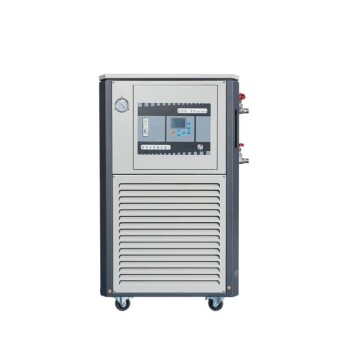
- 50L Heating Chilling Circulator Cooling Water Bath Circulator for High and Low Temperature Constant Temperature Reaction
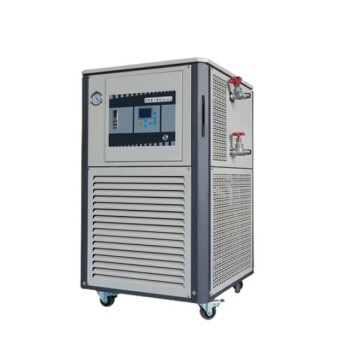
- 10L Heating Chilling Circulator Cooling Water Bath Circulator for High and Low Temperature Constant Temperature Reaction
- Molybdenum Tungsten Tantalum Evaporation Boat for High Temperature Applications
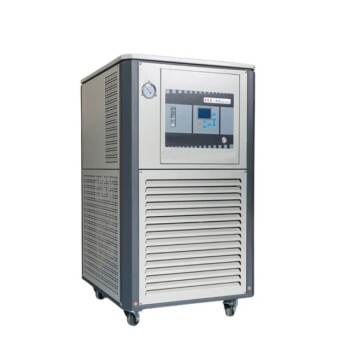
- 5L Heating Chilling Circulator Cooling Water Bath Circulator for High and Low Temperature Constant Temperature Reaction
- 30L Heating Chilling Circulator Cooling Water Bath Circulator for High and Low Temperature Constant Temperature Reaction
People Also Ask
- What is the necessity of a circulating water bath in chlorate production? Optimize Yield & Purity with Precision
- What is the purpose of a cooling circulation water bath system in electrochemical experiments? Enhance Lab Precision
- What function does a circulating cooling chiller perform during the gas adsorption isotherm testing of nanoporous carbon?
- How does a constant temperature circulator support the leaching reaction of gold scrap? Optimize Gold Recovery Results
- How do constant temperature circulators impact weight-loss immersion tests? Ensure Precision in Corrosion Analysis