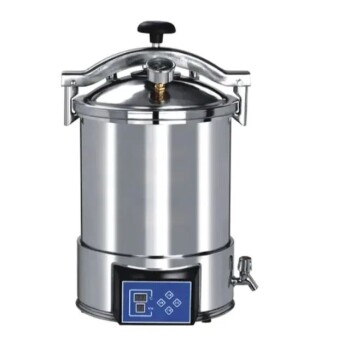
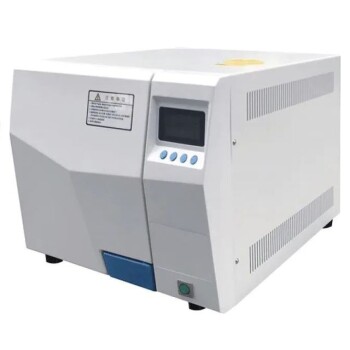
A high-temperature and high-pressure autoclave serves as a critical simulation chamber for evaluating the resilience of nuclear cladding materials. Specifically for molybdenum alloys, this device replicates the harsh coolant environments of Boiling Water Reactors (BWR) and Pressurized Water Reactors (PWR) to quantify corrosion rates and verify the integrity of protective coatings.
Core Takeaway While molybdenum alloys offer potential benefits for nuclear fuel cladding, their validation depends on surviving realistic reactor conditions. The autoclave provides this validation by exposing materials to precise chemical and physical stressors to ensure long-term chemical stability and coating durability.
Simulating Reactor Environments
Replicating Extreme Conditions
To evaluate material performance, the autoclave must mimic the operational reality of a nuclear core.
For a Pressurized Water Reactor (PWR), this involves generating pressures around 15.5 MPa.
Simultaneously, coolant temperatures are maintained between 320 and 350 degrees Celsius.
Controlling Water Chemistry
Temperature and pressure are only part of the equation; the chemical environment is equally destructive.
The autoclave introduces specific water chemistries, including controlled levels of hydrogen or oxygen.
This allows researchers to observe how the alloy reacts to the actual oxidizing or reducing conditions found in a reactor.
The Testing Process for Molybdenum Alloys
Comparative Analysis
A key function of the autoclave is to test both coated and uncoated molybdenum alloy tubes side-by-side.
Uncoated molybdenum has known vulnerabilities in certain reactor environments.
Testing both states establishes a baseline for how essential the protective coating is for survival.
Verifying Coating Stability
The primary goal for molybdenum applications is often validating the protective coating.
The autoclave ensures that this barrier remains intact and chemically stable under high pressure and temperature.
If the coating fails or delaminates in the autoclave, it acts as an early warning that the material is unsuitable for reactor service.
Quantifying Performance
Measuring Corrosion Rates
The output of these tests is not just qualitative; it is quantitative.
Researchers measure precise corrosion rates to predict the material's lifespan.
This data allows for the extrapolation of how the cladding will perform over the reactor's entire service life.
Kinetic Data Collection
Long-duration experiments within the autoclave allow for the collection of kinetic data.
This tracks how oxide layers form and grow over time.
This data is essential for validating fuel performance codes and ensuring the cladding maintains its structural integrity.
Understanding the Trade-offs
Simulation vs. Reality
While an autoclave provides a high-fidelity simulation of coolant conditions, it is not a perfect replica of a reactor core.
It focuses primarily on chemical and thermal stress, but typically does not account for neutron irradiation or the mechanical interaction between the fuel pellet and the cladding.
Therefore, autoclave data validates chemical stability but must be paired with other testing methods to verify total reactor readiness.
Making the Right Choice for Your Goal
The data derived from autoclave testing is pivotal for different stages of material development.
- If your primary focus is material selection: Prioritize the corrosion rate data to determine if the base alloy or coating chemistry provides sufficient lifespan.
- If your primary focus is safety validation: Scrutinize the coating stability results to ensure there is no risk of barrier failure under maximum pressure and temperature conditions.
Successful deployment of molybdenum cladding relies on this rigorous, environment-specific validation.
Summary Table:
| Parameter | PWR Simulation Requirements | Testing Objective for Molybdenum |
|---|---|---|
| Pressure | Approx. 15.5 MPa | Verify structural integrity under stress |
| Temperature | 320°C - 350°C | Assess thermal stability and oxidation |
| Water Chemistry | Controlled H₂/O₂ levels | Replicate oxidizing/reducing environments |
| Key Metric | Corrosion Rate (mm/year) | Predict material lifespan and safety |
| Coating Focus | Stability & Adhesion | Prevent delamination of protective layers |
Advance Your Nuclear Material Research with KINTEK
Precise simulation is the backbone of material validation. KINTEK specializes in high-performance laboratory equipment, providing the high-temperature high-pressure reactors and autoclaves essential for replicating harsh reactor environments.
Whether you are evaluating molybdenum alloy cladding, testing advanced coatings, or analyzing corrosion kinetics, our precision-engineered systems deliver the accuracy your research demands. Beyond reactors, we offer a full suite of laboratory solutions including crushing and milling systems, high-temperature furnaces, and PTFE or ceramic consumables to support every stage of your workflow.
Ready to elevate your material testing accuracy? Contact our technical experts today to find the perfect solution for your lab's unique requirements.
References
- Bo Cheng, Young‐Jin Kim. Evaluations of Mo-alloy for light water reactor fuel cladding to enhance accident tolerance. DOI: 10.1051/epjn/e2015-50060-7
This article is also based on technical information from Kintek Solution Knowledge Base .
Related Products
- High Pressure Laboratory Autoclave Reactor for Hydrothermal Synthesis
- Mini SS High Pressure Autoclave Reactor for Laboratory Use
- Stainless High Pressure Autoclave Reactor Laboratory Pressure Reactor
- Laboratory High Pressure Horizontal Autoclave Steam Sterilizer for Lab Use
- Portable High Pressure Laboratory Autoclave Steam Sterilizer for Lab Use
People Also Ask
- What role does a high-pressure reactor (autoclave) play in the synthesis of NiCuFe-LDH? Master Hydrothermal Growth
- What Role Does a High-Pressure Reactor or Autoclave Play in HA Catalyst Synthesis? Achieve High Surface Area Materials
- What equipment is required for hydrothermal synthesis of Ga0.25Zn4.67S5.08? Optimize Your Semiconductor Production
- What is the function of a high-pressure reactor in the hydrothermal synthesis of boehmite? Expert Process Insights
- What role does an autoclave play in the synthesis of MnO2 nanofibers? Mastering Hydrothermal Growth