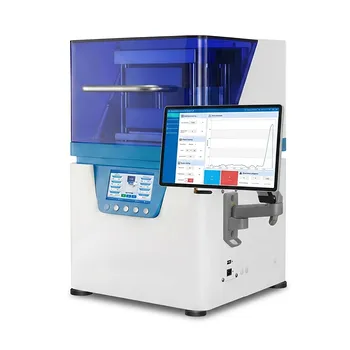
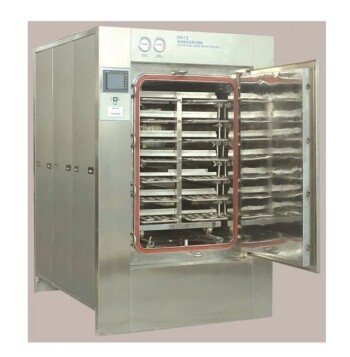
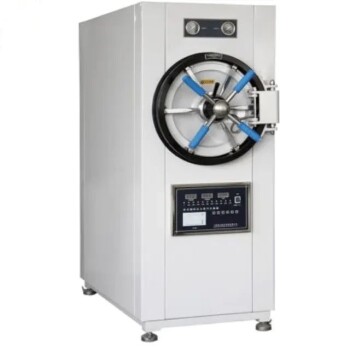
Hydrothermal autoclaves enable the synthesis of germanium-containing sodalites at significantly lower temperatures and with greater structural precision than solid-state methods. By utilizing high-pressure digestion tanks with PTFE liners, researchers can achieve complete crystallization at temperatures as low as 180 °C. This method leverages increased solubility and reaction kinetics to produce powders with superior uniformity and finer particle sizes compared to traditional high-temperature sintering.
High-pressure hydrothermal synthesis provides a controlled, low-temperature environment that overcomes the kinetic barriers of solid-state reactions. This ensures stoichiometric accuracy and phase purity in complex germanium-substituted sodalite structures while protecting materials with poor thermal stability.
Overcoming Thermal Stability and Kinetic Barriers
Lowering the Synthesis Temperature Threshold
Traditional solid-state methods often require extreme temperatures to force ions into a crystal lattice through diffusion. Hydrothermal autoclaves facilitate crystallization at relatively low temperatures, such as 180 °C, which is critical for sodalite compositions that might decompose or phase-separate at higher heat.
Enhancing Solubility and Reaction Rates
The sealed environment of a high-pressure digestion tank creates a hydrothermal state that dramatically increases the solubility of raw materials. This heightened solubility allows reagents to interact in a liquid phase, accelerating reaction rates far beyond what is possible through solid-to-solid contact.
Preserving Thermally Sensitive Compositions
Germanium-substituted sodalites can exhibit poor thermal stability during the formation phase. The pressurized, low-heat environment of an autoclave protects these sensitive structures, allowing the framework to lock into place without the risk of thermal degradation associated with furnace-based methods.
Achieving Superior Material Characteristics
Precise Stoichiometric Doping
Achieving the exact ratio of germanium or other substituents is notoriously difficult in solid-state reactions due to uneven heating or volatile loss. High-pressure tanks ensure precise stoichiometric doping because the sealed system prevents the loss of precursors and promotes a more controlled incorporation of elements.
Uniform Compositional Distribution
Because the reaction occurs in a pressurized solution, the resulting sodalite exhibits a more uniform compositional distribution. This eliminates the "hot spots" or concentration gradients often found in solid-state pellets, resulting in a more chemically homogenous final product.
Refined Particle Morphology
Hydrothermal methods are superior for producing finer particle sizes with narrow distributions. The controlled nucleation environment in the autoclave prevents the uncontrolled grain growth typical of high-temperature sintering, yielding powders that are easier to process for downstream applications.
Understanding the Trade-offs
Equipment and Safety Constraints
While autoclaves offer superior control, they require specialized high-pressure equipment and rigorous safety protocols to manage the risks of pressurized vessels. Furthermore, the use of PTFE liners limits the maximum operating temperature, usually capping the process below 250 °C to prevent liner deformation.
Scalability and Throughput
Solid-state synthesis is often easier to scale for mass production using large industrial kilns. Hydrothermal synthesis is generally a batch process constrained by the volume of the digestion tank, which can lead to lower throughput and higher per-unit costs in a commercial setting.
Selecting the Optimal Synthesis Route
The choice between hydrothermal and solid-state methods depends heavily on your requirements for purity and particle morphology.
- If your primary focus is phase purity and precise doping: Use high-pressure hydrothermal autoclaves to ensure a homogenous crystal structure and prevent the degradation of thermally sensitive germanium components.
- If your primary focus is maximizing particle surface area: Choose the hydrothermal route, as it consistently produces finer particle sizes and more uniform morphology than solid-state sintering.
- If your primary focus is high-volume industrial production: Evaluate solid-state methods first, provided the specific sodalite composition can withstand the necessary sintering temperatures without losing stoichiometric integrity.
By leveraging the unique high-pressure environment of hydrothermal digestion, you can synthesize advanced sodalite materials that are otherwise impossible to create using conventional thermal techniques.
Summary Table:
| Feature | Hydrothermal Synthesis (Autoclave) | Solid-State Method |
|---|---|---|
| Synthesis Temperature | Low (e.g., 180 °C - 250 °C) | Very High (Extreme Sintering) |
| Structural Precision | Superior stoichiometric accuracy | Lower; risk of uneven heating |
| Particle Morphology | Fine particles, narrow distribution | Coarse grains, uncontrolled growth |
| Thermal Sensitivity | Protects unstable compositions | Risk of thermal degradation |
| Reaction Medium | Pressurized liquid (high solubility) | Solid-to-solid diffusion |
Elevate Your Material Research with KINTEK Precision
Achieve unmatched stoichiometric accuracy and phase purity in your germanium-containing sodalites. KINTEK specializes in high-performance laboratory equipment designed for the most demanding synthesis environments. Our industry-leading high-temperature high-pressure reactors and autoclaves, paired with premium PTFE liners and ceramic consumables, ensure your hydrothermal processes are safe, efficient, and reproducible.
Why Choose KINTEK?
- Advanced Hydrothermal Solutions: Specialized digestion tanks for low-temperature, high-precision crystallization.
- Comprehensive Portfolio: From muffle and vacuum furnaces for solid-state sintering to crushing and milling systems for sample preparation.
- Uncompromising Quality: Reliable cooling solutions, hydraulic presses, and essential laboratory consumables tailored for material science.
Ready to optimize your synthesis results? Contact KINTEK today to discover how our high-pressure systems can transform your laboratory's capabilities!
References
- Hannah Byron, Mika Lastusaari. Highly Tuneable Photochromic Sodalites for Dosimetry, Security Marking and Imaging. DOI: 10.1002/adfm.202303398
This article is also based on technical information from Kintek Solution Knowledge Base .
Related Products
- High Pressure Laboratory Autoclave Reactor for Hydrothermal Synthesis
- Fully Automatic Heated Hydraulic Lab Press for Materials Sintering and Sample Preparation
- Laboratory High Pressure Steam Sterilizer Vertical Autoclave for Lab Department
- Desktop Fast Laboratory Autoclave Sterilizer 35L 50L 90L for Lab Use
- Desktop Fast High Pressure Laboratory Autoclave Sterilizer 16L 24L for Lab Use
People Also Ask
- What role does a high-pressure reactor (autoclave) play in the synthesis of NiCuFe-LDH? Master Hydrothermal Growth
- What Role Does a High-Pressure Reactor or Autoclave Play in HA Catalyst Synthesis? Achieve High Surface Area Materials
- What equipment is required for hydrothermal synthesis of Ga0.25Zn4.67S5.08? Optimize Your Semiconductor Production
- What is the function of a high-pressure reactor in the hydrothermal synthesis of boehmite? Expert Process Insights
- What role does an autoclave play in the synthesis of MnO2 nanofibers? Mastering Hydrothermal Growth