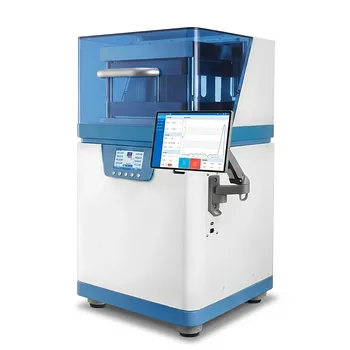
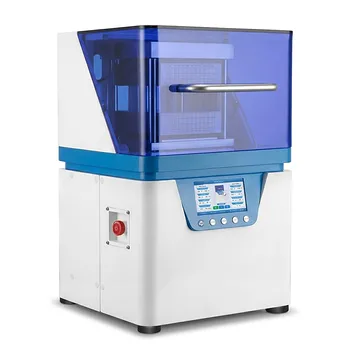
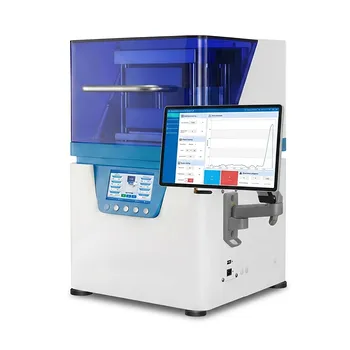
The high-pressure reactor, or autoclave, is the critical catalyst for achieving the hydrothermal synthesis of NiCuFe-LDH. It provides the sealed, high-temperature, and high-pressure environment required for metal precursors to undergo uniform nucleation and ordered crystal growth. This controlled setting is essential for transforming raw metal salts into well-aligned, vertically grown nanosheet arrays on conductive substrates.
The high-pressure reactor enables chemical reactions to occur at temperatures far exceeding the normal boiling point of the solvent, creating a subcritical environment. This specific state drives the self-assembly of nickel, copper, and iron ions into highly crystalline, layered structures that are otherwise impossible to achieve at atmospheric pressure.
Facilitating the Hydrothermal Reaction Environment
Overcoming Solvent Boiling Point Limits
In an open system, the reaction temperature is capped by the solvent's boiling point. The sealed autoclave allows the internal pressure to rise as the temperature increases, enabling the solution to remain liquid at temperatures typically ranging from 120 °C to 160 °C.
Enhancing Diffusion and Reactivity
Under high-pressure conditions, the ionic product of the reaction medium increases and the diffusion capacity of the ions is significantly enhanced. This allows for faster reaction kinetics and the precise exchange of interlayer anions, which are vital for the electrochemical properties of the LDH.
Maintaining Chemical Purity
High-pressure reactors are frequently equipped with a polytetrafluoroethylene (PTFE) liner. This liner provides a corrosion-resistant and chemically inert environment, ensuring that the high-temperature precursor solution does not react with the metal body of the reactor, thereby preserving the purity of the LDH structure.
Governing Nucleation and Structural Growth
Promoting Uniform Heterogeneous Nucleation
The pressurized environment facilitates the heterogeneous nucleation of metal salt precursors directly onto the surface of a substrate, such as nickel foam. This ensures that the Ni, Cu, and Fe ions distribute evenly, preventing the formation of irregular clusters or bulk precipitates.
Achieving High Crystallinity
The stable, enclosed environment promotes the ordered growth of layered crystal structures. This results in LDH nanoparticles with high charge densities and specific grain sizes, which are essential for structural stability during demanding applications like seawater electrolysis.
Engineering Nanosheet Array Morphologies
The reactor's conditions are decisive for the in-situ construction of vertical 2D nanosheet arrays or 3D nanopillar structures. These specific morphologies provide a high specific surface area, which significantly maximizes the exposure of active sites for electrocatalysis.
Understanding the Trade-offs and Pitfalls
Pressure and Temperature Calibration
While higher temperatures can accelerate crystal growth, excessive heat or pressure can lead to over-growth, which might collapse the delicate nanosheet structures. Precision in balancing these parameters is required to maintain the desired "open" architecture of the array.
Safety and Equipment Integrity
Operating at subcritical conditions introduces significant safety risks related to pressure vessel failure. Regular inspection of the autoclave's seals and the integrity of the PTFE liner is mandatory to prevent hazardous leaks or contamination of the synthesis.
Scalability Constraints
Hydrothermal synthesis in an autoclave is inherently a batch process, which can limit throughput compared to continuous flow methods. Additionally, the localized conditions inside a large-volume reactor must be carefully monitored to ensure uniformity across the entire substrate.
Applying This to Your Synthesis Goals
Optimizing Your Synthesis Process
The choice of reactor settings should be dictated by the intended application of your NiCuFe-LDH material.
- If your primary focus is Maximum Electrocatalytic Activity: Prioritize settings that promote vertical nanosheet alignment and high surface area exposure through precise temperature control.
- If your primary focus is Long-term Structural Stability: Focus on maximizing crystallinity and the firmness of the bond between the LDH and the nickel substrate by extending the hydrothermal aging time.
- If your primary focus is Material Purity: Ensure the use of high-quality PTFE liners and rigorous cleaning protocols to avoid transition metal contamination from the reactor walls.
By mastering the pressurized environment of the autoclave, you gain the ability to precisely engineer the atomic and morphological landscape of NiCuFe-LDH for next-generation energy applications.
Summary Table:
| Reactor Feature | Impact on NiCuFe-LDH Synthesis | Key Benefit for Researchers |
|---|---|---|
| Subcritical Temp (120-160°C) | Overcomes solvent boiling point limits | Faster reaction kinetics and phase transformation |
| High-Pressure Environment | Increases ionic product and diffusion capacity | Enhanced anion exchange and structural density |
| Sealed PTFE Liner | Prevents metallic contamination and corrosion | High chemical purity and structural integrity |
| Controlled Cooling/Aging | Regulates nucleation and crystal growth | Uniform, vertically aligned nanosheet arrays |
Elevate Your Material Synthesis with KINTEK
Are you looking to achieve high-crystallinity and precise morphology in your NiCuFe-LDH or energy storage materials? KINTEK specializes in advanced laboratory solutions, offering a comprehensive range of high-temperature high-pressure reactors and autoclaves specifically designed for hydrothermal synthesis.
Our equipment, featuring high-quality PTFE liners, ceramics, and crucibles, ensures your research remains free from contamination. Beyond reactors, we support your entire workflow with electrolytic cells, battery research tools, crushing and milling systems, and high-temperature furnaces.
Ready to optimize your lab’s efficiency and material performance? Contact our technical experts today to find the perfect equipment for your specific synthesis goals!
References
- Yihan Zhang, Hyesung Park. Phase‐Bridged Hierarchical Catalysts for Efficient and Stable Water Electrolysis. DOI: 10.1002/adfm.202309250
This article is also based on technical information from Kintek Solution Knowledge Base .
Related Products
- High Pressure Laboratory Autoclave Reactor for Hydrothermal Synthesis
- Customizable Laboratory High Temperature High Pressure Reactors for Diverse Scientific Applications
- Stainless High Pressure Autoclave Reactor Laboratory Pressure Reactor
- Mini SS High Pressure Autoclave Reactor for Laboratory Use
- Customizable High Pressure Reactors for Advanced Scientific and Industrial Applications
People Also Ask
- What Role Does a High-Pressure Reactor or Autoclave Play in HA Catalyst Synthesis? Achieve High Surface Area Materials
- What equipment is required for hydrothermal synthesis of Ga0.25Zn4.67S5.08? Optimize Your Semiconductor Production
- What is the function of a high-pressure reactor in the hydrothermal synthesis of boehmite? Expert Process Insights
- What role does an autoclave play in the synthesis of MnO2 nanofibers? Mastering Hydrothermal Growth
- Why is a 24-hour hydrothermal treatment in an autoclave necessary for BMO nanosheets? Unlock Superior Photocatalysis