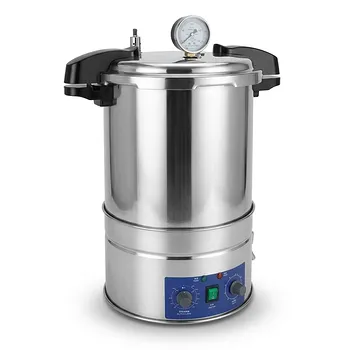
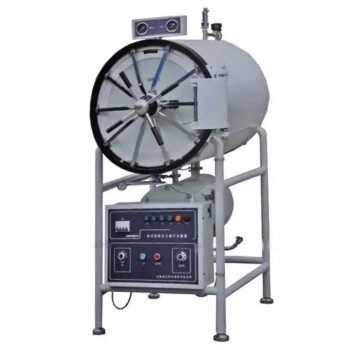
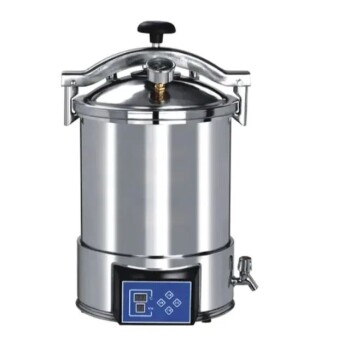
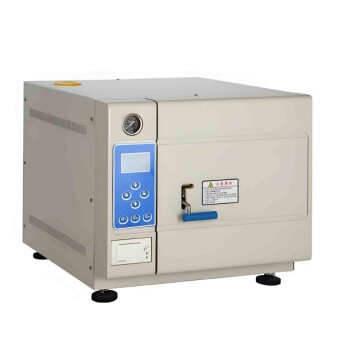
High-pressure autoclaves function as essential containment vessels that facilitate hydrothermal synthesis by creating a sealed environment where temperature and pressure exceed the standard boiling point of water. This extreme internal atmosphere forces reactants to undergo accelerated dissolution and recrystallization, a process necessary for synthesizing advanced catalytic materials that cannot be formed under ambient conditions.
The core function of the autoclave is to drive the formation of highly crystalline structures with complex pore architectures, such as zeolites. By maintaining a closed system, it ensures phase consistency and allows for the precise engineering of specific surface areas and ion-exchange capabilities.
The Mechanics of Hydrothermal Synthesis
Creating Superheated Environments
The primary role of the autoclave is to surpass the limitations of standard atmospheric chemistry. By sealing the reaction mixture, the vessel allows internal temperatures to rise significantly above the boiling point of water.
Accelerating Reactant Transformation
Within this high-pressure environment, reactants experience accelerated dissolution and recrystallization. This rapid turnover is the fundamental mechanism that converts raw precursors into structured catalytic materials.
Promoting High Crystallinity
The controlled, high-energy environment facilitates the growth of materials with high crystallinity. This process is particularly effective for targeting specific crystal planes, which often define the active sites in a catalyst.
Engineering Material Architecture
Developing Complex Pore Structures
Autoclaves are critical for synthesizing materials that require defined internal cavities. This includes zeolites and molecular sieves, which rely on complex pore structures to function effectively as catalysts.
Controlling Dispersibility and Surface Area
By fine-tuning the temperature and pressure parameters, researchers can dictate the physical characteristics of the resulting powder. This control enables the production of mesoporous materials with high specific surface areas and superior dispersibility.
Enhancing Chemical Functionality
The structural refinement achieved in an autoclave directly impacts chemical performance. The process enhances specific properties, such as the material's ion-exchange capabilities, which are vital for many catalytic applications.
Operational Considerations and Constraints
The Necessity of a Closed System
To achieve high phase composition consistency, the reaction must occur within a completely closed system. While this ensures excellent reproducibility, it requires that all reactants be present at the start of the synthesis, as the vessel cannot be opened mid-process.
Sensitivity to Parameter Adjustments
The output of a high-pressure autoclave is highly sensitive to input variables. Slight adjustments to temperature and pressure will significantly alter the pore structure and dispersibility of the final product, requiring rigorous process control to avoid varying results.
Making the Right Choice for Your Goal
When utilizing high-pressure autoclaves for catalyst development, align your parameters with your specific structural requirements:
- If your primary focus is Structural Complexity: Prioritize high-pressure settings to facilitate the accelerated recrystallization needed for complex pore structures like zeolites and molecular sieves.
- If your primary focus is Material Consistency: Leverage the closed-system nature of the reactor to ensure high phase composition consistency and reproducibility across batches.
- If your primary focus is Reactivity: Adjust temperature parameters to maximize specific surface area and ion-exchange capabilities in mesoporous materials.
High-pressure autoclaves are the definitive tool for converting basic reactants into highly structured, reproducible, and chemically active catalytic materials.
Summary Table:
| Feature | Function in Hydrothermal Synthesis | Impact on Catalytic Materials |
|---|---|---|
| Superheated Environment | Surpasses standard boiling points | Accelerates reactant dissolution and recrystallization |
| Closed System | Maintains internal phase consistency | Ensures high reproducibility and phase purity |
| Pressure Control | Facilitates complex architecture growth | Creates defined pore structures like zeolites and molecular sieves |
| Thermal Precision | Regulates crystal growth energy | Optimizes specific surface areas and active crystal planes |
Elevate Your Material Research with KINTEK Precision Engineering
Unlock the full potential of hydrothermal synthesis with KINTEK’s high-temperature high-pressure reactors and autoclaves. Specifically designed for the rigorous demands of catalytic material development, our equipment provides the precise thermal and pressure control necessary to engineer complex pore structures, high-surface-area mesoporous materials, and high-crystallinity zeolites.
From battery research tools and advanced ceramics to our industry-leading crushing, milling, and hydraulic press systems, KINTEK is your partner in laboratory excellence. Don't let equipment limitations stifle your innovation—empower your lab with the durability and accuracy of KINTEK solutions.
Ready to refine your synthesis process? Contact our technical experts today to find the perfect autoclave or reactor configuration for your specific application.
References
- Ahmed I. Osman, Mika Sillanpää. Biofuel production, hydrogen production and water remediation by photocatalysis, biocatalysis and electrocatalysis. DOI: 10.1007/s10311-023-01581-7
This article is also based on technical information from Kintek Solution Knowledge Base .
Related Products
- High Pressure Laboratory Autoclave Reactor for Hydrothermal Synthesis
- Mini SS High Pressure Autoclave Reactor for Laboratory Use
- Customizable Laboratory High Temperature High Pressure Reactors for Diverse Scientific Applications
- Stainless High Pressure Autoclave Reactor Laboratory Pressure Reactor
- Customizable High Pressure Reactors for Advanced Scientific and Industrial Applications
People Also Ask
- What role does a high-pressure reactor (autoclave) play in the synthesis of NiCuFe-LDH? Master Hydrothermal Growth
- What Role Does a High-Pressure Reactor or Autoclave Play in HA Catalyst Synthesis? Achieve High Surface Area Materials
- What equipment is required for hydrothermal synthesis of Ga0.25Zn4.67S5.08? Optimize Your Semiconductor Production
- What is the function of a high-pressure reactor in the hydrothermal synthesis of boehmite? Expert Process Insights
- What role does an autoclave play in the synthesis of MnO2 nanofibers? Mastering Hydrothermal Growth