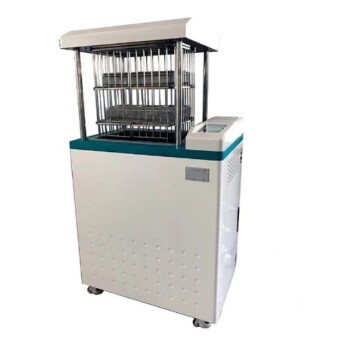
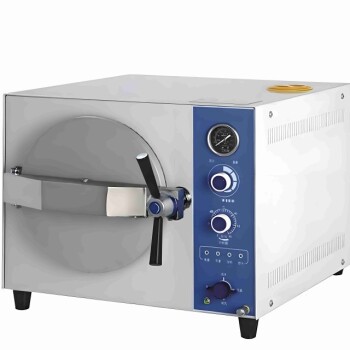
High-pressure autoclave reactors act as hermetically sealed vessels designed to conduct chemical reactions under conditions that exceed standard atmospheric limits. By maintaining elevated temperatures and pressures, they create a unique hydrothermal environment where solvents remain liquid above their natural boiling points. This function is critical for inducing the uniform nucleation and growth of nanocrystals, allowing researchers to produce nano-metal oxides with precise specifications without altering the hardware setup.
Core Insight: The primary value of these reactors lies in their ability to facilitate the dissolution-recrystallization mechanism. By preventing solvent evaporation at high heat, they enable the transformation of amorphous precursors into highly crystalline, distinct nanostructures.
The Mechanics of Hydrothermal Control
Exceeding the Boiling Limit
The fundamental function of the autoclave is to provide a space where aqueous solutions can be heated significantly above their atmospheric boiling point (e.g., reaching 180°C or higher).
Because the system is sealed, the pressure increases alongside the temperature. This prevents the solvent from evaporating, maintaining a liquid phase that acts as a highly active medium for the reaction.
Regulating Nucleation and Growth
Precise control over internal temperature regimes is essential for determining how crystals form.
By adjusting these thermal parameters and often utilizing internal stirring mechanisms, the reactor induces uniform nucleation. This ensures that the growth of nanocrystals is consistent throughout the entire batch, rather than localized or uneven.
Engineering Material Properties
Defining Morphology and Size
High-pressure environments are critical for dictating the physical shape of the final nano-oxide.
Through the management of pressure and temperature, researchers can produce complex morphologies such as nanosheets, nanorods, nanotubes, or nanobelts. Furthermore, this control ensures a narrow particle size distribution, which is vital for the material's eventual application.
Phase Selection and Crystallinity
These reactors allow for the selective induction of specific crystalline phases from amorphous precursors.
For example, in the synthesis of Titanium Dioxide (TiO2), the reactor conditions can be tuned to favor the anatase phase. Similarly, materials like Barium Titanate (BaTiO3) can be synthesized with high surface energy and solubility, which facilitates subsequent processing steps like cold sintering.
Ensuring Purity and Integrity
The Role of Inert Liners
To achieve high purity, many high-pressure reactors utilize a polytetrafluoroethylene (PTFE) or "Teflon" liner.
This liner provides exceptional chemical inertness, effectively resisting corrosion from the acidic environments often required for hydrothermal synthesis. This barrier prevents metallic impurities from the reactor body from leaching into the solution, ensuring the integrity of materials like tungsten oxide nanorods.
Robust Exterior Construction
While the liner interacts with the chemicals, the outer body must withstand the immense physical stress of the reaction.
These reactor bodies are constructed from high-strength materials such as Stainless Steel (SS-316), Hastelloy, Inconel, or Titanium. This construction ensures the vessel remains safely sealed while maintaining the high-pressure environment necessary for the reaction to proceed.
Understanding the Trade-offs
Operational Complexity vs. Versatility
While these reactors allow for the production of various materials without hardware reconfiguration, the process demands rigorous parameter control.
Slight deviations in temperature or pressure can lead to unintended phases or irregular morphologies. The user must precisely manage the "recipe" of the reaction, as the hardware itself provides the capability but not the strategy.
Batch Limitations
Autoclave reactors are typically batch-processing units.
While they are excellent for creating high-quality, high-purity materials, the volume is limited by the size of the pressure vessel. Scaling up production often requires larger vessels or multiple reactors, rather than a continuous flow process.
Making the Right Choice for Your Synthesis
To maximize the utility of a high-pressure autoclave reactor, align your operational parameters with your specific material goals:
- If your primary focus is Phase Purity: Utilize a PTFE-lined reactor to prevent metallic contamination, particularly when working with acidic precursors for materials like Zirconium Dioxide.
- If your primary focus is Morphology Control: Prioritize reactors with precise temperature ramping and stirring capabilities to regulate the growth of complex shapes like nanobelts or nanotubes.
- If your primary focus is Crystallinity: Ensure the reactor is rated for pressures and temperatures sufficiently above the solvent's boiling point to force the full dissolution-recrystallization of amorphous phases.
Mastering the pressure-temperature relationship within these vessels is the key to unlocking the full potential of hydrothermally synthesized nano-oxides.
Summary Table:
| Feature | Function in Hydrothermal Synthesis | Impact on Nano-Oxides |
|---|---|---|
| Sealed Environment | Prevents solvent evaporation above boiling point | Enables dissolution-recrystallization mechanism |
| Pressure Control | Increases solubility of amorphous precursors | Favors specific crystalline phases (e.g., Anatase TiO2) |
| Thermal Regulation | Maintains uniform internal temperature | Ensures narrow particle size distribution |
| PTFE/Teflon Liner | Provides chemical inertness and corrosion resistance | Prevents metallic impurities for high-purity results |
| Material Selection | Uses SS-316, Hastelloy, or Titanium bodies | Ensures safety and integrity under extreme stress |
Elevate Your Material Research with KINTEK Precision
Unlock the full potential of your hydrothermal synthesis with KINTEK’s high-performance laboratory solutions. Whether you are developing advanced energy storage or specialized catalysts, our high-temperature high-pressure reactors and autoclaves provide the precise control needed to dictate morphology and ensure phase purity.
Why partner with KINTEK?
- Comprehensive Range: From PTFE-lined hydrothermal autoclaves to advanced CVD and induction melting systems.
- Built for Rigor: Our reactors are engineered with SS-316, Hastelloy, and Titanium to withstand the most demanding chemical environments.
- Complete Ecosystem: We provide everything from crushing and milling systems to high-purity ceramics and consumables.
Ready to achieve superior crystallinity and narrow particle size distribution? Contact our technical experts today to find the perfect reactor setup for your laboratory’s unique requirements.
References
- L.A. Ivanov, P.S. Prokopiev. Inventions of scientists, engineers and specialists from different countries in the area of nanotechnologies. Part V. DOI: 10.15828/2075-8545-2021-13-5-311-318
This article is also based on technical information from Kintek Solution Knowledge Base .
Related Products
- Stainless High Pressure Autoclave Reactor Laboratory Pressure Reactor
- Mini SS High Pressure Autoclave Reactor for Laboratory Use
- High Pressure Laboratory Autoclave Reactor for Hydrothermal Synthesis
- Customizable High Pressure Reactors for Advanced Scientific and Industrial Applications
- Desktop Fast High Pressure Laboratory Autoclave Sterilizer 16L 24L for Lab Use
People Also Ask
- Why is a laboratory high-pressure reactor used in the hydrothermal synthesis of hydroxyapatite catalysts?
- Why is a laboratory high-pressure reactor necessary for synthesizing fly ash-based zeolite? Achieve Pure Crystallization
- What role does a laboratory high-pressure reactor play in the leaching process of spent cathode materials? Optimize Recovery
- What conditions do laboratory high-pressure reactors provide for HTC? Optimize Your Biochar Production Processes
- How are high-pressure reactors used to prepare metaphosphate electrocatalysts? Master In-Situ Precursor Growth