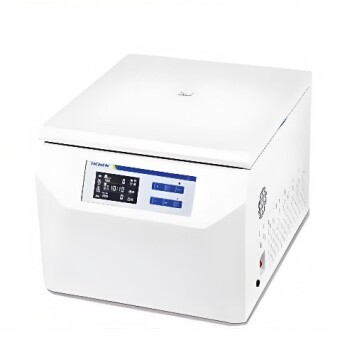
The high-pressure reactor acts as a thermodynamic catalyst, creating a sealed environment that enables synthesis conditions impossible at atmospheric pressure. By allowing the solvent to remain liquid at temperatures far above its boiling point, the reactor dramatically increases the solubility and reactivity of metal salts, facilitating the direct growth of CuO and ZnO nanocrystals onto the functionalized Fe3O4@SiO2-NH2 core.
Core Takeaway The reactor's elevated pressure and temperature are not just for heating; they force a high-energy interaction between the magnetic core and semiconductor precursors. This results in tight physical and chemical contact at the interface, which is the absolute prerequisite for efficient charge transfer in the final composite material.
The Physics of the Reaction Environment
Overcoming Atmospheric Limitations
In a standard open vessel, aqueous solutions cannot exceed 100°C without boiling away. A high-pressure reactor, or autoclave, seals the system, allowing the internal pressure to rise as the temperature increases.
Creating Superheated Conditions
This sealed environment allows the reaction solvent to reach temperatures significantly higher than its atmospheric boiling point while remaining in a liquid state. This state is critical for dissolving precursors that are otherwise difficult to manage.
Enhancing Precursor Solubility
Under these high-pressure, high-temperature conditions, the solubility of the metal salts (the sources for CuO and ZnO) increases significantly. This ensures a homogeneous distribution of ions around the suspended magnetic cores.
Driving Nucleation and Growth
Triggering Heterogeneous Nucleation
The elevated energy in the reactor promotes the reactivity of the metal salts. Rather than forming isolated particles in the solution, the CuO and ZnO nanocrystals are driven to nucleate directly on the surface of the functionalized silica shell (SiO2-NH2).
Ensuring Structural Integrity
The process fosters the growth of these nanocrystals into a cohesive layer. The high pressure ensures that this growth is not merely superficial but results in a robust, micro/nano-hierarchical structure.
Optimizing the Interface
The most critical outcome of this method is the tight physical and chemical contact established between the semiconductor shell (CuO/ZnO) and the magnetic core. This intimate contact minimizes defects at the interface, which is essential for establishing efficient charge transfer pathways.
Understanding the Critical Dependencies
The Necessity of Precision
While the reactor provides the energy, the outcome depends on maintaining specific conditions. The references highlight that temperature and pressure must be precisely controlled to induce the correct crystalline phases (such as anatase in analogous TiO2 systems) rather than amorphous or unwanted phases.
Process sensitivity
The sealed nature of the reactor means the reaction cannot be adjusted once started. If the ratio of precursors (copper nitrate, silica, organic additives) or the temperature profile is incorrect, the resulting morphology may fail to achieve the desired core-shell structure.
Making the Right Choice for Your Goal
To maximize the utility of this synthesis method, consider your primary engineering objective:
- If your primary focus is Efficient Charge Transfer: Prioritize maximizing the temperature and pressure limits of your reactor to ensure the tightest possible chemical bonding at the core-shell interface.
- If your primary focus is Morphological Control: Focus on the precise regulation of the heating ramp and dwell time, as these variables dictate the crystal phase and size distribution of the CuO/ZnO shell.
Ultimately, the high-pressure reactor is the tool that transforms a simple mixture into a unified, high-performance heterojunction composite.
Summary Table:
| Factor | Hydrothermal Influence | Impact on Composite Material |
|---|---|---|
| Pressure | Prevents boiling; allows superheating | Ensures solvent remains liquid for higher solubility |
| Temperature | Exceeds atmospheric boiling points | Catalyzes direct nucleation of CuO/ZnO on cores |
| Solubility | Dramatically increased for metal salts | Enables homogeneous distribution of ions around seeds |
| Interface | High-energy molecular interactions | Creates tight physical/chemical contact for charge transfer |
Elevate Your Advanced Material Synthesis with KINTEK
Precision is the difference between a failed mixture and a high-performance heterojunction composite. KINTEK specializes in high-end laboratory equipment designed to meet the rigorous demands of hydrothermal synthesis.
Our industry-leading high-temperature high-pressure reactors and autoclaves provide the precise temperature control and pressure stability required to engineer complex core-shell structures like Fe3O4@SiO2-NH2@CuO/ZnO. Whether you are focusing on battery research, magnetic separation, or photocatalysis, our comprehensive range—including crushing and milling systems, vacuum furnaces, and specialized ceramics—is built to empower your innovation.
Ready to optimize your lab’s efficiency and research outcomes? Contact our specialists today to find the perfect solution for your synthesis needs.
References
- Saeid Fallahizadeh, Majid Kermani. Enhanced photocatalytic degradation of amoxicillin using a spinning disc photocatalytic reactor (SDPR) with a novel Fe3O4@void@CuO/ZnO yolk-shell thin film nanostructure. DOI: 10.1038/s41598-023-43437-8
This article is also based on technical information from Kintek Solution Knowledge Base .
Related Products
- Customizable Laboratory High Temperature High Pressure Reactors for Diverse Scientific Applications
- Customizable High Pressure Reactors for Advanced Scientific and Industrial Applications
- Stainless High Pressure Autoclave Reactor Laboratory Pressure Reactor
- Mini SS High Pressure Autoclave Reactor for Laboratory Use
- High Pressure Laboratory Autoclave Reactor for Hydrothermal Synthesis
People Also Ask
- How do high-pressure and high-temperature reactors ensure the effective treatment of lignocellulosic wastewater in WAO?
- What equipment is required for high-pressure high-temperature reactions? Master Extreme Chemistry Safely
- How do you control high pressure in a reactor? A Guide to Safe & Stable Operation
- How does initial oxygen pressure affect the wet oxidation of pharmaceutical sludge? Master Your Oxidation Depth
- Why is argon better than nitrogen for inert atmosphere? Ensure Absolute Reactivity & Stability