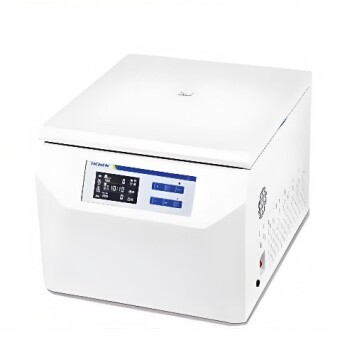
A high-pressure reactor functions as a critical forcing mechanism in solvothermal synthesis by creating a sealed environment that pushes organic solvents into supercritical or near-supercritical states. This elevation of temperature and pressure drastically increases the solubility and reactivity of precursors, which is impossible to achieve under ambient conditions. Consequently, this allows for the precise growth of highly crystalline supports, such as metal sulfides or Metal-Organic Frameworks (MOFs), which act as the structural foundation for photocatalytic interfaces.
Core Takeaway Solvothermal synthesis relies on the high-pressure reactor to alter the fundamental physical properties of solvents, unlocking superior solubility and reaction kinetics. This controlled environment is essential for producing materials with high crystallinity, specific morphologies, and the necessary surface architecture for effective photocatalysis.
The Mechanics of Solvothermal Synthesis
Achieving Supercritical Conditions
The primary function of the high-pressure reactor is to maintain a sealed system while subjected to elevated temperatures.
Because the vessel is closed, the internal pressure rises as the temperature increases, preventing the solvent from boiling away.
This forces organic solvents into a supercritical or near-supercritical state, a phase where the fluid exhibits unique properties distinct from standard liquids or gases.
Enhancing Solubility and Reactivity
In this high-pressure environment, the solvent’s ability to dissolve solid precursors significantly improves.
The increased solubility ensures that reactants are fully dispersed, preventing localized agglomeration and ensuring a homogenous reaction mixture.
Simultaneously, the elevated pressure drives higher reaction activity, enabling chemical transformations that are thermodynamically unfavorable at standard atmospheric pressure.
Controlling Crystallinity and Structure
The stability provided by the reactor facilitates the growth of highly crystalline materials.
High crystallinity is vital for photocatalytic carriers because it reduces defects that can trap charge carriers and lower efficiency.
This process is particularly effective for synthesizing complex structures like metal sulfides or Metal-Organic Frameworks (MOFs), which serve as robust supports for metal catalysts.
Precision Morphology Engineering
Beyond crystal structure, the reactor allows for precise control over the physical shape, or morphology, of the material.
By modulating pressure and temperature, researchers can direct the growth of particles to achieve specific sizes and shapes, such as nanoscale powders.
This control results in supports with a high specific surface area, which maximizes the number of active sites available for catalytic reactions like nitrogen fixation.
Operational Trade-offs and Considerations
Complexity of Parameter Control
While high-pressure reactors offer precision, they require exacting control over variables.
Slight deviations in temperature or pressure can lead to significant inconsistencies in phase composition or particle size distribution.
Achieving reproducibility demands rigorous monitoring and precise calibration of the reactor’s internal environment.
Safety and Scalability Constraints
The requirement for maintaining high pressure introduces inherent safety risks and engineering challenges.
Reactors must be constructed from robust materials to withstand the stress of supercritical solvents, increasing equipment costs.
Furthermore, scaling these batch reactions from a laboratory setting to industrial production is often non-linear and technically demanding.
Making the Right Choice for Your Goal
To maximize the efficacy of your photocatalytic carrier synthesis, align your reactor parameters with your specific material requirements:
- If your primary focus is Structural Integrity: Prioritize high pressure and temperature stability to ensure the growth of highly crystalline, defect-free metal sulfides or MOFs.
- If your primary focus is Surface Reactivity: Focus on tuning the pressure to control particle size and morphology, aiming for mesoporous structures with high specific surface areas.
By leveraging the supercritical capabilities of a high-pressure reactor, you transform basic precursors into sophisticated, high-performance catalytic foundations.
Summary Table:
| Feature | Solvothermal Mechanism | Impact on Photocatalytic Carriers |
|---|---|---|
| Phase State | Supercritical/Near-supercritical fluid | Enhances precursor solubility and homogeneity |
| Reaction Kinetics | Elevated pressure & temperature | Drives transformations unfavorable at ambient conditions |
| Crystallinity | Sealed, stable environment | Produces defect-free supports (MOFs, metal sulfides) |
| Morphology Control | Precise parameter modulation | Optimizes specific surface area and active sites |
Elevate Your Photocatalytic Research with KINTEK Precision
Maximize the potential of your material synthesis with KINTEK’s high-performance laboratory solutions. Whether you are developing highly crystalline MOFs or complex metal sulfides, our high-temperature high-pressure reactors and autoclaves provide the exacting control over supercritical conditions required for superior photocatalytic performance.
From crushing and milling systems for precursor preparation to high-temperature furnaces and vacuum systems for advanced material processing, KINTEK specializes in empowering researchers with robust, reliable equipment.
Ready to achieve high-performance results? Contact us today to find the perfect reactor for your lab!
References
- Binghao Wang, Shuang‐Feng Yin. Recent advances in tunable metal–support interactions for enhancing the photocatalytic nitrogen reduction reaction. DOI: 10.1039/d3ey00191a
This article is also based on technical information from Kintek Solution Knowledge Base .
Related Products
- Customizable Laboratory High Temperature High Pressure Reactors for Diverse Scientific Applications
- Customizable High Pressure Reactors for Advanced Scientific and Industrial Applications
- Stainless High Pressure Autoclave Reactor Laboratory Pressure Reactor
- Mini SS High Pressure Autoclave Reactor for Laboratory Use
- High Pressure Laboratory Autoclave Reactor for Hydrothermal Synthesis
People Also Ask
- How do high-pressure and high-temperature reactors ensure the effective treatment of lignocellulosic wastewater in WAO?
- What equipment is required for high-pressure high-temperature reactions? Master Extreme Chemistry Safely
- How do you control high pressure in a reactor? A Guide to Safe & Stable Operation
- How does initial oxygen pressure affect the wet oxidation of pharmaceutical sludge? Master Your Oxidation Depth
- Why is argon better than nitrogen for inert atmosphere? Ensure Absolute Reactivity & Stability