Incorporating a load lock chamber into Microwave Plasma-Enhanced Chemical Vapor Deposition (MW-PECVD) equipment primarily serves to isolate the main deposition environment from the external atmosphere. By enabling the transfer of samples without venting the main chamber, this component drastically improves both the operational speed and the chemical integrity of the thin-film deposition process.
The load lock chamber acts as a critical vacuum buffer, simultaneously boosting production throughput by eliminating repetitive pumping cycles and ensuring superior film purity by preventing atmospheric contamination.
Optimizing Production Efficiency
Reducing Vacuum Cycle Times
In systems without a load lock, the entire main chamber must be vented to air and re-evacuated for every single run. A load lock eliminates this requirement.
Because only the small volume of the load lock chamber needs to be pumped down, the system reaches the required base pressure much faster. This significantly reduces the downtime between process runs.
Increasing Overall Throughput
The reduction in pumping time translates directly into higher production capacity. Operators can process more samples in a single shift.
For industrial applications where cycle time is a key performance indicator, the inclusion of a load lock is often the deciding factor in meeting volume targets.
Ensuring Process Integrity and Quality
Preventing Atmospheric Contamination
The primary reference highlights that a load lock prevents the deposition environment from being exposed to atmospheric moisture and oxygen. These contaminants are detrimental to many sensitive MW-PECVD processes.
By keeping the main chamber under vacuum permanently, the system minimizes the adsorption of water vapor on the chamber walls. This results in a cleaner background environment for film growth.
Maintaining Process Consistency
High-quality thin films require a stable, reproducible chemical environment.
A load lock ensures that the thermal and chemical conditions inside the main chamber remain constant run-to-run. This leads to higher yield and greater uniformity across batches, as the system does not have to "recover" from atmospheric exposure after every sample change.
Operational Considerations and Trade-offs
Increased System Complexity
While beneficial, a load lock adds mechanical complexity to the system. It requires additional vacuum pumps, gate valves, and magnetic or robotic transfer arms.
This increase in moving parts can lead to higher maintenance requirements compared to simpler, direct-load systems.
Initial Capital Investment
The addition of a load lock chamber increases the upfront cost of the MW-PECVD equipment.
Buyers must weigh this initial expense against the long-term savings gained from increased efficiency and higher yield rates.
Making the Right Choice for Your Goal
Deciding to prioritize a load lock depends on your specific processing requirements and volume goals.
- If your primary focus is High-Volume Manufacturing: The load lock is essential for minimizing cycle times and maximizing the number of runs per day.
- If your primary focus is Ultra-High Purity: The load lock is critical for excluding oxygen and moisture to ensure the highest possible film quality.
- If your primary focus is Process Stability: The load lock provides the consistent vacuum environment necessary for reproducible results across multiple batches.
Ultimately, for any application demanding efficiency and high-purity results, the load lock chamber is not just an accessory, but a fundamental necessity.
Summary Table:
| Feature | Benefit | Impact on MW-PECVD |
|---|---|---|
| Vacuum Isolation | Eliminates venting of the main chamber | Prevents atmospheric moisture/oxygen contamination |
| Rapid Cycle Time | Only small volume requires pumping | Drastically increases production throughput |
| Process Stability | Maintains constant thermal/chemical environment | Improves batch-to-batch uniformity and yield |
| Clean Background | Reduces wall adsorption of gases | Ensures ultra-high purity for sensitive thin films |
Elevate Your Material Research with KINTEK Precision
Unlock the full potential of your Microwave Plasma-Enhanced Chemical Vapor Deposition (MW-PECVD) processes. At KINTEK, we specialize in high-performance laboratory equipment designed for the most demanding industrial and research environments. By integrating advanced load lock chambers and high-purity vacuum systems, we help you achieve faster cycle times and unparalleled film quality.
From MPCVD and PECVD systems to our comprehensive range of high-temperature furnaces, high-pressure reactors, and battery research tools, KINTEK provides the end-to-end solutions your lab needs to innovate.
Ready to optimize your production efficiency and process integrity?
Contact our experts today to find the perfect configuration for your lab.
References
- Amir Hossein Mostafavi, Seyed Saeid Hosseini. Advances in surface modification and functionalization for tailoring the characteristics of thin films and membranes via chemical vapor deposition techniques. DOI: 10.1002/app.53720
This article is also based on technical information from Kintek Solution Knowledge Base .
Related Products
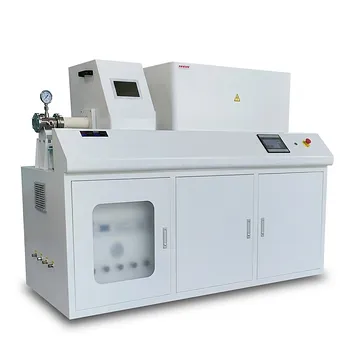
- Chemical Vapor Deposition CVD Equipment System Chamber Slide PECVD Tube Furnace with Liquid Gasifier PECVD Machine
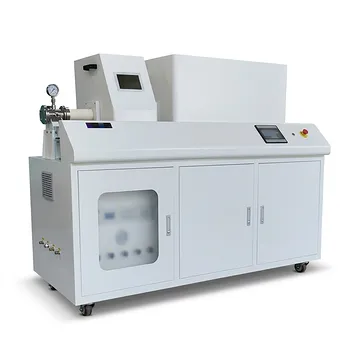
- Inclined Rotary Plasma Enhanced Chemical Vapor Deposition PECVD Equipment Tube Furnace Machine
- Inclined Rotary Plasma Enhanced Chemical Vapor Deposition PECVD Equipment Tube Furnace Machine
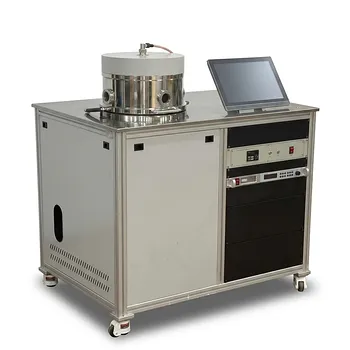
- RF PECVD System Radio Frequency Plasma-Enhanced Chemical Vapor Deposition RF PECVD
People Also Ask
- What are the advantages of chemical vapor deposition? Achieve Superior Thin Films for Your Lab
- What types of substrates are used in CVD to facilitate graphene films? Optimize Graphene Growth with the Right Catalyst
- What is the chemical vapor deposition growth process? Build Superior Thin Films from the Atom Up
- How expensive is chemical vapor deposition? Understanding the True Cost of High-Performance Coating
- Why is Chemical Vapor Deposition (CVD) equipment uniquely suited for constructing hierarchical superhydrophobic structures?