Hydrophilic PTFE microporous membranes are essential in flow-through dissolution experiments because they provide a unique combination of extreme chemical stability and high-flow efficiency. These membranes effectively secure solid samples within the reactor, preventing the loss of fine particles while remaining resistant to corrosion in highly alkaline environments, typically ranging from pH 9 to 13.
Core Takeaway: Hydrophilic PTFE membranes ensure the integrity of dissolution data by offering superior chemical resistance in harsh pH conditions while allowing unobstructed aqueous flow, effectively bridging the gap between physical sample retention and chemical durability.
Chemical Resilience in Aggressive Environments
Stability in High-pH Conditions
One of the primary advantages of PTFE is its exceptional performance in highly alkaline environments. In dissolution experiments where leaching solutions reach a pH of 9 to 13, standard membrane materials often degrade or leach contaminants.
PTFE remains chemically inert under these conditions, ensuring that the membrane does not react with the sample or the solvent. This stability is critical for maintaining the purity of the analytical results over long-term experiments.
Corrosion and Aging Resistance
PTFE is naturally resistant to embrittlement and aging, which is vital for experiments that span several days or weeks. Unlike other polymers that may become brittle when exposed to continuous chemical flow, PTFE maintains its structural integrity.
This resistance to corrosion ensures that the pore structure remains consistent throughout the experiment. As a result, researchers can rely on consistent flow rates without worrying about the membrane failing mid-process.
Optimizing Flow and Particle Retention
Preventing Fine Particle Loss
The microporous structure of the membrane acts as a high-precision barrier that secures solid samples within the reactor. It is specifically designed to prevent the loss of fine particles into the effluent stream.
By retaining these particles, the membrane ensures that the dissolution rate is measured accurately based on the original sample mass. This leads to more reliable kinetic data in single-pass flow-through systems.
Maintaining Unobstructed Aqueous Flow
While standard PTFE is naturally "non-wetting" or hydrophobic, the hydrophilic treatment allows aqueous leaching solutions to pass through the pores without high backpressure. This is a critical distinction for flow-through systems.
The hydrophilic nature ensures that the liquid "wets" the membrane instantly, allowing for an unobstructed flow of the leaching solution. This prevents air bubbles from Trapping in the pores, which could otherwise stall the experiment or cause inconsistent results.
Understanding the Trade-offs
Cost and Surface Fouling
Hydrophilic PTFE membranes are generally more expensive than standard filter papers or basic polymers like PES. This higher cost is a direct result of the complex manufacturing processes required to make the naturally hydrophobic PTFE water-loving.
Additionally, while PTFE has a non-stick surface, the microporous structure can still be susceptible to physical fouling if the sample contains extremely fine colloids. Over time, this can lead to a gradual increase in flow resistance that must be monitored during the experiment.
How to Apply This to Your Project
Selecting the Right Membrane for Your Goal
Choosing the correct membrane depends on the specific chemical and physical parameters of your dissolution study.
- If your primary focus is High-pH Stability: Utilize hydrophilic PTFE to ensure the membrane does not degrade or interfere with the chemistry of leaching solutions between pH 9 and 13.
- If your primary focus is Sample Retention: Select a specific pore size (e.g., 0.2µm or 0.45µm) to capture the finest particles while maintaining the required flow velocity for your single-pass system.
- If your primary focus is Consistent Flow Dynamics: Opt for the hydrophilic variant over standard PTFE to avoid the need for pre-wetting with alcohols, which could potentially contaminate your dissolution environment.
By leveraging the chemical inertness and engineered flow properties of hydrophilic PTFE, you can ensure your dissolution experiments yield precise, reproducible, and contamination-free data.
Summary Table:
| Key Feature | Advantage | Impact on Research |
|---|---|---|
| Chemical Resilience | Stable in pH 9–13 environments | Prevents leaching and ensures data purity |
| Hydrophilic Treatment | Instant aqueous wetting | No pre-wetting required; avoids backpressure |
| Microporous Structure | High-precision particle retention | Prevents loss of fine samples for accurate kinetics |
| Structural Integrity | Resists embrittlement and aging | Ensures consistent flow rates over long durations |
| Inert Material | Zero reaction with solvents | Eliminates experimental interference |
Elevate Your Laboratory Precision with KINTEK
Reliable dissolution data starts with high-quality consumables. KINTEK specializes in high-performance laboratory equipment, offering everything from hydrophilic PTFE products and ceramics to advanced high-temperature high-pressure reactors and autoclaves.
Whether you need precision crushing and milling systems for sample preparation or specialized PTFE membranes for aggressive chemical environments, our solutions are designed to meet the rigorous demands of modern research.
Ready to optimize your experimental workflow? Contact our experts today to discuss your specific needs and discover how our comprehensive range of lab consumables and equipment can drive your success.
References
- Sonia García-Gómez, Joan de Pablo Ribas. Oxidative dissolution mechanism of both undoped and Gd<sub>2</sub>O<sub>3</sub>-doped UO<sub>2</sub>(s) at alkaline to hyperalkaline pH. DOI: 10.1039/d3dt01268a
This article is also based on technical information from Kintek Solution Knowledge Base .
Related Products
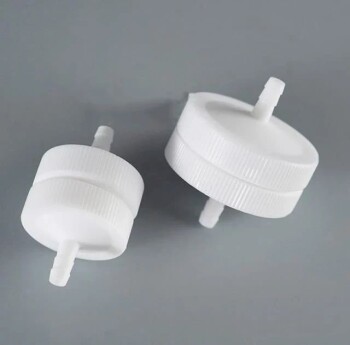
- Custom PTFE Teflon Parts Manufacturer for Sampling Filters
- Custom PTFE Teflon Parts Manufacturer for Hydrothermal Synthesis Reactor Polytetrafluoroethylene Carbon Paper and Carbon Cloth Nano-growth
- Proton Exchange Membrane for Batteries Lab Applications
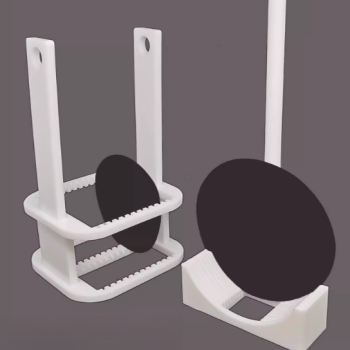
- Customizable PTFE Wafer Carriers for Semiconductor and Lab Applications
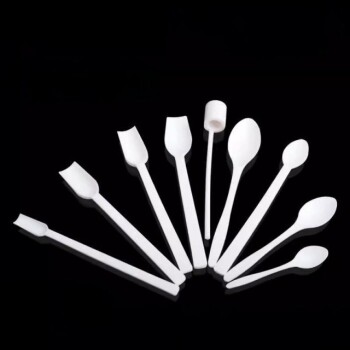
- Custom PTFE Teflon Parts Manufacturer for Sampling Solution Sample and Dry Powder Spoons
People Also Ask
- What are the advantages of using PTFE filters for ionic component analysis? Ensure Accurate Sample Quantification
- Why are PTFE membrane filters selected for rice husk fractionation? Ensuring Purity in Harsh Separation Stages
- Is PTFE corrosion resistant? Discover the Ultimate Chemical Resistance for Your Lab
- What are the specific applications of PTFE in micro-batch slug flow systems? Enhance Your Microfluidic Reaction Purity
- How is PTFE utilized for insulation in Alloy 22 corrosion setups? Ensure Signal Purity & Accuracy