Large-diameter stainless steel balls maximize grinding efficiency by combining high kinetic energy with controlled mechanical impact. In wet ball milling, these media utilize their significant mass and hardness to generate the impact energy necessary to break down hard material skeletons while the liquid medium prevents dust and regulates grinding intensity. This synergy allows for precise particle size control, often achieving a micron-level distribution (such as 10–40μm) without over-pulverizing the material.
Large-diameter stainless steel balls serve as the primary energy drivers in a milling system, providing the crushing force required for large or hard particles. When used in a wet process, they leverage the damping effect of the liquid to balance high-intensity impact with refined particle size distribution.
Superior Energy Transfer and Impact Force
High Mass and Kinetic Energy
Large-diameter balls possess greater individual mass, which translates directly into higher kinetic energy during the rotation of the milling jar. This high energy is essential for the initial crushing of large feed particles and for inducing solid-state reactions in ductile materials.
Breaking Hard Material Skeletons
The extreme hardness and density of stainless steel allow these balls to generate significant impact forces upon collision. This is particularly effective for fracturing hard carbonized skeletons or brittle materials that require high mechanical activation to break.
Mechanical Activation and Lattice Distortion
Beyond simple size reduction, the intense impact and shearing forces induce lattice distortion and defects within the material structure. This increases the contact area and chemical reactivity of the powder, facilitating faster reaction kinetics in subsequent processing steps.
Precision Control in Wet Milling Environments
Utilizing the Liquid Damping Effect
In wet ball milling, the liquid medium acts as a damping agent that absorbs a portion of the impact energy. Large-diameter balls are heavy enough to overcome this resistance to perform work, yet the liquid prevents the intensity from becoming so high that it damages the crystalline structure of sensitive components.
Prevention of Over-Pulverization
By balancing the high mass of the balls with the viscosity of the fluid, operators can prevent over-pulverization. This controlled environment is critical for achieving a specific micron-level particle size distribution, ensuring the final powder meets exact industrial specifications.
Dust Suppression and Slurry Uniformity
Wet milling inherently eliminates dust pollution, creating a safer and cleaner working environment. The use of large-diameter media within a slurry ensures highly uniform mixing, which is vital for maintaining consistent viscosity and effective fiber loading in composite materials.
Understanding the Trade-offs
The Risk of Media Contamination
Despite their high wear resistance, the intense mechanical energy of stainless steel can lead to metal impurity contamination in the processed powder. To mitigate this, some processes require pre-treating the media and jar walls with a coating of the material being milled.
Diminishing Surface Area
While large balls provide the highest impact energy, they offer less total surface area and a lower collision frequency than smaller media. Relying solely on large-diameter balls may result in a "coarser" final grind compared to a graded mixture of ball sizes.
Energy Consumption and Equipment Wear
The high mass of large stainless steel media requires significant rotational energy, which can increase operational costs. Additionally, the high-intensity impacts accelerate the wear and tear on the milling jars, necessitating the use of high-strength, industrial-grade equipment.
How to Apply This to Your Milling Project
To achieve the best results with large-diameter stainless steel media, you must align your media selection with your specific material properties and refinement goals.
- If your primary focus is initial size reduction of hard materials: Use large-diameter balls to provide the maximum impact energy required to fracture carbonized or brittle skeletons.
- If your primary focus is achieving a specific micron-level distribution: Leverage wet milling to utilize the liquid’s damping effect, which prevents the large balls from over-pulverizing the powder.
- If your primary focus is maximizing chemical reactivity: Focus on the high-intensity shearing forces of the steel balls to induce lattice defects and increase the surface area of the particles.
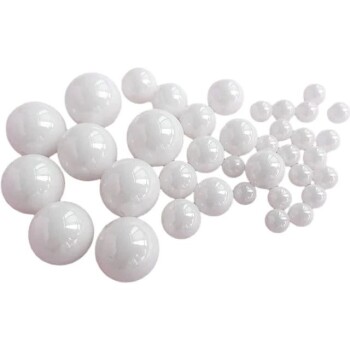
- If your primary focus is high-purity ceramic production: Consider substituting stainless steel with high-density alumina balls to minimize foreign metal contamination during the grinding process.
By strategically balancing ball diameter and liquid viscosity, you can transform high-energy impact into a precise tool for advanced material refinement.
Summary Table:
| Feature | Advantage | Ideal Application |
|---|---|---|
| High Kinetic Energy | Rapidly crushes hard material skeletons and large feed particles. | Initial size reduction of brittle materials. |
| Liquid Damping | Prevents over-pulverization and protects crystalline structures. | Achieving precise 10–40μm particle distribution. |
| Mechanical Activation | Induces lattice distortion to increase chemical reactivity. | Solid-state reactions and composite synthesis. |
| Slurry Uniformity | Eliminates dust and ensures consistent viscosity/fiber loading. | Advanced material mixing and safer lab environments. |
Optimize Your Grinding Precision with KINTEK
Achieving the perfect particle size distribution requires the right balance of high-energy media and robust equipment. KINTEK specializes in premium laboratory solutions, offering a comprehensive range of crushing and milling systems, sieving equipment, and high-quality grinding media.
Whether you are processing hard carbonized materials or sensitive composites, our portfolio—including high-temperature furnaces, hydraulic presses, and specialized PTFE or ceramic consumables—is designed to meet the rigorous demands of material science.
Ready to elevate your lab's efficiency? Contact our experts today to find the ideal milling configuration and high-performance consumables tailored to your specific research or production needs.
References
- Mariem Zouari, David DeVallance. Effect of demineralization and ball milling treatments on the properties of Arundo donax and olive stone-derived biochar. DOI: 10.1007/s13762-023-04968-9
This article is also based on technical information from Kintek Solution Knowledge Base .
Related Products
- Stainless Steel Laboratory Ball Mill for Dry Powder and Liquid with Ceramic Polyurethane Lining
- Laboratory Ball Mill Jar Mill with Metal Alloy Grinding Jar and Balls
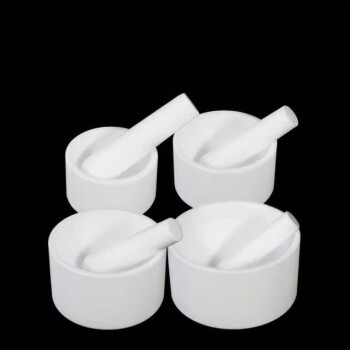
- Custom PTFE Teflon Parts Manufacturer Grinding Bowl
- Laboratory Jar Mill with Agate Grinding Jar and Balls
- Laboratory Jar Ball Mill with Alumina Zirconia Grinding Jar and Balls
People Also Ask
- How do laboratory ball mills facilitate the mechanochemical synthesis of ZIF-8? Solvent-Free Synthesis Explained
- What is the primary function of a laboratory ball mill in the modification of sulfide-based solid electrolytes with LiPO2F2?
- How does a laboratory ball mill ensure the mixing quality of Mn3Zn0.8Sn0.2N and Ti? Achieve Perfect Homogeneity
- What is the function of a laboratory ball mill in the preparation of AMMCs? Optimize Dispersion & Grain Refinement
- In what way does a laboratory ball mill affect material properties when modifying PHBV/pulp fiber composites?