
The most common hazards of using an autoclave are physical, stemming directly from the extreme heat, steam, and pressure required for sterilization. Burns from hot surfaces and scalding steam are the most frequent risks, followed by the potential for explosive decompression if the unit is improperly sealed or loaded.
Understanding an autoclave's hazards is not about fearing the machine, but about respecting the physical forces it employs. The greatest risks arise not from the machine itself during normal operation, but from user error in loading, sealing, and unloading materials.
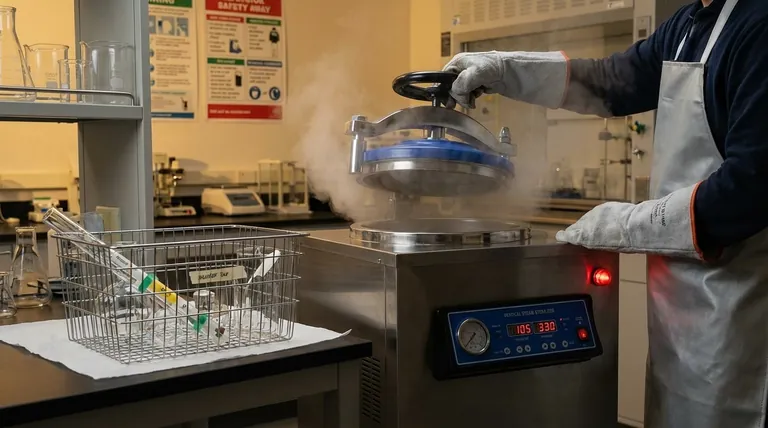
The Core Physical Hazards: Heat, Steam, and Pressure
An autoclave functions by creating an environment that is physically hostile to microorganisms. These same conditions are hostile to users if proper procedures are not followed.
High-Temperature Burns
An autoclave chamber and its contents reach temperatures exceeding 250°F (121°C).
Direct contact with the metal chamber walls or recently sterilized items can cause severe contact burns. This risk is highest immediately after a cycle is completed.
High-Pressure Steam Burns
The sterilization process relies on steam pressurized to at least 20 pounds per square inch (psi).
This superheated steam can cause near-instantaneous, deep burns if it escapes unexpectedly. The most dangerous moments are when opening the door, as residual steam can erupt from the chamber.
Explosive Decompression
The combination of heat and pressure creates a significant amount of contained energy.
If a unit malfunctions or is opened while still pressurized, it can decompress explosively. This can turn the door and the contents into high-velocity projectiles, posing a severe risk of injury.
Secondary Hazards from Improper Use
While the physical forces are the primary hazard, improper operational procedures can create a range of secondary risks.
Biological and Chemical Contamination
The goal of autoclaving is to eliminate biological hazards, but improper use can create them.
An incomplete sterilization cycle, often caused by overloading, can leave infectious materials viable. Autoclaving inappropriate chemicals can also lead to the release of toxic fumes.
Sharps and Puncture Wounds
Glassware and sharp instruments are frequently sterilized in autoclaves.
Mishandling these items before or after a cycle can lead to cuts and punctures. This risk is compounded if the items were not successfully sterilized, creating a path for infection.
Damage to Equipment and Materials
Autoclaves can easily destroy incompatible materials, which can in turn damage the unit itself.
Heat-sensitive plastics like polyethylene can melt, gumming up the chamber and drain lines. Autoclaving sealed containers can cause them to burst, damaging the interior of the machine.
Understanding the Trade-offs and Limitations
Recognizing what an autoclave cannot do is as important as knowing how to operate it. Attempting to sterilize unsuitable items is a common source of hazards and damage.
Not All Materials Are Autoclavable
The high heat and moisture will damage or destroy many common materials.
Items that should never be autoclaved include heat-sensitive plastics, oily or greasy substances, and high-grade carbon steel instruments, which will rust and become dull.
The Problem with Sealed Containers
Never autoclave a container with a tightly sealed lid.
As the liquid inside heats up, it will boil and create immense steam pressure within the container. This pressure has nowhere to go, often resulting in a violent explosion that can damage the autoclave and injure the user.
Ineffective Sterilization from Overloading
A packed chamber is the primary cause of a failed sterilization cycle.
Overloading the autoclave prevents steam from penetrating the entire load, leaving items in the center unsterilized. This creates a false and dangerous sense of safety when using the "sterilized" equipment.
Making the Right Choice for Safe Operation
By focusing on the principles behind the hazards, you can ensure safe and effective operation every time.
- If your primary focus is personal safety: Always assume the machine and its contents are dangerously hot, and wait for it to fully depressurize before cautiously opening the door.
- If your primary focus is effective sterilization: Ensure you do not overload the chamber, as this is the most common reason for a failed cycle.
- If your primary focus is equipment longevity: Never autoclave incompatible materials like sealed containers, corrosive chemicals, or plastics that cannot withstand high temperatures.
Understanding these hazards transforms the autoclave from a potential risk into a powerful and reliable tool for your work.
Summary Table:
| Hazard Type | Primary Risk | Common Cause |
|---|---|---|
| Physical | Severe burns, explosive decompression | Contact with hot surfaces, improper door opening, unit malfunction |
| Operational | Ineffective sterilization, chemical exposure | Overloading, autoclaving sealed containers or wrong materials |
| Secondary | Puncture wounds, equipment damage | Mishandling sharps, using incompatible materials |
Ensure your lab operates safely and efficiently. The risks of autoclave use are manageable with the right equipment and knowledge. KINTEK specializes in reliable lab autoclaves and consumables designed for maximum safety and performance. Contact our experts today to find the perfect sterilization solution for your laboratory's needs and to learn more about our safety support services.
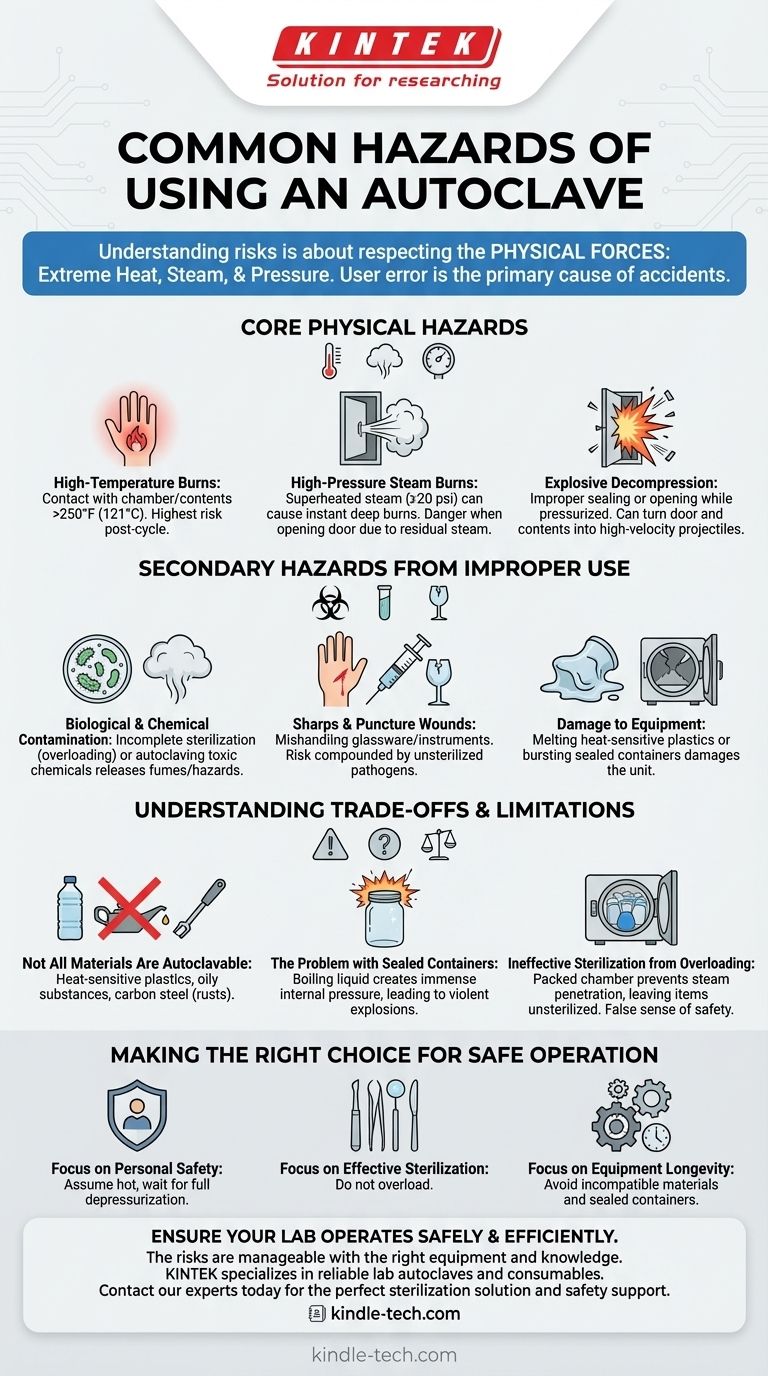
Visual Guide
Related Products
- Portable High Pressure Laboratory Autoclave Steam Sterilizer for Lab Use
- Portable Digital Display Automatic Laboratory Sterilizer Lab Autoclave for Sterilization Pressure
- Desktop Fast High Pressure Laboratory Autoclave Sterilizer 16L 24L for Lab Use
- Desktop Fast Laboratory Autoclave Sterilizer 35L 50L 90L for Lab Use
- Desktop Fast Laboratory Autoclave Sterilizer 20L 24L for Lab Use
People Also Ask
- What is the primary function of a laboratory autoclave in the pre-treatment of medical plastic waste for liquid fuel?
- Why is a laboratory autoclave necessary for Postgate Medium B (PMB)? Ensure Pure SRB Cultures & Accurate MIC Research
- What is a laboratory autoclave? A Guide to Sterilization with Pressurized Steam
- What extreme conditions does a laboratory autoclave simulate? Testing Wear Resistance of Nuclear Fuel Cladding
- What role does a laboratory autoclave play in HEA corrosion research? Key to Validating Advanced Reactor Materials














