A biological indicator (BI) is a monitoring device containing a standardized, viable population of highly resistant microorganisms, most commonly spores of Geobacillus stearothermophilus. Its fundamental purpose in autoclave monitoring is to provide direct evidence that decontamination conditions were sufficient to kill biological agents, verifying the sterilization process was effective.
The mechanical sensors on an autoclave tell you if the machine reached the right temperature, but only a Biological Indicator proves that the cycle actually destroyed living organisms. It serves as the ultimate "pass/fail" test for decontamination lethality.
The Anatomy of a Biological Indicator
The Biological Standard
A BI is not merely a swab of random bacteria. It contains a standardized population of microorganisms.
This ensures consistency across tests. You are testing against a known quantity of pathogens every time to ensure the challenge to the autoclave remains constant.
The Choice of Organism
The industry standard utilizes spores of Geobacillus stearothermophilus.
These spores are selected specifically for their high resistance to heat and sterilization processes. If your autoclave cycle is powerful enough to kill these robust spores, you can be confident it has destroyed less resistant contaminants.
How the Verification Process Works
Exposure to the Cycle
To perform the test, the biological indicator is placed inside the autoclave and exposed to a full sterilization cycle.
It experiences the same heat, pressure, and steam conditions as the equipment or instruments being sterilized.
Culturing and Analysis
Once the cycle is complete, the BI is cultured (incubated) to see if the spores survived.
If the microorganisms fail to grow, the test is successful, indicating the autoclave is operating correctly. If they grow, the sterilization process failed.
Rapid Results
Traditional methods required long incubation periods, but modern technology offers Rapid Readout Biological Indicators.
These advanced devices can provide definitive results within one hour, allowing for faster verification of the decontamination process.
Understanding the Trade-offs
Biological vs. Physical Monitoring
While BIs are the most accurate measure of lethality, they are reactive rather than real-time.
Physical gauges (pressure and temperature) give instant feedback, whereas a BI requires a processing period after the cycle. You cannot confirm the load is sterile until the BI result is finalized.
The Necessity of Verification
Relying solely on mechanical readouts can be risky.
An autoclave might display the correct temperature but fail to sterilize due to air pockets or poor steam quality. A BI bridges this gap by proving the biological outcome rather than just the physical parameters.
Making the Right Choice for Your Goal
To maintain high standards of safety and equipment verification, consider the following:
- If your primary focus is absolute certainty: Rely on Biological Indicators as your primary evidence of decontamination, as they offer the only direct proof that microorganisms were destroyed.
- If your primary focus is operational efficiency: Utilize Rapid Readout Biological Indicators to obtain confirmation within one hour, allowing you to return equipment to service faster without compromising safety.
By utilizing biological indicators, you move beyond assuming an autoclave works to proving it delivers the necessary lethality.
Summary Table:
| Feature | Biological Indicators (BIs) | Physical/Mechanical Sensors |
|---|---|---|
| Test Organism | Geobacillus stearothermophilus spores | N/A (Measures parameters) |
| Verification Type | Direct biological lethality (Pass/Fail) | Indirect physical conditions |
| Data Provided | Proof of microbial destruction | Temperature, pressure, and time |
| Result Time | 1 hour (Rapid) to 24-48 hours | Real-time / Instant |
| Core Benefit | Detects failures like air pockets | Monitors equipment performance |
Elevate Your Sterilization Standards with KINTEK
Don't leave your laboratory safety to chance. At KINTEK, we understand that biological verification is the gold standard for decontamination. Whether you are operating high-temperature autoclaves, high-pressure reactors, or specialized dental furnaces, our expertise in laboratory equipment ensures your processes meet the highest regulatory requirements.
Why partner with KINTEK?
- Comprehensive Solutions: From advanced autoclaves and vacuum furnaces to precision crushing, milling, and pellet presses.
- Reliable Consumables: We provide the essential PTFE products, ceramics, and crucibles your research demands.
- Expert Support: Our team helps you select the right cooling solutions, homogenizers, and battery research tools to optimize your workflow.
Ensure absolute lethality and operational efficiency in your lab. Contact KINTEK today to discover how our high-performance equipment and monitoring solutions can support your critical research goals.
Related Products
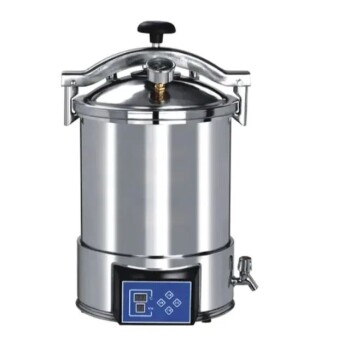
- Portable Digital Display Automatic Laboratory Sterilizer Lab Autoclave for Sterilization Pressure
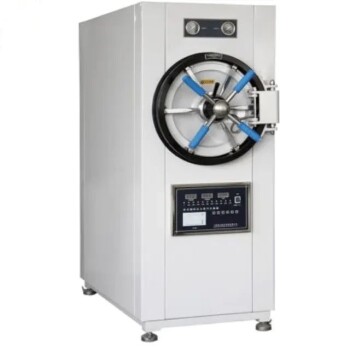
- Laboratory Horizontal Autoclave Steam Sterilizer Lab Microcomputer Sterilizer
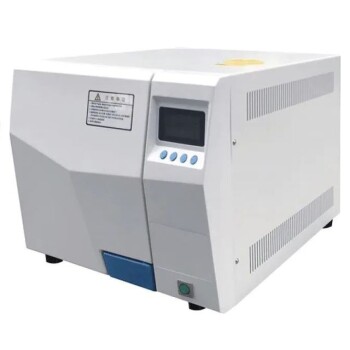
- Laboratory Sterilizer Lab Autoclave Vertical Pressure Steam Sterilizer for Liquid Crystal Display Automatic Type
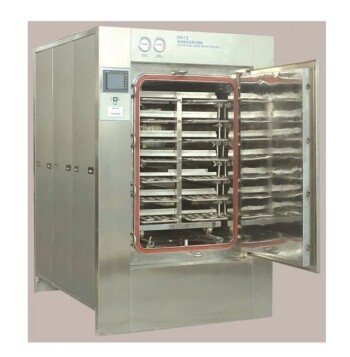
- Laboratory High Pressure Horizontal Autoclave Steam Sterilizer for Lab Use
- Desktop Fast Laboratory Autoclave Sterilizer 20L 24L for Lab Use
People Also Ask
- What is the primary function of a laboratory sterilization autoclave? Master the Physics of Wet Heat Sterilization
- What are the two types of autoclave used in the laboratory? Gravity vs. Pre-Vacuum Explained
- What is the autoclave temperature for sterilization? Master the 121°C Standard for Guaranteed Sterility
- What precautions should be taken during autoclave in laboratory? A Complete Safety Guide to Prevent Burns and Explosions
- What extreme conditions does a laboratory autoclave simulate? Testing Wear Resistance of Nuclear Fuel Cladding