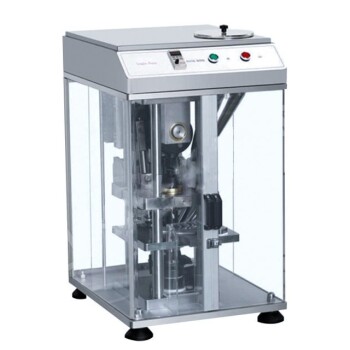
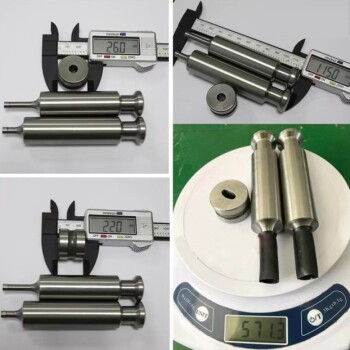
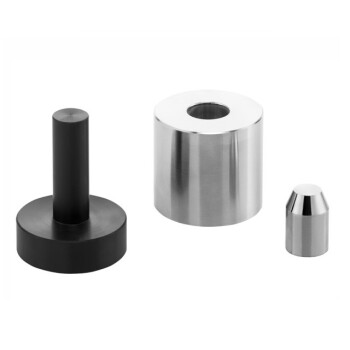
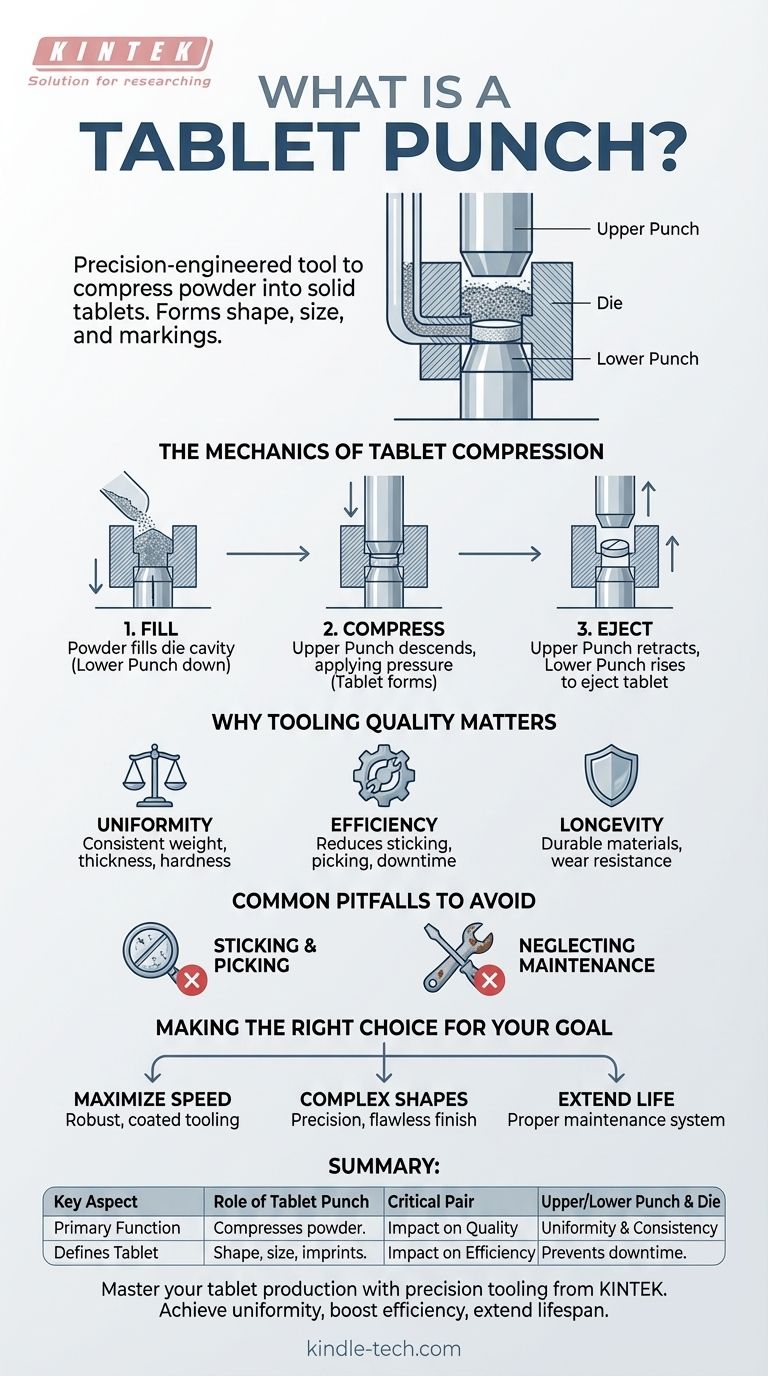
At its core, a tablet punch is a precision-engineered tool used in a tablet press machine to compress granulated powder into a solid tablet. Working in conjunction with a die, the punches are the components that directly shape the material, determine the final tablet's size and form, and imprint any necessary markings like logos or score lines.
While the tablet press provides the force, the tablet punch and die are the critical tools that actually form the tablet. Their design and quality directly dictate the final product's consistency, appearance, and the overall efficiency of your manufacturing line.
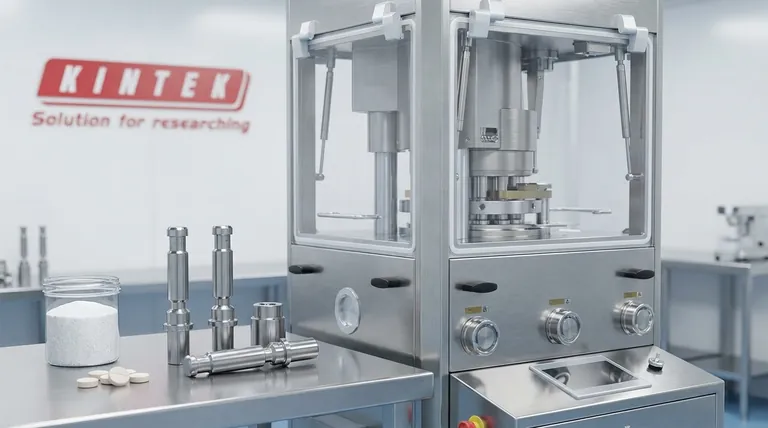
The Mechanics of Tablet Compression
To understand the punch, you must understand its role within the larger system. It is part of a matched set often referred to as "punch and die tooling" or "compression tools."
The Punch and Die: A Matched Pair
A tablet is not formed by a punch alone. The process requires an upper punch, a lower punch, and a die.
The die is a precision-machined cavity that dictates the tablet's diameter or perimeter. The powder formulation fills this cavity before compression.
The two punches move within the die to compress the powder.
The Role of the Upper and Lower Punch
The lower punch first descends in the die to create a cavity of a specific volume, which is then filled with the powder. It serves as the base of the mold.
The upper punch then descends into the die, applying the immense pressure required to compact the loose powder into a solid, bonded tablet.
After compression, the upper punch retracts, and the lower punch rises to eject the finished tablet from the die cavity.
Defining Every Aspect of the Tablet
The tooling set is responsible for all the physical characteristics of the final tablet.
The shape of the punch tips and the die cavity determines if the tablet is round, oval, or a custom shape. The engraving on the upper punch tip creates the logo, lettering, or score line. The volume of powder compressed determines the tablet's final weight and thickness.
Why Tooling Quality is Non-Negotiable
The performance of your entire tablet production line is directly tied to the quality of your punches and dies. Investing in superior quality tooling is not an expense; it's a requirement for efficient and reliable manufacturing.
Impact on Product Uniformity
High-quality, precisely manufactured tooling ensures that every tablet produced is consistent. This uniformity in weight, thickness, and hardness is essential for meeting regulatory standards and ensuring proper dosage.
Influence on Production Efficiency
Worn or poorly made punches can lead to a host of manufacturing problems, such as tablets sticking to the punch face. These issues cause machine stoppages, reduce output, and increase waste, directly impacting productivity.
Ensuring Tooling Longevity
Punches and dies are subjected to extreme pressures and abrasive materials. Superior tooling is made from hardened, high-grade steel with optional specialized coatings that resist wear, corrosion, and damage, extending their operational life and providing a better return on investment.
Common Pitfalls to Avoid
Even with the best equipment, improper handling or selection of tooling can lead to significant problems. Understanding these challenges is key to preventing them.
Mismatching Tooling to Formulation
Some powder formulations are abrasive, while others are corrosive or sticky. You must select a punch material and coating specifically suited to your product to prevent premature wear or compression issues.
Ignoring "Sticking" and "Picking"
Sticking is when the powder formulation adheres to the face of the punch, resulting in imperfect tablets. Picking occurs when small particles are lifted from the tablet's surface and become trapped in the details of the logo or lettering. Both are often symptoms of poor punch quality or an incompatible formulation.
Neglecting Proper Maintenance
Punches and dies are not disposable parts. They require a strict protocol for cleaning, polishing, and storage. Improper handling can cause nicks and scratches on the punch tips, which will transfer directly to every tablet produced.
Making the Right Choice for Your Goal
The optimal tooling depends entirely on your specific production objective.
- If your primary focus is maximizing production speed: Select robust tooling made from premium steel with coatings designed to reduce friction and withstand the high cyclical stress of a high-speed press.
- If your primary focus is producing tablets with complex shapes or detailed logos: Prioritize precision-engineered tooling with flawless punch tip finishes to prevent defects like picking and ensure crisp, clear imprints.
- If your primary focus is extending the life of your equipment: Invest in a comprehensive tooling maintenance system, including proper cleaning, polishing, and storage, to maximize the longevity of your punches and dies.
Ultimately, viewing your tablet punch not as a simple part but as a precision instrument is the first step toward mastering tablet manufacturing.
Summary Table:
| Key Aspect | Role of the Tablet Punch |
|---|---|
| Primary Function | Compresses powder into a solid tablet within a die. |
| Defines Tablet | Shape, size, thickness, and imprints (logos, scores). |
| Critical Pair | Works with an upper punch, lower punch, and die. |
| Impact on Quality | Directly influences tablet uniformity and consistency. |
| Impact on Efficiency | Quality tooling prevents sticking, picking, and downtime. |
Master your tablet production with precision tooling from KINTEK.
The right tablet punch and die set is not just a part—it's the heart of your manufacturing process, dictating product quality and line efficiency. KINTEK specializes in high-performance lab equipment and consumables, providing robust, precision-engineered tooling tailored to your formulation and production goals.
We help you:
- Achieve perfect tablet uniformity with tooling that ensures consistent weight, hardness, and appearance.
- Boost production efficiency by reducing defects like sticking and picking that cause costly downtime.
- Extend equipment lifespan with durable, coated punches designed to withstand abrasive or corrosive materials.
Ready to optimize your compression process? Contact our experts today to discuss your specific needs and discover how KINTEK's solutions can enhance your laboratory's productivity and output.
Visual Guide
Related Products
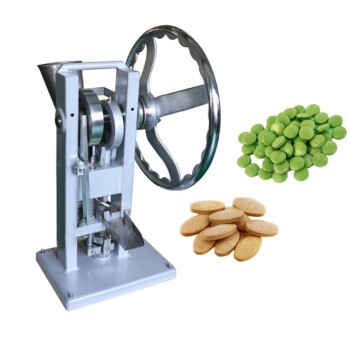
- Single Punch Manual Tablet Press Machine TDP Tablet Punching Machine
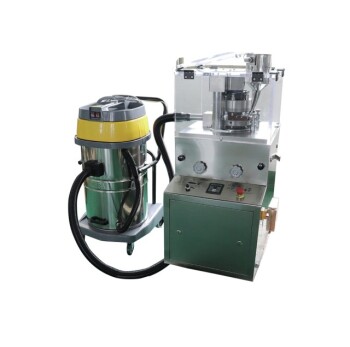
- Lab Scale Rotary Single Punch Tablet Press Machine TDP Tablet Punching Machine
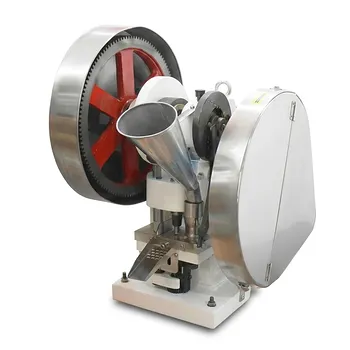
- Single Punch Electric Tablet Press Machine TDP Tablet Punching Machine
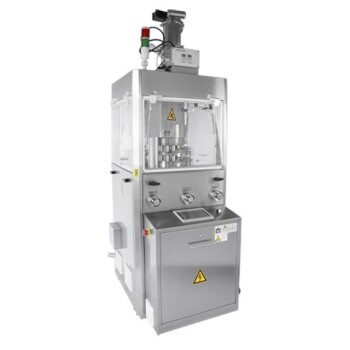
- Single Punch Tablet Press Machine and Mass Production Rotary Tablet Punching Machine for TDP
- Single Punch Electric Tablet Press Machine Laboratory Powder Tablet Punching TDP Tablet Press
People Also Ask
- What is the advantage of a single punch tablet machine? Ideal for Low-Waste R&D and Formulation Testing
- What are the different parts of a single punch tablet machine? The Core Components Explained
- What is a punch tablet press? Precision Tableting for R&D and Small Batches
- What are advantages of single punch tablet press machine? Maximize R&D Efficiency with Minimal Material
- What is the use of single punch tablet press? For Precise R&D and Small-Batch Tablet Production