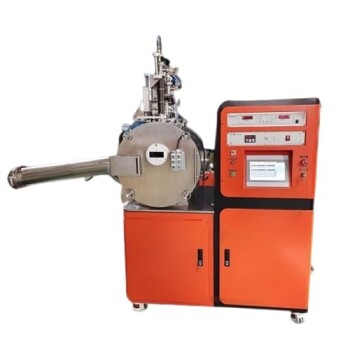
At its core, Rapid Temperature Annealing (RTA), also known as Rapid Thermal Annealing, is a manufacturing process that uses intense light sources to heat a material like a silicon film to a very high temperature in a matter of seconds. This brief, controlled burst of energy is designed to repair crystalline defects and improve the material's electrical or mechanical properties with extreme precision.
The critical insight is that RTA isolates the benefits of high-temperature heat treatment—like repairing crystal damage and relieving stress—into a very short timeframe. This precision prevents the unwanted side effects, such as dopant diffusion, that occur during slower, prolonged heating in a traditional furnace.
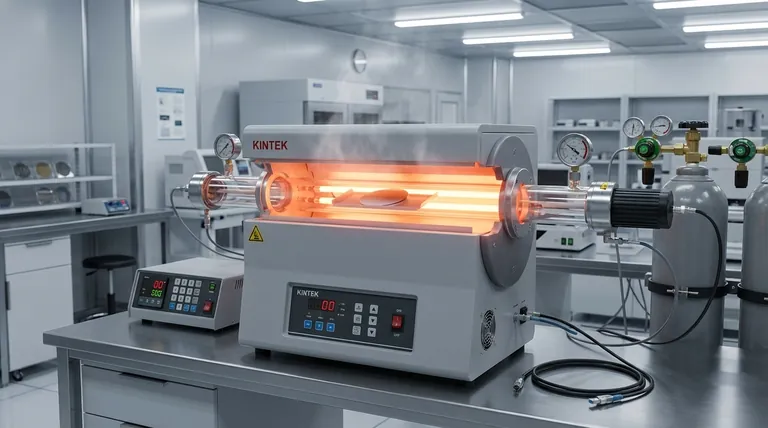
The Fundamental Goal: Why We Anneal Materials
To understand RTA, you must first understand the purpose of annealing in general. It's a foundational heat treatment process used to modify the microstructure of a material.
Repairing the Crystal Structure
Nearly all solids, especially metals and semiconductors, have a crystalline structure. When these materials are processed—bent, stamped, or machined—defects and dislocations are introduced into this perfect lattice.
Annealing heats the material to a point where the atoms can move and rearrange themselves, effectively "healing" these defects without melting the material itself.
Relieving Internal Stress
Manufacturing processes like welding, grinding, or cold forming create significant internal stress within a material. This locked-in stress can lead to warping, distortion, or even cracking over time.
By heating the material, annealing allows the crystal structure to relax, releasing these internal stresses and creating a more stable final product.
Improving Material Properties
The primary outcome of repairing the crystal structure and relieving stress is a material with more desirable properties.
Annealing typically increases ductility (the ability to be drawn or bent without breaking) and restores workability after a material has been hardened by cold working. It can also significantly improve a material's electrical properties, which is critical in semiconductor fabrication.
How RTA Modernizes the Process
Traditional annealing involves placing materials in a furnace for an extended period. While effective for large bulk materials, this method is too slow and imprecise for modern electronics.
The Need for Speed
In semiconductor manufacturing, silicon wafers are implanted with "dopant" atoms to control their electrical properties. This process damages the silicon's crystal lattice, and annealing is required to repair it and "activate" the dopants.
However, prolonged heating in a furnace causes these dopants to diffuse or spread out from their intended locations, which can ruin the microscopic circuits. RTA solves this by completing the annealing process in seconds, before significant diffusion can occur.
Using Light Instead of Heat
Instead of relying on the slow convection of a furnace, RTA systems use arrays of high-intensity halogen lamps.
These lamps flood the surface of the material with radiant energy, causing its temperature to rise hundreds of degrees per second. This delivers a precise thermal budget—just enough heat and time to achieve the desired effect and no more.
Key Benefits of the RTA Approach
This rapid, light-based heating results in superior material uniformity across the surface of a wafer.
Because the process is so fast, throughput is dramatically increased, contributing to lower production costs per unit compared to slow, batch-based furnace methods.
Understanding the Trade-offs
While powerful, RTA is not a universal solution. Its specialized nature comes with specific challenges and limitations.
Temperature Uniformity
Heating a large, thin surface like a silicon wafer to over 1000°C in seconds without creating hot or cold spots is an immense engineering challenge. Non-uniformity can lead to defects and lower device yields.
Equipment Complexity
RTA systems are far more complex and expensive than simple industrial furnaces. They require precise control systems, specialized lamp arrays, and carefully managed process chambers to function correctly.
Not for Bulk Materials
RTA is a surface-heating technology optimized for thin films and wafers. It is completely unsuitable for annealing large, thick metal components, where traditional furnace annealing remains the only practical method.
Making the Right Choice for Your Goal
Selecting the right thermal process depends entirely on the material and the desired outcome.
- If your primary focus is semiconductor manufacturing: RTA is the industry standard for activating dopants and repairing implant damage with minimal diffusion.
- If your primary focus is treating thin films or surface layers: RTA provides precise, rapid thermal control that delivers the benefits of annealing without affecting the underlying substrate.
- If your primary focus is bulk metal treatment: Traditional furnace annealing is the more appropriate and effective method for relieving stress and improving ductility in large components.
Ultimately, RTA represents a critical evolution from brute-force heating to a precise, targeted thermal process essential for creating high-performance modern materials.
Summary Table:
| Aspect | RTA (Rapid Thermal Annealing) | Traditional Furnace Annealing |
|---|---|---|
| Heating Method | High-intensity lamps (radiant energy) | Convection heating |
| Process Time | Seconds | Hours |
| Primary Use | Semiconductor wafers, thin films | Bulk metals, large components |
| Key Advantage | Minimal dopant diffusion, high precision | Effective for stress relief in bulk materials |
| Limitation | Surface-only heating, high equipment cost | Slow, causes unwanted dopant diffusion |
Optimize Your Material Processing with KINTEK's Expertise
Are you working with semiconductor wafers, thin films, or specialized materials that require precise thermal treatment? KINTEK specializes in advanced lab equipment and consumables that deliver the precision and control needed for modern manufacturing processes.
Why choose KINTEK for your annealing needs?
- Precision Engineering: Our solutions ensure temperature uniformity and process control critical for high-yield manufacturing
- Technical Expertise: We understand the complexities of RTA and can help you select the right equipment for your specific application
- Quality Assurance: Trust in equipment that delivers consistent, reliable results for your most demanding thermal processing requirements
Whether you're in semiconductor fabrication, materials research, or thin-film development, KINTEK has the solutions to enhance your process efficiency and product quality.
Contact our thermal processing experts today to discuss how we can support your specific annealing requirements and help you achieve superior material properties.
Visual Guide

Related Products
- Laboratory Rapid Thermal Processing (RTP) Quartz Tube Furnace
- Vacuum Heat Treat Furnace with Ceramic Fiber Liner
- Multi Heating Zones CVD Tube Furnace Machine Chemical Vapor Deposition Chamber System Equipment
- Customer Made Versatile CVD Tube Furnace Chemical Vapor Deposition Chamber System Equipment
- Spark Plasma Sintering Furnace SPS Furnace
People Also Ask
- What are the advantages of using an electric heating furnace with a quartz tube for liquid bismuth corrosion control?
- What role does a quartz tube furnace play in hBN synthesis? Optimize Your Chemical Vapor Deposition Results
- How does a laboratory tube furnace provide precise temperature control? Expert Simulation for Steam Cracking
- How do you clean a quartz furnace tube? Essential Steps for Peak Performance and Longevity
- What are the functions of vacuum-sealing raw materials in a quartz tube during sulfide electrolyte synthesis?