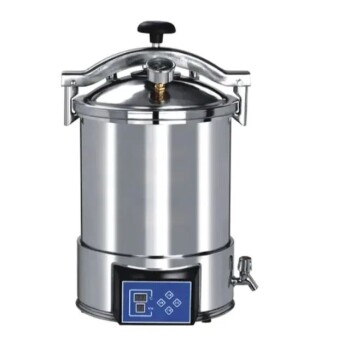
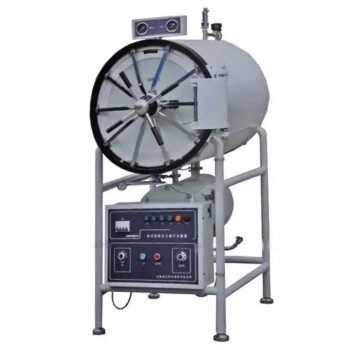
At its core, daily autoclave maintenance is a simple routine of pre-use inspection and post-use cleaning. Before each cycle, you must ensure the autoclave has the correct amount of water and that the door gasket is clean and intact. After the final cycle of the day, the chamber should be cleaned of any spills or debris to prevent buildup and ensure its long-term integrity.
The goal of daily maintenance is not complex repair but consistent care. These simple checks and cleaning procedures are the most critical factors in ensuring operator safety, reliable sterilization, and the longevity of the equipment.
The Purpose of Daily Checks: Safety and Efficacy
Daily autoclave tasks are fundamentally about creating a consistent and safe operating environment. Skipping these steps can lead to failed sterilization cycles, equipment damage, or serious safety hazards.
The Pre-Operation Checklist
Before you run your first cycle of the day, perform these quick inspections.
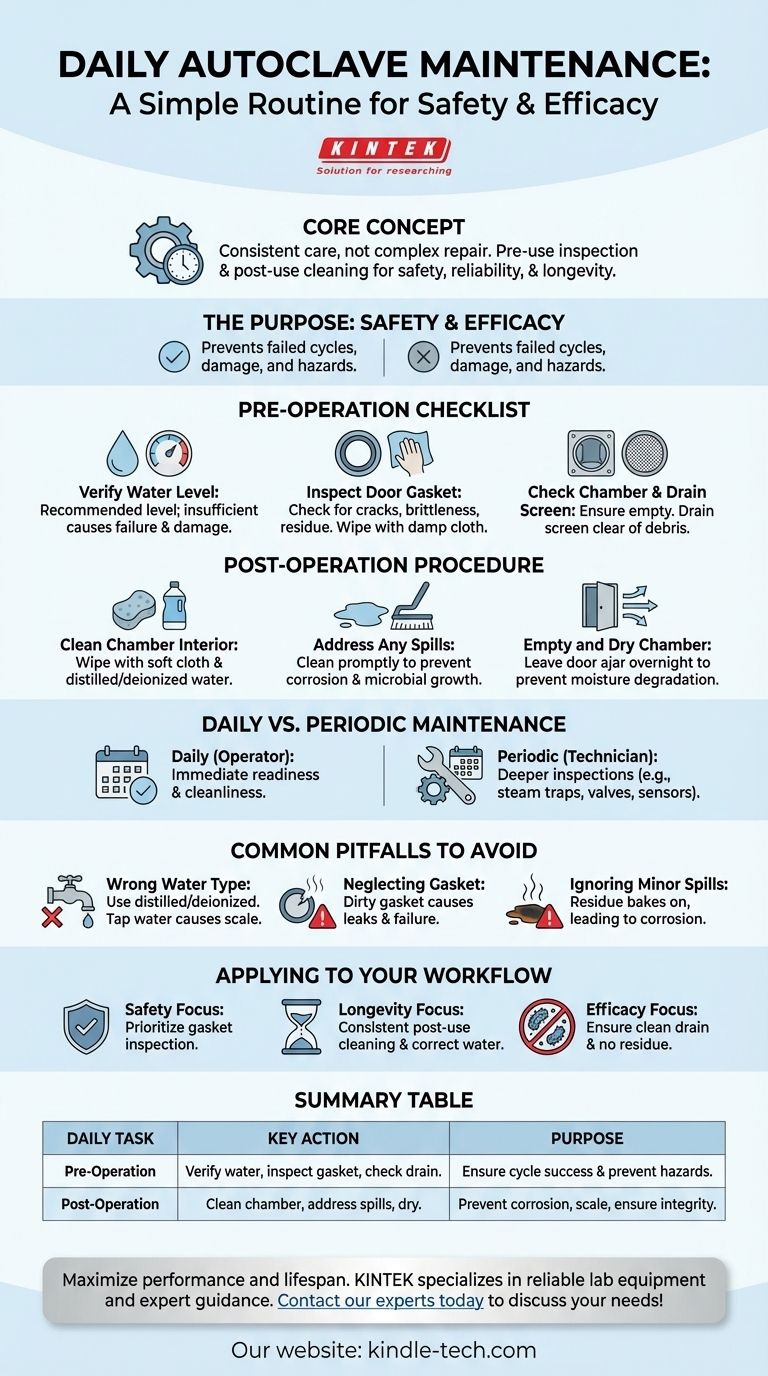
- Verify Water Level: An autoclave generates steam from a water reservoir. Confirm that the water is at the manufacturer-recommended level. Insufficient water can cause a cycle to fail and may damage the heating elements.
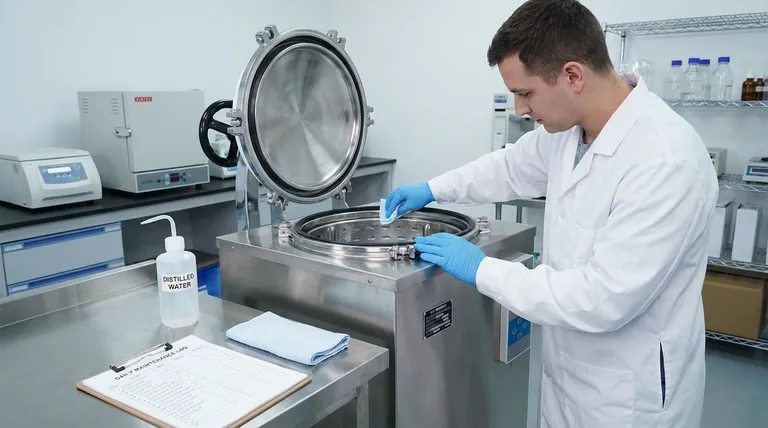
- Inspect the Door Gasket: The rubber or silicone gasket around the door creates a pressure-tight seal. Visually inspect it for any cracks, brittleness, or residue from previous cycles. Wipe it with a damp, lint-free cloth to ensure a clean sealing surface.
- Check the Chamber and Drain Screen: Glance inside the chamber to ensure it is empty from a previous run. Check that the chamber drain screen at the bottom is clear of debris like tape, broken glass, or cap liners that could cause a clog.
The Post-Operation Procedure
After the last cycle of the day is complete and the autoclave has cooled, these steps are essential.
- Clean the Chamber Interior: Use a soft, lint-free cloth and distilled or deionized water to wipe down the inside of the chamber and the inside of the door. This removes mineral deposits and residue from media spills.
- Address Any Spills: If a container has boiled over, it is critical to clean the spill thoroughly. Baked-on agar or other media can corrode the stainless steel chamber and harbor microbial growth.
- Empty and Dry the Chamber: Leave the autoclave door slightly ajar overnight. This allows the chamber and gasket to dry completely, preventing moisture-related degradation and the growth of microorganisms.
Daily Tasks vs. Periodic Maintenance
It is vital to distinguish between daily care and more intensive periodic maintenance. The daily tasks described above are performed by the operator to ensure immediate readiness and cleanliness.
Periodic maintenance, conversely, involves deeper inspections of mechanical and safety components. These tasks are often performed by trained technicians on a monthly, quarterly, or annual basis and include checking:
- Steam traps and filters
- Safety valves
- Heating coils and contactors
- Temperature and pressure sensors
Daily diligence prevents premature failure of these internal components, but it does not replace the need for scheduled professional service.
Common Pitfalls in Daily Autoclave Care
Avoiding these common mistakes is as important as performing the correct procedures.
Using the Wrong Water Type
Never use tap water unless explicitly approved by the manufacturer. The minerals in tap water create scale buildup on heating elements and chamber walls, reducing efficiency and eventually causing component failure. Always use distilled or deionized water.
Neglecting the Gasket
A dirty gasket is the most common cause of a failed cycle. Debris prevents a perfect seal, causing steam to leak and the machine to fail to reach the required pressure and temperature. A neglected gasket will also degrade and crack much faster.
Ignoring Minor Spills
It is easy to ignore a small agar boil-over, but these spills do not simply disappear. The residue bakes onto the chamber surface during subsequent cycles, making it difficult to remove and creating a potential site for corrosion.
Applying This to Your Daily Workflow
Your specific focus will determine which daily steps are most critical for you.
- If your primary focus is operator safety: The most important step is the pre-run inspection of the door gasket to ensure it can create a proper seal.
- If your primary focus is equipment longevity: Consistent post-use cleaning and using the correct type of water are key to preventing corrosion and scale buildup.
- If your primary focus is sterilization efficacy: Ensuring the chamber drain is clear and that no residue is left on surfaces prevents microorganisms from being shielded from the steam.
Ultimately, integrating these simple habits into your daily routine is the foundation of a safe, effective, and reliable sterilization process.
Summary Table:
| Daily Task | Key Action | Purpose |
|---|---|---|
| Pre-Operation | Verify water level, inspect door gasket, check drain screen. | Ensure cycle success and prevent immediate hazards. |
| Post-Operation | Clean chamber interior, address spills, leave door ajar to dry. | Prevent corrosion, scale buildup, and ensure long-term integrity. |
Maximize the performance and lifespan of your lab's autoclaves. Consistent daily care is the first step, but having the right equipment and support is crucial. KINTEK specializes in reliable lab equipment and consumables, providing autoclaves and expert guidance tailored to your laboratory's sterilization needs. Ensure your processes are safe and effective—contact our experts today to discuss your requirements!
Visual Guide
Related Products
- Portable High Pressure Laboratory Autoclave Steam Sterilizer for Lab Use
- Portable Digital Display Automatic Laboratory Sterilizer Lab Autoclave for Sterilization Pressure
- Desktop Fast High Pressure Laboratory Autoclave Sterilizer 16L 24L for Lab Use
- Desktop Fast Laboratory Autoclave Sterilizer 35L 50L 90L for Lab Use
- Desktop Fast Laboratory Autoclave Sterilizer 20L 24L for Lab Use
People Also Ask
- What is the importance of using a laboratory autoclave in ZSM-5 synthesis? Achieve Perfect Zeolite Crystallization
- What extreme conditions does a laboratory autoclave simulate? Testing Wear Resistance of Nuclear Fuel Cladding
- Why is a laboratory high-pressure autoclave sterilizer necessary? Ensure Accuracy in Antibacterial Research
- What is an autoclave laboratory equipment? The Ultimate Guide to Steam Sterilization
- What is a laboratory autoclave? A Guide to Sterilization with Pressurized Steam