A laboratory autoclave is the indispensable vessel that enables the hydrothermal synthesis of ZSM-5 zeolites by creating a sealed, high-pressure environment. It allows the reaction mixture to reach temperatures significantly above the boiling point of water, such as 180°C, which generates the autogenous pressure necessary to transform amorphous aluminosilicate gels into crystalline structures.
Core Takeaway: The autoclave does not merely heat the reactants; it creates a subcritical water environment where the reaction mother liquor achieves a supersaturated state. This unique physical condition is the primary driver that forces aluminosilicate species to reorganize into the complex, long-range ordered MFI topological structures characteristic of ZSM-5.
Creating the Essential Reaction Environment
Achieving High-Temperature Stability
To synthesize ZSM-5, the reaction environment must sustain high temperatures, typically around 180°C.
In an open vessel, water would boil off at 100°C, halting the reaction. The autoclave’s sealed design traps the solvent, allowing it to remain liquid at these elevated temperatures.
Generating Autogenous Pressure
The sealing of the autoclave results in autogenous pressure, which is pressure generated internally by heating the liquid in a closed volume.
Depending on the fill volume and temperature, pressures can range from 1 bar to 15 bar. This pressure is critical for increasing the solubility of the reactants within the alkaline medium.
Enabling Subcritical Water Conditions
The combination of heat and pressure creates a subcritical water environment.
In this state, the properties of water change, making it a more effective solvent for dissolving silicon and aluminum sources. This promotes the consistent "aging" and interaction of the precursor gel.
Driving the Crystallization Mechanism
Facilitating Supersaturation
Within the sealed autoclave, the reaction mother liquor reaches a supersaturated state.
This thermodynamic instability is required to drive the chemical equilibrium toward precipitation. Without this supersaturation, the precursor materials would remain dissolved or form amorphous solids rather than crystals.
Guiding MFI Topology Formation
The high-pressure environment facilitates the reorganization of aluminosilicate species into specific MFI topological structures.
This structural rearrangement is guided by structure-directing agents and crystal seeds, which function effectively only when the mother liquor is in this pressurized, heated state.
Promoting Dissolution and Precipitation
The process involves a continuous cycle of dissolution and precipitation over a crystallization period, often lasting 24 to 96 hours.
The autoclave ensures that the reactants—aluminosilicate hydrogels, organic molecules, and metal cations—remain in constant contact under uniform conditions, leading to a regular pore structure.
Understanding the Trade-offs
Sensitivity to Operating Parameters
While the autoclave provides the necessary conditions, the process is highly sensitive to the degree of filling and the temperature ramp rate.
If the autoclave is under-filled or over-filled, the resulting autogenous pressure may deviate from the target, leading to incomplete crystallization or impurities in the zeolite framework.
The "Black Box" Limitation
A standard laboratory autoclave is a sealed steel vessel, effectively acting as a "black box" during synthesis.
You cannot visually monitor the dissolution or precipitation in real-time. This requires precise reliance on predetermined recipes and consistent heating profiles to ensure the crystallization completes consistently without visual confirmation.
Making the Right Choice for Your Synthesis
To ensure successful ZSM-5 growth, align your equipment use with your specific goals:
- If your primary focus is Crystal Purity: Ensure the autoclave maintains a steady 180°C without fluctuation, as temperature stability dictates the uniformity of the MFI structure.
- If your primary focus is Process Efficiency: Optimize the fill volume of the autoclave to generate maximum safe autogenous pressure, which can potentially reduce the crystallization time (within the 24-96 hour window).
Ultimately, the laboratory autoclave acts as the physical catalyst that forces the chaotic mixture of raw chemicals into the disciplined, porous architecture of a ZSM-5 zeolite.
Summary Table:
| Parameter | Role in ZSM-5 Synthesis | Impact on Crystallization |
|---|---|---|
| Temperature (180°C) | Maintains liquid phase above boiling point | Enables transformation of amorphous gels into crystals |
| Autogenous Pressure | 1 to 15 bar (internally generated) | Increases solubility of silicon and aluminum sources |
| Subcritical Water | Enhanced solvent properties | Facilitates dissolution and precipitation cycle |
| MFI Topology | Structural reorganization | Forces formation of complex, long-range ordered pores |
| Crystallization Time | 24 to 96 hours | Ensures uniform growth and high crystal purity |
Elevate Your Material Synthesis with KINTEK
Precision is non-negotiable when synthesizing complex MFI structures like ZSM-5 zeolites. KINTEK specializes in high-performance laboratory equipment, providing the thermal stability and pressure control your research demands. Our comprehensive range includes high-temperature high-pressure reactors and autoclaves, muffle furnaces, and specialized consumables like crucibles and PTFE products designed for the most rigorous hydrothermal processes.
From battery research to advanced chemical catalysis, KINTEK supports your laboratory's efficiency with reliable cooling solutions, crushing systems, and hydraulic presses. Don't leave your crystallization results to chance—Contact KINTEK today to find the perfect autoclave for your synthesis needs!
References
- Yunsheng Zheng, Guping Tang. Preparation of a High-Silicon ZSM-5 Molecular Sieve Using Only Coal Gangue as the Silicon and Aluminum Sources. DOI: 10.3390/ma16124338
This article is also based on technical information from Kintek Solution Knowledge Base .
Related Products
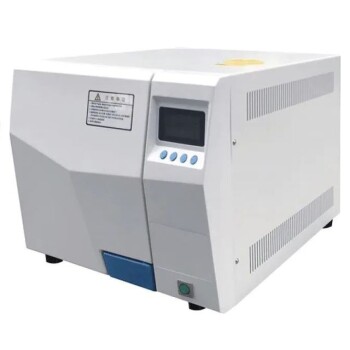
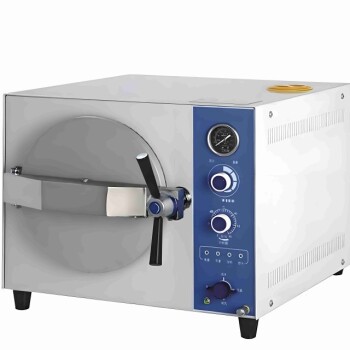
- Desktop Fast Laboratory Autoclave Sterilizer 20L 24L for Lab Use
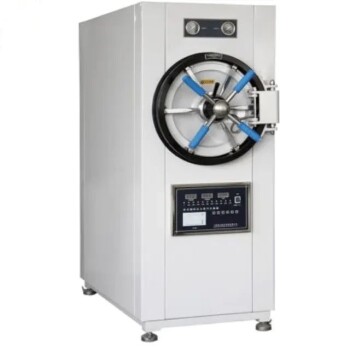
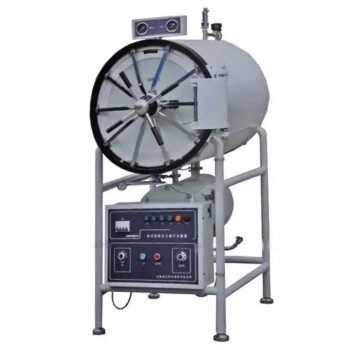
- Laboratory Horizontal Autoclave Steam Sterilizer Lab Microcomputer Sterilizer
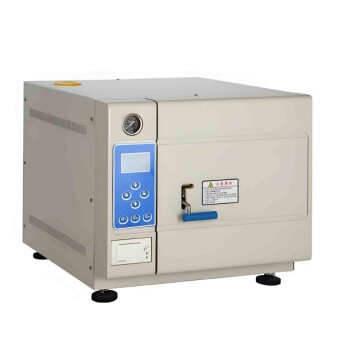
- Desktop Fast Laboratory Autoclave Sterilizer 35L 50L 90L for Lab Use
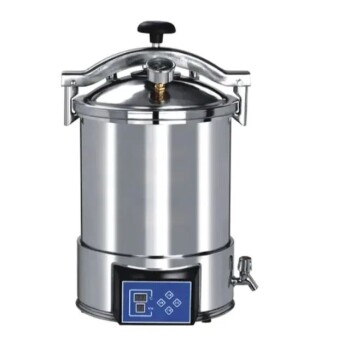
- Desktop Fast High Pressure Laboratory Autoclave Sterilizer 16L 24L for Lab Use
- High Pressure Laboratory Autoclave Reactor for Hydrothermal Synthesis
People Also Ask
- What are the two types of autoclave used in the laboratory? Gravity vs. Pre-Vacuum Explained
- What is a laboratory autoclave? A Guide to Sterilization with Pressurized Steam
- What precautions should be taken during autoclave in laboratory? A Complete Safety Guide to Prevent Burns and Explosions
- What extreme conditions does a laboratory autoclave simulate? Testing Wear Resistance of Nuclear Fuel Cladding
- What role does a laboratory autoclave play in HEA corrosion research? Key to Validating Advanced Reactor Materials