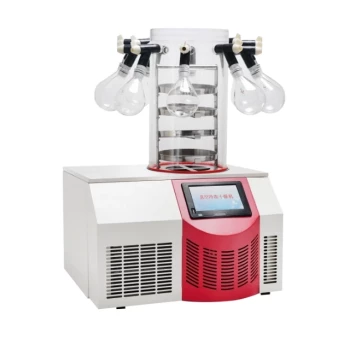
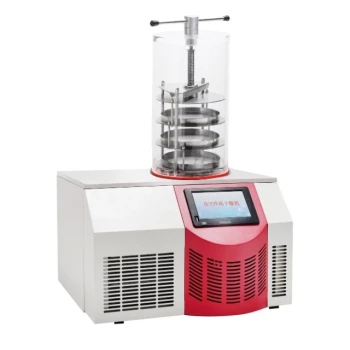
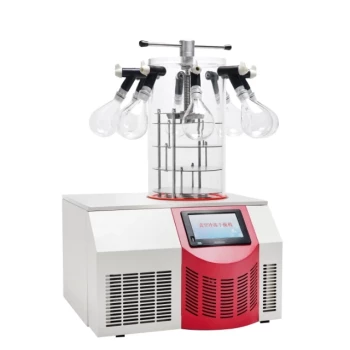
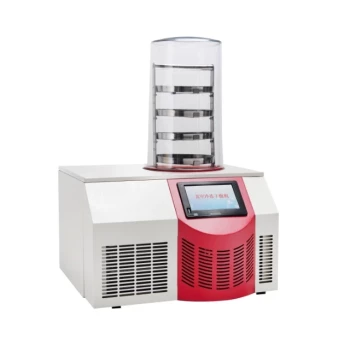
The fundamental function of a freeze dryer in the ice-templating process is to remove frozen solvent, typically water, via sublimation. By converting ice directly into vapor, this equipment removes the "template" without subjecting the delicate ceramic precursor to the damaging surface tension forces associated with liquid evaporation.
The freeze dryer acts as a structural preservation tool. By gently removing solvents through sublimation, it locks in the directionally aligned pore channels necessary for creating efficient 3D lithium-ion conduction networks.
The Mechanism of Structural Preservation
Achieving Sublimation
The freeze dryer operates by creating an environment where the frozen solvent transitions directly from a solid to a gas.
This process, known as sublimation, is essential for processing the ceramic precursor. It ensures that the solvent is evacuated without ever returning to a liquid state.
Preventing Microscopic Damage
Standard drying methods involve liquid evaporation, which can generate capillary forces strong enough to collapse microscopic structures.
The freeze dryer avoids this entirely. It ensures the gentle removal of the solvent, leaving the fragile architecture of the ceramic intact.
Enabling 3D Conduction Networks
Creating the Pore Channels
During the freezing stage, ice crystals form a specific, aligned pattern within the material.
The freeze dryer removes these ice crystals, leaving behind directionally aligned pore channels. These empty spaces are the negative image of the original ice template.
Foundation for Electrolyte Infiltration
The resulting structure is not the final product but a scaffold.
The open, aligned pores serve as the critical foundation for the subsequent infiltration of polymer electrolytes. This combination creates the continuous pathways required for efficient lithium-ion conduction.
Critical Process Requirements
Necessity of Process Control
While the freeze dryer is a powerful tool, it is described as a critical component for a reason.
The process relies entirely on the successful execution of sublimation. If the solvent is not removed gently or if the transition to vapor is incomplete, the microscopic structure will likely sustain damage, ruining the scaffold's potential for conductivity.
Making the Right Choice for Your Goal
To maximize the performance of your LAGP ceramic scaffolds, consider how the drying phase impacts your final metrics.
- If your primary focus is Structural Integrity: Ensure the freeze drying parameters strictly maintain sublimation to prevent capillary forces from collapsing the precursor pores.
- If your primary focus is Ionic Conductivity: Verify that the solvent removal is complete to leave unobstructed channels for deep polymer electrolyte infiltration.
The freeze dryer transforms a frozen precursor into a functional, high-performance scaffold by preserving the architecture essential for ion transport.
Summary Table:
| Feature | Role in Ice-Templating | Impact on Ceramic Scaffolds |
|---|---|---|
| Sublimation | Converts ice directly to vapor | Prevents capillary force damage and pore collapse |
| Solvent Removal | Gently evacuates the ice template | Preserves fragile 3D ceramic architecture |
| Pore Formation | Leaves negative image of ice crystals | Creates directionally aligned channels for ion flow |
| Structural Lock | Maintains directional alignment | Enables efficient polymer electrolyte infiltration |
Advance Your Battery Research with KINTEK Precision Solutions
Creating high-performance LAGP ceramic scaffolds requires absolute control over the drying environment. KINTEK specializes in advanced laboratory equipment, offering high-performance freeze dryers and cold traps designed to maintain the structural integrity of your most delicate precursors.
Whether you are developing solid-state electrolytes or complex 3D conduction networks, our portfolio—ranging from vacuum systems and sintering furnaces to battery research tools and ceramic consumables—provides the reliability your lab demands.
Ready to optimize your ice-templating process? Contact our experts today to find the perfect equipment for your material science innovations.
Related Products
- High Performance Laboratory Freeze Dryer
- High Performance Laboratory Freeze Dryer for Research and Development
- Benchtop Laboratory Freeze Dryer for Lab Use
- Benchtop Laboratory Vacuum Freeze Dryer
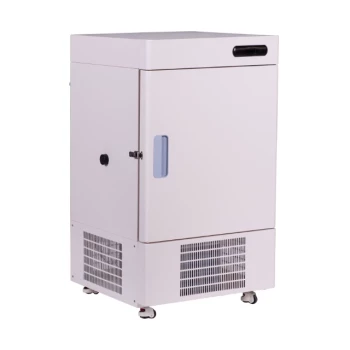
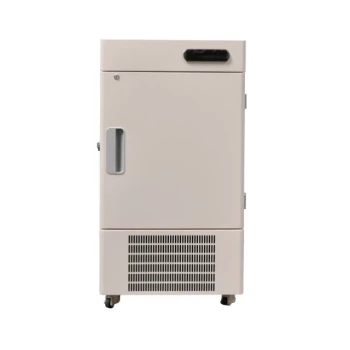
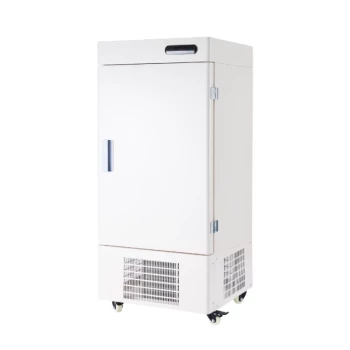
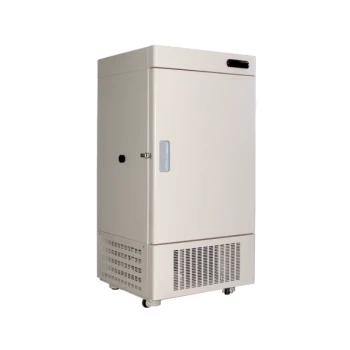
- 108L Vertical Ultra Low Temperature ULT Freezer
People Also Ask
- What role does a laboratory freeze dryer play in the synthesis of graphene-based electrocatalysts? Preserve 3D Structures
- What are the technical advantages of using a laboratory freeze dryer for porous carbon precursors? Preserve 3D Networks
- What types of liquid samples can be processed using a laboratory freeze dryer? Preserve Your Sensitive Materials
- How do laboratory freeze dryers support scientific research? Preserve Sample Integrity for Reproducible Results
- Why is a laboratory freeze dryer preferred over traditional heating? Preserve Biochar Structure & Maximize Porosity