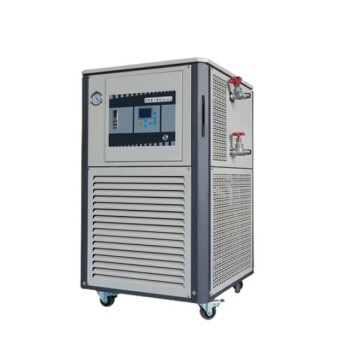
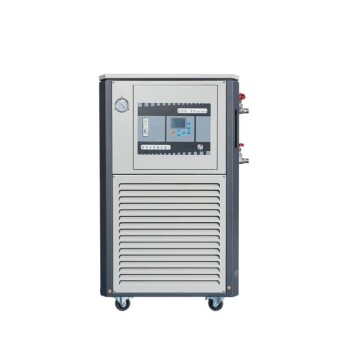
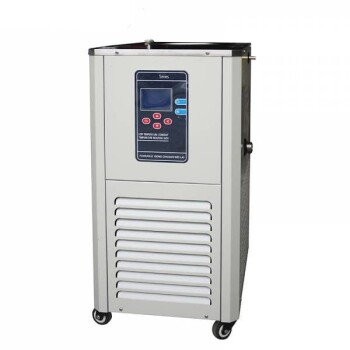
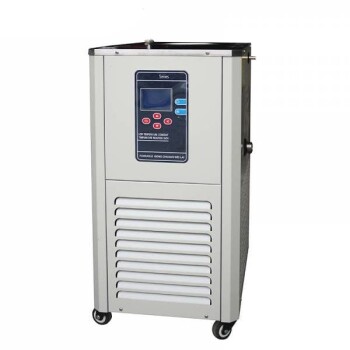
The primary function of a high-precision constant temperature test chamber is to create a controlled, stable environment that isolates the impact of temperature on battery degradation over time. By maintaining strict thermal consistency, these chambers enable researchers to simulate extreme conditions—ranging from -40°C to 50°C—and accurately quantify how temperature accelerates chemical decay mechanisms in lithium-ion batteries.
Calendar aging is a slow, continuous process driven by chemical instability rather than active cycling. A high-precision chamber is essential to ensure that observed capacity loss is attributed solely to thermal stress and time, eliminating the "noise" of environmental temperature fluctuations.
Simulating Critical Environments
Replicating Deep-Space Conditions
To ensure reliability for specialized applications, such as deep-space missions, batteries must be tested against extreme thermal baselines.
High-precision chambers enable the simulation of harsh environments, specifically covering a range from -40°C to 50°C. This capability allows engineers to verify battery survival and performance retention in environments far outside standard commercial operating windows.
Long-Term Environmental Stability
Calendar aging studies often span months or years.
A high-precision chamber ensures that the temperature set at the beginning of the test remains constant throughout the entire duration. This stability is critical for generating reliable data that can be used to predict the battery's lifespan over years of dormancy or standby use.
Isolating Degradation Mechanisms
Measuring SEI Growth
One of the primary drivers of calendar aging is the growth of the Solid Electrolyte Interphase (SEI) layer.
By maintaining a constant temperature, researchers can precisely correlate the rate of SEI thickening with specific thermal conditions. This helps in modeling how heat accelerates the consumption of lithium ions within the battery chemistry.
Quantifying Active Material Loss
Temperature also affects the chemical structure of the cathode and anode materials.
These test chambers allow researchers to measure the loss of active materials without the interference of cycle-induced mechanical stress. This isolation is necessary to distinguish between aging caused by usage (cycling) and aging caused by time and temperature (calendar aging).
Understanding the Trade-offs
Idealized vs. Real-World Conditions
While constant temperature chambers are excellent for isolating variables, they create an idealized environment.
Real-world batteries, whether in electric vehicles or grid storage, experience daily thermal cycling and seasonal fluctuations. Therefore, data from constant temperature tests serves as a baseline but may not perfectly predict aging in dynamic, real-world scenarios.
Cost and Complexity
High-precision equipment requires significant energy and maintenance to hold exact temperatures over long periods.
The strict requirement for "high precision" increases the cost of testing equipment compared to standard environmental chambers. This is a necessary investment for fundamental research but requires careful resource allocation for large-scale testing.
Applying This to Your Testing Strategy
To maximize the value of your calendar aging studies, align your equipment use with your specific data requirements:
- If your primary focus is fundamental electrochemistry: Prioritize the chamber's stability to model specific decay mechanisms like SEI growth without external noise.
- If your primary focus is mission assurance: Utilize the full -40°C to 50°C range to stress-test the battery against the worst-case scenarios of your target environment.
Accurate prediction of battery lifespan begins with the precise control of its environment.
Summary Table:
| Feature | Function in Calendar Aging Studies |
|---|---|
| Temperature Range | Simulates extreme environments from -40°C to 50°C for mission assurance. |
| Thermal Stability | Ensures long-term consistency over months/years to eliminate environmental 'noise'. |
| SEI Growth Analysis | Isolates the rate of Solid Electrolyte Interphase thickening at specific temperatures. |
| Mechanism Isolation | Distinguishes between time-based chemical decay and usage-based mechanical stress. |
| Data Reliability | Provides a controlled baseline for predicting battery lifespan and survival. |
Elevate Your Battery Research with KINTEK Precision
Precise control is the foundation of reliable battery lifespan modeling. KINTEK specializes in high-performance laboratory equipment designed to meet the rigorous demands of electrochemistry and material science. Whether you are studying calendar aging, SEI growth, or thermal stability, our comprehensive range of high-precision constant temperature chambers, battery research tools, and consumables ensures your data is accurate and reproducible.
From advanced vacuum and atmosphere furnaces to electrolytic cells, electrodes, and high-pressure reactors, KINTEK provides the end-to-end solutions necessary for cutting-edge energy storage innovation.
Ready to eliminate variables and optimize your testing environment? Contact our technical experts today to discover how KINTEK can support your lab's mission with industry-leading equipment and personalized support.
References
- Hayder Ali, Michael Pecht. Assessment of the calendar aging of lithium-ion batteries for a long-term—Space missions. DOI: 10.3389/fenrg.2023.1108269
This article is also based on technical information from Kintek Solution Knowledge Base .
Related Products
- High Temperature Constant Temperature Heating Circulator Water Bath Chiller Circulator for Reaction Bath
- 20L Heating Chilling Circulator Cooling Water Bath Circulator for High and Low Temperature Constant Temperature Reaction
- 100L Heating Chilling Circulator Cooling Water Bath Circulator for High and Low Temperature Constant Temperature Reaction
- 10L Heating Chilling Circulator Cooling Water Bath Circulator for High and Low Temperature Constant Temperature Reaction
- 50L Heating Chilling Circulator Cooling Water Bath Circulator for High and Low Temperature Constant Temperature Reaction
People Also Ask
- What is the necessity of a circulating water bath in chlorate production? Optimize Yield & Purity with Precision
- How do constant temperature circulators impact weight-loss immersion tests? Ensure Precision in Corrosion Analysis
- How does a constant temperature circulator support the leaching reaction of gold scrap? Optimize Gold Recovery Results
- Why is a constant temperature water bath used for precursor storage in CVD? Achieve Stable Nanocrystalline SiC Deposition
- Why is a high-precision constant temperature water bath necessary for anaerobic digestion? Ensure Success at 37±0.02°C