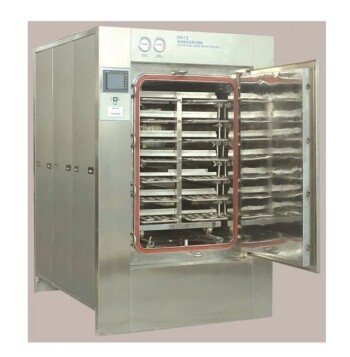
The primary function of an autoclave is to create a sterile baseline for microbiological work by subjecting culture media and containers to high pressure and a temperature of 121°C. In the specific context of preparing media for Sulfate-Reducing Bacteria (SRB), this thermal processing eliminates preexisting microorganisms that could otherwise compromise the experiment.
Core Takeaway The autoclave acts as the guardian of experimental accuracy. By creating a strictly non-competitive environment through high-temperature sterilization, it ensures that subsequent growth and metabolic activity are attributable solely to the target Sulfate-Reducing Bacteria, not environmental contaminants.
The Mechanics of Sterilization
Establishing High-Temperature Conditions
To effectively prepare culture media, the autoclave must reach a specific thermal threshold. The standard operating temperature is 121°C, a level of heat sufficient to destroy most microbial life forms.
The Role of Pressure
Achieving this temperature in a liquid medium requires a high-pressure environment. The autoclave utilizes this pressure to raise the boiling point of water, allowing the steam to penetrate and sterilize the media and containers thoroughly.
Elimination of Contaminants
The ultimate physical goal of this process is the total elimination of contaminating microorganisms. Any bacteria or fungi present in the water, powder components, or on the glass of the container are neutralized before the SRB are introduced.
Why Sterility Matters for Sulfate-Reducing Bacteria
Creating a Non-Competitive Environment
Sulfate-Reducing Bacteria often require specific environmental conditions to thrive. If contaminants are left in the media, they compete for nutrients and space.
Autoclaving ensures the SRB enter a non-competitive environment. This gives the target strain the exclusive opportunity to colonize the media without fighting for resources against faster-growing contaminants.
Ensuring Experimental Accuracy
The presence of foreign microbes introduces variables that make data impossible to interpret. They may alter the chemical composition of the media or produce byproducts that mimic or inhibit SRB activity.
By sterilizing the media, you guarantee the accuracy of experimental results. You can be confident that observed changes—such as sulfate reduction rates—are caused by your specific bacterial strain.
Common Pitfalls to Avoid
Incomplete Sterilization cycles
If the autoclave does not reach the required 121°C or fails to maintain pressure for the correct duration, sterilization will be incomplete.
The Risk of "False" Results
Failing to properly autoclave media is not just a cleanliness issue; it is a data integrity issue. A contaminated culture yields compromised data, potentially leading to false conclusions about the behavior or efficiency of the Sulfate-Reducing Bacteria.
Making the Right Choice for Your Goal
To ensure your SRB cultures provide valid scientific data, consider the following applications:
- If your primary focus is Isolation: Ensure the autoclave cycle effectively treats both the media and the storage containers to prevent cross-contamination.
- If your primary focus is Metabolic Analysis: Rely on the autoclave to create a blank slate, ensuring all chemical changes in the media are the result of SRB metabolism alone.
Proper sterilization is the non-negotiable first step in obtaining reproducible microbiological data.
Summary Table:
| Feature | Autoclave Requirement | Impact on SRB Preparation |
|---|---|---|
| Temperature | 121°C (Standard) | Neutralizes heat-resistant microbial life and contaminants. |
| Pressure | High-pressure steam | Elevates boiling point to ensure deep media penetration. |
| Environment | Non-competitive | Allows target SRB strains to colonize without resource rivalry. |
| Data Quality | Sterile Baseline | Guarantees metabolic changes are solely from target bacteria. |
Elevate Your Microbiology Research with KINTEK
Precision in Sulfate-Reducing Bacteria research begins with a sterile foundation. KINTEK specializes in high-performance laboratory equipment, including high-temperature high-pressure autoclaves and reactors designed to provide the rigorous sterilization your experiments demand.
Whether you are focusing on bacterial isolation or metabolic analysis, our robust solutions—ranging from crushing and milling systems to PTFE consumables and ceramics—ensure your lab achieves reproducible, high-integrity data. Don't let contaminants compromise your results.
Contact KINTEK today to find the perfect sterilization solution for your lab!
References
- Lang Liao, Yan Zhang. Immobilization Behavior and Mechanism of Cd2+ by Sulfate-Reducing Bacteria in Anoxic Environments. DOI: 10.3390/w16081086
This article is also based on technical information from Kintek Solution Knowledge Base .
Related Products
- Portable High Pressure Laboratory Autoclave Steam Sterilizer for Lab Use
- Laboratory Horizontal Autoclave Steam Sterilizer Lab Microcomputer Sterilizer
- Desktop Fast High Pressure Laboratory Autoclave Sterilizer 16L 24L for Lab Use
- Portable Digital Display Automatic Laboratory Sterilizer Lab Autoclave for Sterilization Pressure
- Desktop Fast Laboratory Autoclave Sterilizer 35L 50L 90L for Lab Use
People Also Ask
- Why is a laboratory high-pressure autoclave sterilizer necessary? Ensure Accuracy in Antibacterial Research
- What is the role of a laboratory high-pressure autoclave in the conversion of furfural to piperidine? Optimize Yields
- What are the two types of autoclave used in the laboratory? Gravity vs. Pre-Vacuum Explained
- What precautions should be taken during autoclave in laboratory? A Complete Safety Guide to Prevent Burns and Explosions
- What extreme conditions does a laboratory autoclave simulate? Testing Wear Resistance of Nuclear Fuel Cladding