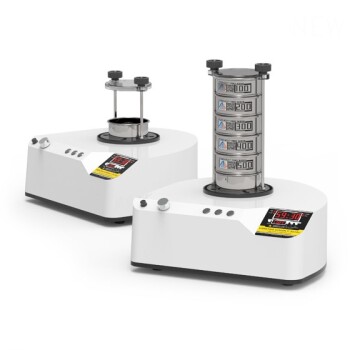
The use of a shaker or oscillator is a fundamental requirement for valid adsorption studies.
Mechanical agitation provides the kinetic energy necessary to ensure modified biochar particles are thoroughly mixed with cadmium-containing solutions. This process eliminates liquid-phase diffusion resistance and maximizes the collision frequency between cadmium ions and the biochar's active surface sites, enabling the system to reach chemical equilibrium efficiently and accurately.
Continuous mechanical agitation via a shaker is essential to overcome mass transfer resistance, ensuring that the adsorption data collected reflects the material's true chemical affinity rather than physical transport limitations.
The Role of Mechanical Energy in Adsorption Kinetics
Overcoming Liquid-Phase Diffusion Resistance
In a static or poorly mixed solution, a stagnant layer of liquid surrounds the biochar particles, acting as a physical barrier to ion movement. This "boundary layer" can artificially slow down the adsorption process, leading to inaccurate kinetic readings.
The shaker creates forced convection that disrupts this film, allowing cadmium ions to move rapidly from the bulk solution to the particle surface. This ensures that the rate-limiting step of the experiment is the actual adsorption onto the biochar, not the speed of the ions traveling through the water.
Maximizing Site Accessibility through Uniform Suspension
Biochar particles, especially those modified with heavy minerals or functional groups, tend to settle at the bottom of a container due to gravity. Continuous agitation keeps these particles in uniform suspension, preventing sedimentation.
By maintaining a homogeneous mixture, the shaker ensures that the entire surface area of the biochar is available for interaction. This exposure is critical for identifying the true number of active sites available for cadmium sequestration.
Achieving Equilibrium and Data Integrity
Simulating Dynamic Environmental Conditions
Laboratory shakers simulate the movement of water found in natural streams or industrial wastewater treatment systems. This provides researchers with performance data that is more representative of real-world applications than static tests.
Constant agitation ensures that the adsorption process reaches a true thermodynamic equilibrium. Without this, the reaction might appear to stop prematurely, leading to an underestimation of the biochar’s maximum adsorption capacity.
Thermal Stability and Kinetic Energy
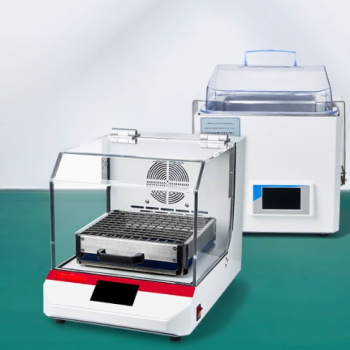
Many experiments utilize a constant temperature shaker to maintain a stable thermal environment throughout the process. Since adsorption is an energy-dependent process (often endothermic or exothermic), even slight temperature fluctuations can skew results.
Consistent rotation speeds—typically maintained between 120 and 150 rpm—provide the precise kinetic energy needed for reproducibility. This standardization allows researchers to compare different biochar modifications with high scientific confidence.
Understanding the Trade-offs and Limitations
Agitation Speed vs. Particle Integrity
While higher speeds reduce diffusion resistance, excessive agitation can cause physical attrition. This mechanical stress may break biochar particles into smaller fragments, artificially increasing the surface area and potentially leaching modifiers back into the solution.
Researchers must find an "optimal speed" where the solution is perfectly mixed but the structural integrity of the biochar remains intact.
External vs. Internal Diffusion
It is important to recognize that while a shaker eliminates external mass transfer resistance, it has no effect on internal pore diffusion. Cadmium ions must still navigate the internal micropores of the biochar to reach deep adsorption sites.
When analyzing kinetic models, such as the intra-particle diffusion model, researchers must distinguish between the rapid surface adsorption facilitated by the shaker and the slower diffusion occurring within the material.
How to Optimize Shaker Parameters for Your Research
To ensure your adsorption data is both accurate and scalable, consider the following recommendations based on your experimental goals:
- If your primary focus is determining maximum adsorption capacity: Set the shaker to a moderate speed (120–150 rpm) and allow the experiment to run until the cadmium concentration in the solution remains constant, signaling true chemical equilibrium.
- If your primary focus is evaluating adsorption kinetics: Utilize a constant temperature shaker to maintain precise thermal control, as reaction rate constants are highly sensitive to temperature fluctuations.
- If your primary focus is simulating industrial water treatment: Calibrate the agitation intensity to match the flow characteristics of the specific filtration or batch reactor system you intend to model.
Mastering the use of mechanical agitation is the key to transforming raw laboratory observations into reliable, scalable data for heavy metal remediation.
Summary Table:
| Mechanism | Function in Adsorption | Research Benefit |
|---|---|---|
| Forced Convection | Overcomes liquid-phase diffusion resistance | Ensures accurate kinetic data and faster equilibrium |
| Uniform Suspension | Prevents particle sedimentation and clustering | Maximizes accessibility to all active surface sites |
| Mechanical Agitation | Simulates dynamic environmental conditions | Provides scalable data for real-world applications |
| Thermal Regulation | Maintains constant temperature stability | Eliminates skewing from endothermic/exothermic fluctuations |
| Kinetic Energy | Standardizes particle collision frequency | Enhances reproducibility and scientific confidence |
Elevate Your Research Precision with KINTEK
Precision and reproducibility are the cornerstones of successful heavy metal remediation studies. KINTEK specializes in high-performance laboratory equipment designed to meet the rigorous demands of material science and environmental research.
Our extensive portfolio includes:
- Precision Shakers & Homogenizers: Ensure perfect mass transfer and uniform suspension for your adsorption kinetics.
- High-Temperature Furnaces: Muffle, tube, and vacuum furnaces for precise biochar modification and carbonization.
- Crushing & Milling Systems: Achieve the ideal particle size for maximum surface area accessibility.
- Specialized Reactors: High-temperature and high-pressure autoclaves for advanced material synthesis.
Whether you are a researcher focused on data integrity or a lab manager seeking reliable supply chains, KINTEK provides the tools and expertise to drive your innovation forward.
Ready to optimize your lab’s efficiency? Contact our experts today to find the perfect solution for your research goals!
References
- Jiankun Chen, Jianan Wang. Synthesis of Modified Walnut Shell Biochar and Its Performance of Cadmium Adsorption. DOI: 10.4236/gep.2023.119020
This article is also based on technical information from Kintek Solution Knowledge Base .
Related Products
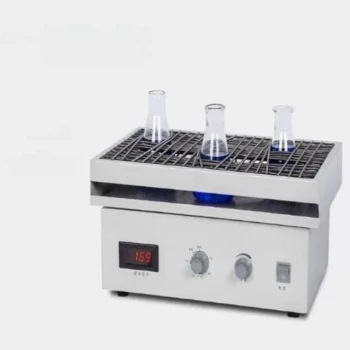
- Laboratory Multifunctional Small Speed-Adjustable Horizontal Mechanical Shaker for Lab
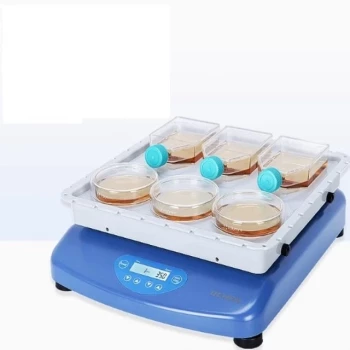
- Laboratory Oscillating Orbital Shaker
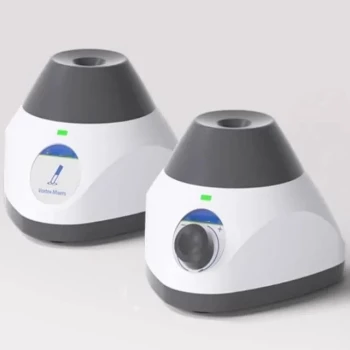
- Laboratory Vortex Mixer Orbital Shaker Multifunctional Rotation Oscillation Mixer
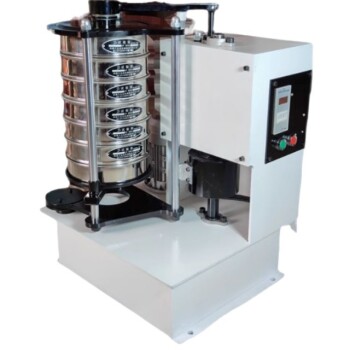
- Laboratory Vibratory Sieve Shaker Machine Slap Vibrating Sieve
- Shaking Incubators for Diverse Laboratory Applications
People Also Ask
- How do static culture and shaking culture affect the morphology of BC? Optimize Lab Shaker Results
- What is the role of a laboratory shaker in silane sol preparation? Master Uniform Aramid Fabric Coating
- Why is a laboratory shaker required for continuous 24-hour catalyst treatment? Achieve Deep Uniform Impregnation
- What is the function of a laboratory shaker in evaluating Fe-C@C nanoparticles? Optimize Methylene Blue Adsorption
- How do laboratory shakers or stirrers influence the efficiency of hydrogen production during dark fermentation?