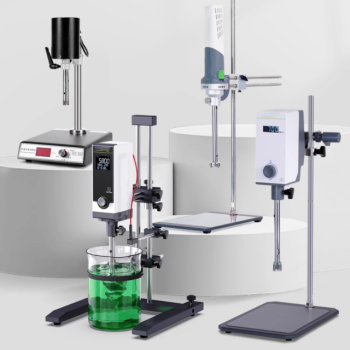
Laboratory shakers and stirrers drive hydrogen production efficiency by fundamentally altering the physical environment of the fermentation vessel. They provide the continuous mechanical agitation necessary to maximize the interaction between microbes and nutrients while actively removing growth-inhibiting gas products.
The efficiency of dark fermentation relies on overcoming physical barriers within the liquid. Agitation serves a dual purpose: it ensures a uniform supply of fuel to the microbial community and physically forces dissolved hydrogen out of the solution to prevent metabolic stalling.
Optimizing Biological Interactions
Laboratory shakers influence efficiency primarily by managing the logistics of the microbial environment. Without mechanical intervention, the fermentation process can become stagnant and inefficient.
Ensuring Homogeneity
For hydrogen production to occur, bacteria must be in constant physical contact with their energy source.
Shakers and stirrers ensure the uniform distribution of substrates and nutrients throughout the vessel. This prevents the formation of nutrient-depleted "dead zones" where microbes would otherwise starve, ensuring the entire bacterial population is productive.
Enhancing Mass Transfer Kinetics
The speed at which chemical and biological reactions occur is limited by how fast molecules can move through the liquid.
Mechanical agitation significantly enhances mass transfer kinetics. By keeping the liquid in motion, stirrers facilitate the rapid transport of metabolic reactants to the microbial cells, accelerating the overall rate of hydrogen production.
Managing Byproducts and Inhibition
In dark fermentation, the product (hydrogen) and physical byproducts (foam) can become obstacles to efficiency. Mechanical agitation is the primary tool for mitigating these issues.
Overcoming Product Inhibition
Hydrogen gas is not just the desired output; if it remains trapped in the liquid, it becomes a metabolic inhibitor.
High concentrations of dissolved hydrogen create thermodynamic pressure that can shut down the microbial pathways responsible for generating gas. Agitation assists in the timely release of generated hydrogen gas from the liquid phase to the headspace.
Preventing Physical Obstructions
Fermentation processes often generate surface byproducts that can hinder operations.
Continuous movement prevents the formation of foam and scum on the surface of the fermentation vessel. Eliminating these layers is critical, as they can block gas escape and interfere with the uniformity of the mixture.
Understanding the Trade-offs
While agitation is essential, the application of mechanical force must be balanced to maintain an ideal environment.
The Balance of Gas Retention vs. Release
The primary trade-off in mixing is managing the gas phase.
Insufficient agitation leads to supersaturation of hydrogen, causing the inhibitory effects mentioned above. However, the agitation must be consistent enough to continuously drive the gas out without disrupting the microbial community's stability.
Mechanical Consistency
The benefits of agitation rely heavily on continuity.
Intermittent or uneven mixing can allow layers to form or substrates to settle. To rely on the efficiency gains described, the mechanical action must be continuous to maintain the delicate equilibrium of mass transfer and gas release.
Making the Right Choice for Your Goal
To maximize the efficiency of your dark fermentation setup, you must tailor your agitation strategy to your specific limiting factors.
- If your primary focus is maximizing reaction speed: Prioritize agitation speeds that optimize mass transfer kinetics to ensure nutrients reach microbes instantly.
- If your primary focus is preventing metabolic stalling: Ensure your mixing strategy is aggressive enough to facilitate the rapid release of dissolved hydrogen to keep partial pressure low.
- If your primary focus is process stability: Use continuous stirring to prevent foam and scum accumulation that could destabilize long-term fermentation.
Agitation is not merely a mixing step; it is a critical control mechanism that prevents product inhibition and fuels reaction kinetics.
Summary Table:
| Factor Influenced | Impact on Efficiency | Primary Mechanism |
|---|---|---|
| Substrate Distribution | High | Eliminates dead zones by ensuring uniform nutrient/microbe contact. |
| Mass Transfer Kinetics | High | Accelerates the transport of reactants to microbial cells via agitation. |
| Gas Release | Critical | Prevents metabolic stalling by forcing dissolved H2 into the headspace. |
| Surface Management | Moderate | Prevents foam and scum accumulation that blocks gas escape. |
| Process Stability | High | Continuous mechanical action maintains thermodynamic equilibrium. |
Maximize Your Bioenergy Research with KINTEK Precision
Elevate your dark fermentation efficiency with KINTEK’s high-performance laboratory shakers and stirrers. Beyond agitation, we provide a complete ecosystem for advanced laboratory research, including high-temperature furnaces, crushing and milling systems, and specialized reactors. Whether you are optimizing microbial pathways or scaling up chemical processes, our precision-engineered equipment ensures the consistency and reliability your data demands.
Ready to optimize your lab’s workflow? Contact KINTEK experts today to find the perfect equipment solution for your specific research goals.
References
- Djangbadjoa Gbiete, Michael Nelles. Insights into Biohydrogen Production Through Dark Fermentation of Food Waste: Substrate Properties, Inocula, and Pretreatment Strategies. DOI: 10.3390/en17246350
This article is also based on technical information from Kintek Solution Knowledge Base .
Related Products
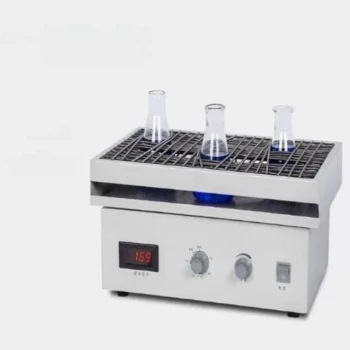
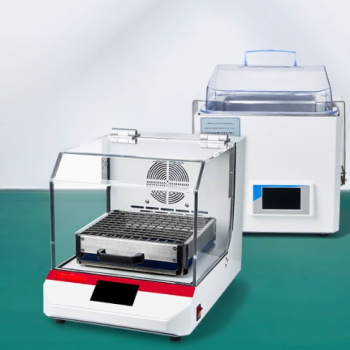
- Laboratory Multifunctional Small Speed-Adjustable Horizontal Mechanical Shaker for Lab
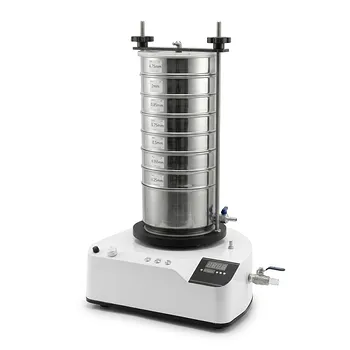
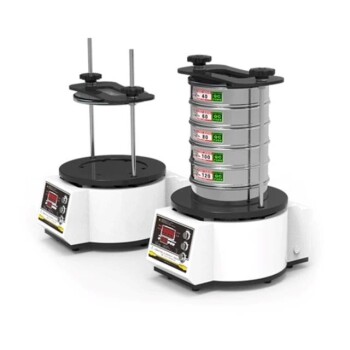
- Laboratory Vibratory Sieve Shaker Machine for Dry and Wet Three-Dimensional Sieving
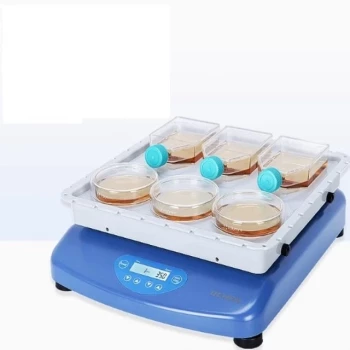
- Laboratory Oscillating Orbital Shaker
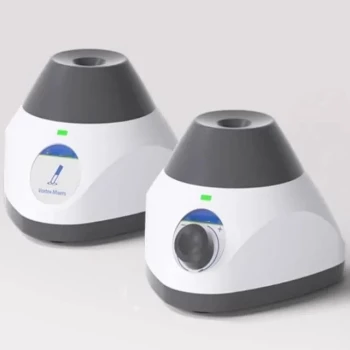
- Laboratory Vortex Mixer Orbital Shaker Multifunctional Rotation Oscillation Mixer
- Shaking Incubators for Diverse Laboratory Applications
People Also Ask
- How do static culture and shaking culture affect the morphology of BC? Optimize Lab Shaker Results
- What is the role of a laboratory shaker in silane sol preparation? Master Uniform Aramid Fabric Coating
- Why is a laboratory shaker required for continuous 24-hour catalyst treatment? Achieve Deep Uniform Impregnation
- What is the function of a laboratory shaker in evaluating Fe-C@C nanoparticles? Optimize Methylene Blue Adsorption
- What is the function of a laboratory shaker during the wet chemical synthesis of Pd/Fe3O4 nanocatalysts?