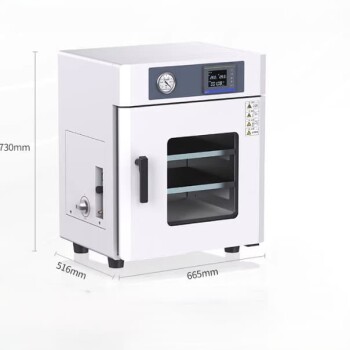
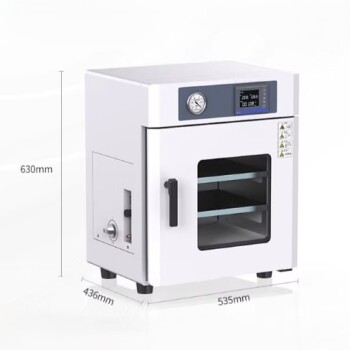
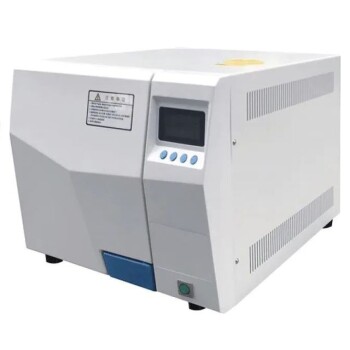
The primary function of a laboratory oven in the preliminary treatment of biomass is to systematically remove surface moisture by maintaining a constant temperature, typically set at 105 °C. This dehydration process creates a standardized state for raw materials like sesame stalks and bean husks. By establishing this baseline, the oven ensures that all subsequent grinding and analytical results can be accurately calculated on a "dry basis."
The laboratory oven serves as the critical standardization step in biomass analysis by eliminating water content variability. This ensures that experimental data reflects the true chemical composition of the material rather than fluctuating moisture levels.
The Critical Role of Thermal Dehydration
Establishing a Dry Basis
The fundamental purpose of the laboratory oven is to convert raw biomass into a state suitable for consistent analysis.
Raw materials naturally contain varying levels of moisture depending on storage and environmental conditions.
By drying the material at 105 °C, you remove this variable, ensuring that weight measurements reflect only the biomass solids.
Improving Experimental Accuracy
Analytical precision relies heavily on the stability of the starting material.
If moisture remains in the sample, it distorts weight-based calculations and chemical concentration readings.
Dehydration ensures that comparisons between different batches of raw materials are mathematically valid and reproducible.
Preparation for Mechanical Processing
Drying is a prerequisite for effective physical breakdown of the material.
The primary reference notes that dehydration prepares the biomass for subsequent grinding operations.
Removing moisture prevents clumping and allows for more efficient reduction of the material during the crushing stages.
Context: The Broader Pretreatment Workflow
facilitating Particle Size Reduction
While the oven handles moisture, it sets the stage for mechanical systems to reduce particle size.
As noted in supplementary contexts, biomass is often processed into specific sizes, such as 0.43 mm to 1.02 mm, using crushing and sieving systems.
Dry material fractures more cleanly, allowing these mechanical systems to achieve the specific surface area required for chemical reagents to penetrate the structure effectively.
Understanding the Trade-offs
Temperature Sensitivity
While 105 °C is the standard for moisture removal, exceeding this temperature can be detrimental.
Excessive heat may cause thermal degradation or the volatilization of organic compounds beyond just water.
This would alter the chemical composition of the biomass, leading to errors in compositional analysis.
Duration and Consistency
The drying process is not instantaneous and requires monitoring.
Removing the sample before it reaches a constant weight will result in incomplete dehydration.
Conversely, leaving samples in for excessive periods without need reduces laboratory throughput and efficiency.
Making the Right Choice for Your Goal
To maximize the utility of a laboratory oven in your biomass workflow, consider your specific analytical requirements.
- If your primary focus is analytical precision: Ensure the oven maintains a strict 105 °C profile to guarantee all data is calculated on a verified dry basis.
- If your primary focus is mechanical processing: Use the drying step to condition the material, ensuring it is brittle enough for uniform grinding and sieving.
Effective preliminary treatment is the silent foundation of every reliable biomass experiment.
Summary Table:
| Process Phase | Primary Function | Standard Operating Parameter | Key Benefit |
|---|---|---|---|
| Dehydration | Surface moisture removal | 105 °C Constant Temperature | Establishes a standardized "dry basis" |
| Standardization | Eliminating water variability | Monitoring till constant weight | Ensures reproducible chemical data |
| Mechanical Prep | Material conditioning | Prior to grinding/milling | Prevents clumping and improves fracture efficiency |
| Analytical Setup | Sample stabilization | Controlled thermal environment | Prevents volatile loss while removing water |
Elevate Your Biomass Research with KINTEK Precision
Reliable analytical results start with perfect sample preparation. At KINTEK, we understand that maintaining a strict thermal profile is critical for biomass standardization. Beyond our high-performance laboratory ovens, we offer a comprehensive suite of equipment designed for the entire pretreatment workflow—including crushing and milling systems, sieving equipment, and hydraulic presses for pelletizing your samples.
Whether you need specialized high-temperature furnaces, high-pressure reactors, or PTFE consumables for chemical analysis, KINTEK provides the professional-grade tools required to ensure your data is accurate and reproducible.
Ready to optimize your laboratory efficiency? Contact our experts today to find the perfect solution for your workflow!
References
- Mohamed Khairy, Ahmed Elwardany. The influence of torrefaction on the biochar characteristics produced from sesame stalks and bean husk. DOI: 10.1007/s13399-023-03822-9
This article is also based on technical information from Kintek Solution Knowledge Base .
Related Products
- Laboratory Scientific Electric Heating Blast Drying Oven
- 56L Vertical Laboratory Vacuum Drying Oven
- 23L Laboratory Vacuum Drying Oven
- 1200℃ Muffle Furnace Oven for Laboratory
- 1700℃ Muffle Oven Furnace for Laboratory
People Also Ask
- How does a laboratory electric drying oven contribute to the formation of the initial coating? Expert Insights
- What role does a precision laboratory drying oven play in the synthesis of GO-PANI nanocomposites? Protect Material Integrity
- What role does a laboratory drying oven play in the preparation of zinc oxide nanoparticle precursors?
- What is the necessity of using a laboratory drying oven when processing MoO3/GO composite nanopowders? Find out here.
- What is the role of a laboratory drying oven in cellulose citrate production? Ensure Material Stability & Purity