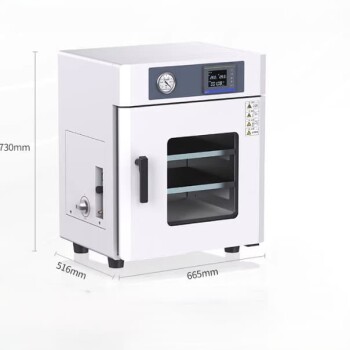
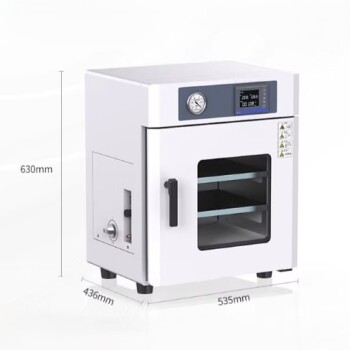
The critical function of a controlled drying process is to strictly regulate the evaporation rate of solvents after a substrate has been dipped in a photosensitive compound. By maintaining a stable environment, a laboratory oven or specialized chamber ensures the formation of a highly uniform crystalline layer on the film's fibers. This structural homogeneity is the fundamental requirement for the film to deliver accurate, linear, and reproducible data when measuring ionizing radiation.
The integrity of a radiochromic film relies on converting a liquid precursor into a solid, uniform crystalline structure without physical defects. Controlled drying acts as the essential bridge between raw chemical potential and reliable dosimetric performance.
The Physics of Film Formation
Regulating Solvent Evaporation
After the substrate is dipped in the photosensitive solution, it is saturated with solvents. The drying process is not simply about removing these liquids; it is about removing them at a specific rate.
A laboratory oven controls this evaporation, preventing the chaotic release of solvents that occurs in uncontrolled environments.
Establishing Crystalline Uniformity
The primary goal of this controlled evaporation is to deposit the photosensitive compound evenly across the substrate.
As the solvent leaves, the remaining compound forms a crystalline layer on the fibers. Because the drying environment is stable, this crystallization happens uniformly, creating a consistent surface structure across the entire film.
Preserving Structural Integrity
Controlled drying is essential for maintaining the physical architecture of the nanofibers.
By using a constant temperature—such as 60 degrees Celsius—moisture and residual chemicals like ethanol are removed gently. This prevents the physical structure from collapsing or sustaining damage during the transition from wet to dry.
Impact on Measurement Reliability
Ensuring Linearity
The quality of the drying process directly dictates the film's performance as a sensor.
A uniform crystalline layer ensures that the color change response of the film maintains a linear relationship with the absorbed radiation dose. Without this uniformity, the correlation between color intensity and radiation exposure becomes unpredictable.
Guaranteeing Reproducibility
For a dosimeter to be useful, it must provide consistent results under identical conditions.
The precise film-forming process achieved through controlled drying minimizes structural variations between different batches of film. This ensures high reproducibility, allowing researchers to trust that a specific color change represents the exact same dose every time.
Common Pitfalls to Avoid
The Risk of Rapid Evaporation
Speed is the enemy of quality in radiochromic film preparation.
If the drying process is rushed or the temperature fluctuates, rapid evaporation can occur. This leads to the formation of severe agglomerates (clumps) and poor dispersibility of the precursors.
Structural Collapse
Beyond mere clumping, uncontrolled drying can cause the actual physical structure of the nanofibers to collapse.
If the precursor structure is compromised before high-temperature processing, the final film will lack the necessary sensitivity and uniformity, rendering it useless for precision measurement.
Making the Right Choice for Your Goal
When configuring your drying protocols for radiochromic film production, consider your specific performance metrics.
- If your primary focus is Dosimetric Accuracy: Prioritize the uniformity of the crystalline layer to ensure a strictly linear response to radiation dose.
- If your primary focus is Physical Durability: Focus on gentle, constant-temperature drying to prevent fiber collapse and precursor agglomeration.
Mastering the drying phase transforms a simple chemical coating into a precision measurement instrument.
Summary Table:
| Feature | Impact of Controlled Drying | Consequences of Rapid Drying |
|---|---|---|
| Crystalline Structure | Uniform and homogeneous layer | Formation of clumps and agglomerates |
| Solvent Evaporation | Regulated and stable rate | Chaotic and rapid evaporation |
| Structural Integrity | Prevents fiber collapse | Physical damage and structural collapse |
| Measurement Accuracy | Linear dose-response relationship | Unpredictable and non-linear data |
| Reproducibility | High consistency between batches | Significant variations in sensitivity |
Elevate Your Laboratory Precision with KINTEK
Consistency is the hallmark of reliable research. KINTEK specializes in high-performance laboratory equipment designed to meet the rigorous demands of material science and dosimetry. From precision laboratory ovens and vacuum chambers for controlled drying to advanced high-temperature furnaces, crushing systems, and hydraulic presses, we provide the tools necessary to ensure your flexible radiochromic films deliver accurate, linear, and reproducible data.
Why choose KINTEK?
- Unmatched Uniformity: Our drying and heating solutions guarantee stable environments for sensitive crystallization processes.
- Comprehensive Support: We offer everything from ULT freezers and cooling solutions to essential consumables like ceramics and crucibles.
- Tailored Solutions: Whether you are focusing on battery research, dental applications, or chemical synthesis, our portfolio is built for accuracy.
Don't let uncontrolled variables compromise your results. Contact KINTEK today to discover how our high-precision equipment can enhance your laboratory’s efficiency and scientific integrity.
References
- Aigul Sarkeeva, R. R. Mulyukov. Multilayer laminate manufactured from near-alpha titanium alloy. DOI: 10.21175/rad.abstr.book.2023.19.10
This article is also based on technical information from Kintek Solution Knowledge Base .
Related Products
- Laboratory Scientific Electric Heating Blast Drying Oven
- 56L Vertical Laboratory Vacuum Drying Oven
- 23L Laboratory Vacuum Drying Oven
- 1200℃ Muffle Furnace Oven for Laboratory
- 1700℃ Muffle Oven Furnace for Laboratory
People Also Ask
- How does a laboratory electric drying oven contribute to the formation of the initial coating? Expert Insights
- What role does a precision laboratory drying oven play in the synthesis of GO-PANI nanocomposites? Protect Material Integrity
- What role does a laboratory drying oven play in the preparation of zinc oxide nanoparticle precursors?
- What is the necessity of using a laboratory drying oven when processing MoO3/GO composite nanopowders? Find out here.
- What is the role of a laboratory drying oven in cellulose citrate production? Ensure Material Stability & Purity