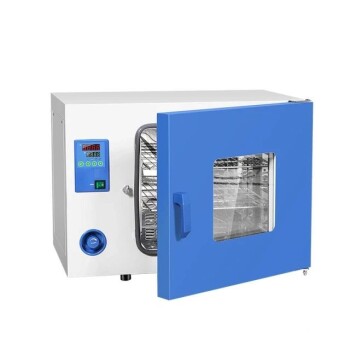
A laboratory drying oven serves as a critical stabilization tool in the aluminum dross workflow, ensuring the material is chemically and physically prepared for characterization. Its primary function is to subject washed aluminum dross to a constant temperature—typically 60°C for two hours—to remove physically adsorbed water, which is essential for accurate chemical analysis and efficient mechanical processing.
Core Takeaway The drying oven acts as a standardization gateway between raw processing and precise analysis. By removing surface moisture without altering the material's chemical state, it prevents mechanical clumping during grinding and establishes a reliable baseline for calculating Moisture Content (MC) and Loss on Ignition (LMOI).
The Critical Role of Moisture Removal
The presence of water in aluminum dross is not merely a variable; it is a contaminant that distorts both physical handling and data collection. The drying oven addresses this by establishing a controlled environment for moisture evaporation.
Removing Physically Adsorbed Water
After the washing stage, aluminum dross retains water on its surface, known as physically adsorbed water.
The drying oven eliminates this moisture layer. This is distinct from removing chemically bound water (which requires higher temperatures), ensuring the sample remains chemically intact while becoming physically dry.
Standardizing the Sample
Standardization is the prerequisite for reproducibility.
By maintaining a constant temperature (typically 60°C), the oven ensures every sample reaches the same state of dryness. This allows researchers to compare different batches of dross with confidence that variations are due to the material itself, not the residual water content.
Impact on Chemical Analysis
The most immediate value of the drying oven is the protection of analytical data integrity. Wet samples lead to skewed calculations and interference in sensitive detection methods.
Ensuring Accuracy of Weight-Based Metrics
Chemical analyses like Moisture Content (MC) and Loss on Ignition (LMOI) rely entirely on precise weighing.
If the dross is not dried uniformly, the initial mass reading will include the weight of water. This inflates the perceived sample mass and renders subsequent percentage calculations inaccurate.
Preventing Signal Interference
While the primary goal is weight accuracy, proper drying also aids in advanced characterization.
Techniques used in later stages, such as X-ray powder diffraction (XRD) or FTIR, require dry samples. Residual moisture or solvents can introduce "noise" or false peaks in the data, obscuring the true chemical composition of the aluminum dross.
Impact on Physical Processing
Beyond chemical analysis, the physical state of the dross dictates how well it can be mechanically processed. The drying oven is essential for preparing the material for size reduction.
Preventing Agglomeration
Wet powders do not grind well; they stick together.
Moisture acts as a binding agent, causing particles to cluster or agglomerate. If you attempt to fine-grind dross that hasn't been adequately dried, the material will clump rather than fracture.
Ensuring Uniform Particle Size
To achieve a fine, consistent powder, the material must be free-flowing.
Dried dross facilitates a uniform particle size distribution during the fine grinding process. This uniformity is crucial because particle size often influences the reactivity and recovery rates in subsequent aluminum recycling steps.
Understanding the Trade-offs
While drying is essential, the parameters must be strictly controlled. It is not simply a matter of "the hotter, the better."
The Risk of Thermal Oxidation
Temperature control is vital. The standard 60°C is relatively low for a reason.
Excessive heat can cause the aluminum or other metallic components in the dross to oxidize. If the oven is too hot, you alter the chemical nature of the sample before you have a chance to analyze it, artificially changing the LMOI values.
The Risk of Incomplete Drying
Conversely, insufficient time in the oven leaves residual moisture.
If the drying period is shorter than the recommended two hours, pockets of moisture may remain deep within the sample. This can lead to "micro-clumping" during grinding or slight inaccuracies in mass measurements that compound over time.
Making the Right Choice for Your Goal
The specific application of the drying oven depends on your immediate objective within the processing workflow.
- If your primary focus is Chemical Analysis (MC/LMOI): Ensure the oven temperature is stable at 60°C to remove water without triggering oxidation that could skew composition data.
- If your primary focus is Physical Processing (Grinding): Prioritize the duration of drying (full 2 hours) to guarantee the material is completely brittle and free-flowing to prevent clumping.
Ultimately, the laboratory drying oven transforms a variable, wet sludge into a consistent, process-ready solid, forming the foundation of reliable aluminum dross analysis.
Summary Table:
| Process Phase | Role of Drying Oven | Key Benefit |
|---|---|---|
| Sample Preparation | Removes physically adsorbed water | Standardizes baseline for MC and LMOI calculations |
| Chemical Analysis | Prevents moisture interference | Ensures data accuracy in XRD and weight-based metrics |
| Physical Processing | Eliminates particle agglomeration | Facilitates uniform particle size during fine grinding |
| Quality Control | Controlled 60°C environment | Prevents thermal oxidation of metallic components |
Optimize Your Aluminum Dross Analysis with KINTEK
Precision in chemical analysis begins with the right preparation environment. KINTEK specializes in advanced laboratory equipment designed to meet the rigorous demands of material science. From our high-stability laboratory drying ovens and cooling solutions (ULT freezers, freeze dryers) to our heavy-duty crushing and milling systems and hydraulic presses, we provide the tools necessary for consistent, reproducible results.
Whether you are performing moisture content assays or complex recycling research, KINTEK’s comprehensive portfolio—including high-temperature furnaces, PTFE consumables, and crucibles—ensures your lab operates at peak efficiency.
Ready to upgrade your processing workflow? Contact our technical experts today to find the perfect solution for your lab.
References
- Ibrahim K. Ayinla. An Energy Saving Option for Production of pure α – Alumina for Industrial Applications Using Waste Aluminium Dross. DOI: 10.54908/iljs.2021.08.02.003
This article is also based on technical information from Kintek Solution Knowledge Base .
Related Products
- Laboratory Scientific Electric Heating Blast Drying Oven
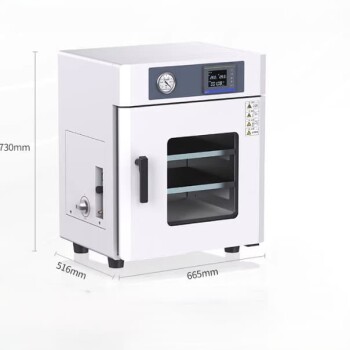
- 56L Vertical Laboratory Vacuum Drying Oven
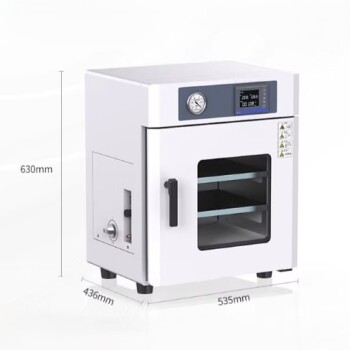
- 23L Laboratory Vacuum Drying Oven
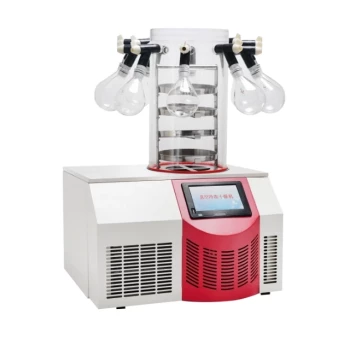
- High Performance Laboratory Freeze Dryer
- High Performance Laboratory Freeze Dryer for Research and Development
People Also Ask
- How does a laboratory electric drying oven contribute to the formation of the initial coating? Expert Insights
- What role does a precision laboratory drying oven play in the synthesis of GO-PANI nanocomposites? Protect Material Integrity
- What role does a laboratory drying oven play in the preparation of zinc oxide nanoparticle precursors?
- What is the necessity of using a laboratory drying oven when processing MoO3/GO composite nanopowders? Find out here.
- What is the role of a laboratory drying oven in cellulose citrate production? Ensure Material Stability & Purity