The primary role of a laboratory drying oven in post-washing treatment is to systematically remove physically adsorbed water and residual solvents from the catalyst material. By maintaining a constant, controlled temperature (typically between 105°C and 115°C), the oven prepares the precursor for subsequent high-temperature processing.
Core Takeaway The drying step serves as a critical stabilization phase that protects the catalyst's internal architecture. It mitigates the risk of structural collapse and particle clumping by ensuring that moisture is evaporated gently, rather than explosively, during the final calcination stage.
Preserving Catalyst Structure
Preventing Violent Evaporation
The most critical function of the drying oven is to prevent violent evaporation.
If a wet catalyst is subjected immediately to high-temperature calcination (often exceeding 500°C), trapped moisture flashes into steam instantly.
This rapid expansion creates internal pressure that can physically shatter the material's microstructure.
Avoiding Pore Collapse
Metal oxide catalysts rely on a specific pore structure to function effectively.
Skipping the drying step often leads to the collapse of the pore structure.
The drying oven removes the water layer gently, ensuring the framework of the catalyst remains intact and open for chemical reactions.
Mitigating Particle Agglomeration
Moisture acts as a binding agent that can cause particles to stick together.
Without proper drying, the subsequent heat treatment can cause severe particle agglomeration.
Using a drying oven ensures the final catalyst powder achieves a uniform particle size distribution, which is essential for consistent performance.
Enhancing Chemical Activity
Removal of Residual Solvents
Beyond water, the washing process may leave behind residual solvents or volatile organic compounds.
A constant temperature oven effectively evaporates these impurities.
This leaves behind a pure, dry solid mixture that is chemically ready for activation.
Restoration of Active Sites
For recovered or regenerated catalysts, the drying process helps restore function.
By removing contaminants from the pores without damaging the crystal structure, the oven helps restore active sites.
This ensures the physical stability of the catalyst for multiple degradation cycles.
Understanding the Trade-offs
The Importance of Constant Weight
It is not enough to simply heat the material for a set time; the goal is to achieve a constant weight.
Removing the material too early leaves residual moisture deep within the pores.
This residual moisture can still cause cracking or structural failure when the material hits the high heat of a calcination furnace.
Temperature Sensitivity
While 105°C–115°C is standard for many metal oxides, the temperature must be "mild" relative to the material's limits.
Excessive heat during the drying stage can prematurely alter the crystal structure before the material is ready.
Conversely, temperatures that are too low may fail to remove solvents with higher boiling points, leading to carbon deposits later.
Making the Right Choice for Your Goal
- If your primary focus is Physical Stability: Prioritize drying until a constant weight is achieved to prevent cracking and structural collapse during calcination.
- If your primary focus is Uniformity: Ensure the drying temperature is maintained strictly (e.g., 115°C) to prevent particle agglomeration and ensure consistent powder size.
- If your primary focus is Surface Area: Focus on the gentle removal of physically adsorbed water to keep the pore structure open and uncollapsed.
Proper drying is the difference between a high-surface-area catalyst and a collapsed, inactive powder.
Summary Table:
| Feature | Role in Post-Washing Treatment | Impact on Catalyst Quality |
|---|---|---|
| Moisture Removal | Evaporates physically adsorbed water at 105°C–115°C | Prevents structural shattering & violent evaporation |
| Pore Preservation | Gently removes liquid layers from internal channels | Maintains high surface area & prevents pore collapse |
| Particle Control | Eliminates moisture-induced binding | Mitigates agglomeration for uniform particle size |
| Chemical Purity | Drives off residual washing solvents | Leaves pure solid precursors ready for calcination |
| Active Sites | Clears contaminants from the framework | Restores catalytic activity and physical stability |
Optimize Your Catalyst Synthesis with KINTEK
Precision is non-negotiable when dealing with the delicate microstructure of metal oxide catalysts. KINTEK specializes in advanced laboratory equipment designed to bridge the gap between washing and calcination. Whether you need high-stability drying ovens for gentle moisture removal or high-temperature muffle, tube, and vacuum furnaces for final activation, our solutions ensure your materials achieve maximum surface area and catalytic activity.
From high-pressure reactors for synthesis to crushing and milling systems for post-processing, KINTEK provides the comprehensive tools required for high-performance battery research and chemical engineering. Consult with a KINTEK expert today to find the perfect equipment for your laboratory and safeguard your research from structural collapse and agglomeration.
References
- Thatiane Veríssimo dos Santos, Mário R. Meneghetti. Influence of Synthesis Methodology on the Properties and Catalytic Performance of Tin, Niobium, and Tin-Niobium Oxides in Fructose Conversion. DOI: 10.3390/catal13020285
This article is also based on technical information from Kintek Solution Knowledge Base .
Related Products
- Laboratory Scientific Electric Heating Blast Drying Oven
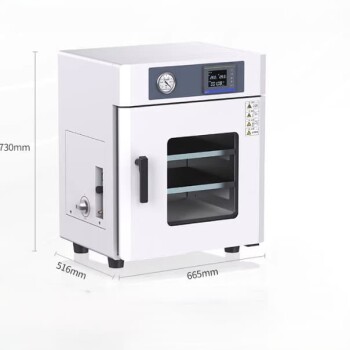
- 56L Vertical Laboratory Vacuum Drying Oven
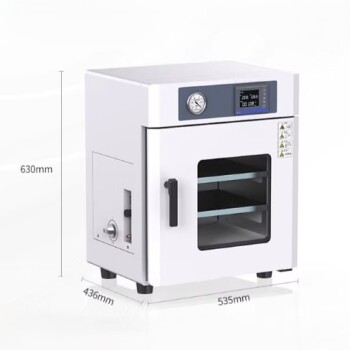
- 23L Laboratory Vacuum Drying Oven
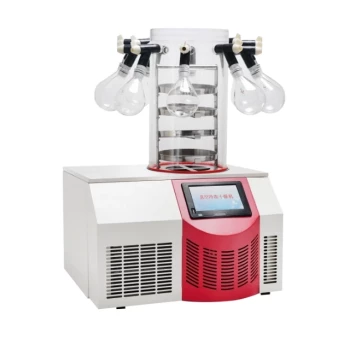
- High Performance Laboratory Freeze Dryer
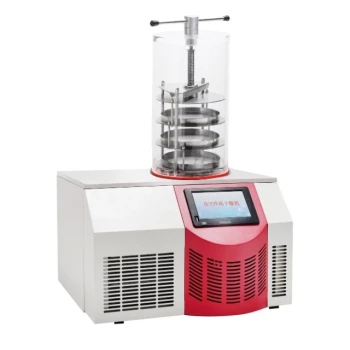
- High Performance Laboratory Freeze Dryer for Research and Development
People Also Ask
- How does a laboratory electric drying oven contribute to the formation of the initial coating? Expert Insights
- What role does a precision laboratory drying oven play in the synthesis of GO-PANI nanocomposites? Protect Material Integrity
- What role does a laboratory drying oven play in the preparation of zinc oxide nanoparticle precursors?
- What is the necessity of using a laboratory drying oven when processing MoO3/GO composite nanopowders? Find out here.
- What is the role of a laboratory drying oven in cellulose citrate production? Ensure Material Stability & Purity